Post by : Amit
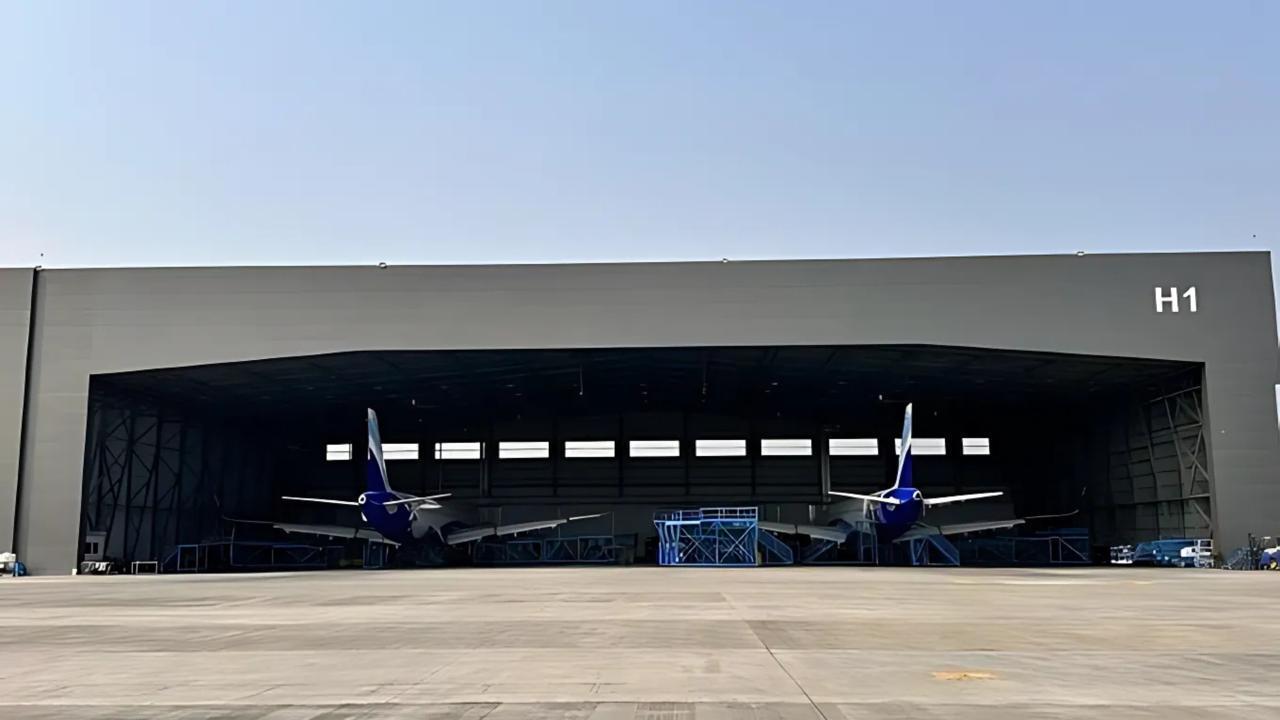
Photo : X / Aviation Week MRO
Adani Group Bets Big on Aircraft Maintenance
In a decisive move that signals its ambitions to dominate India’s fast-growing aviation services sector, the Adani Group has expanded its Maintenance, Repair, and Overhaul (MRO) portfolio by acquiring AAR-Indamer Aviation. The transaction, disclosed this week, marks a significant milestone in the conglomerate’s journey to diversify its aviation ecosystem beyond airports and into high-value aftermarket services.
The acquisition highlights how the Adani Group is positioning itself as a key player in India’s aerospace supply chain, with the MRO sector at the heart of its strategy. Aviation industry insiders note that the move comes at a time when India’s MRO market is poised for exponential growth, projected to reach USD 4 billion by 2031, fueled by rising fleet sizes, government policy support, and airlines’ push for cost-efficient maintenance solutions closer to home.
Why AAR-Indamer Matters
AAR-Indamer Aviation is not just another maintenance firm. Formed through a joint venture between U.S.-based AAR Corp and India’s Indamer Aviation, it brought global technical know-how together with domestic operational expertise. The company has built its reputation by offering line maintenance, heavy checks, and component repair for both narrowbody and widebody aircraft.
By bringing AAR-Indamer into its fold, Adani Group gains not only established hangar infrastructure but also a skilled workforce with international certifications. Analysts suggest that this deal gives Adani a ready-made launchpad to compete with global MRO heavyweights that are increasingly eyeing the Indian market.
The acquisition is particularly strategic because India has long been dependent on overseas hubs in Singapore, Dubai, and Malaysia for heavy maintenance. With this deal, Adani is betting that airlines operating in India will now be more inclined to service aircraft locally, cutting costs and turnaround times.
Adani’s MRO Ambition Aligned With Policy Push
The timing of Adani’s expansion could not be more deliberate. The Indian government has been aggressively pushing to transform the country into a global MRO hub. The civil aviation ministry has rolled out a series of reforms, from reducing Goods and Services Tax (GST) on MRO services to simplifying import rules for aircraft parts.
In line with the National Civil Aviation Policy (NCAP) 2016 and subsequent amendments, policymakers want to ensure that India’s rapidly growing fleet—expected to cross 2,000 commercial aircraft by 2040—is serviced within the country. For Adani, already managing major airports such as Mumbai, Ahmedabad, and Lucknow, adding MRO to its portfolio creates a vertically integrated model that extends from passenger handling to aircraft servicing.
This alignment with government policy means Adani can not only attract airlines seeking cost savings but also leverage regulatory support to establish long-term competitiveness in the sector.
Market Shifts Driving Demand
The global MRO industry is undergoing major transitions. Aircraft fleets are becoming more diverse, driven by the entry of new-generation engines and narrowbody aircraft with longer ranges. Airlines are also under immense financial pressure post-pandemic, leading them to scrutinize operational costs more than ever.
For India, where aviation demand is booming—thanks to a rising middle class and increased connectivity—maintenance will play a critical role in sustaining airline profitability. Currently, more than 90% of heavy checks for Indian airlines are carried out abroad, draining valuable foreign exchange. With Adani’s new MRO capabilities, there is an opportunity to reverse this outflow.
Furthermore, geopolitical uncertainties and supply chain disruptions have made regional self-reliance in aviation maintenance a strategic necessity. Adani’s acquisition directly addresses this gap, creating domestic capacity that could reduce India’s vulnerability to global shocks.
Adani’s Larger Aviation Strategy
This acquisition is not an isolated move. Adani Group’s aviation portfolio has steadily expanded over the last five years. Beyond managing airports, the company has been investing in cargo, ground handling, fueling, and digital solutions that together form a complete aviation services ecosystem.
By integrating MRO into this framework, Adani strengthens its ability to provide end-to-end solutions for airlines. Analysts say this ecosystem approach mirrors global trends where airport operators diversify into ancillary aviation services, creating new revenue streams while increasing customer stickiness.
Adani’s strategy also plays into India’s broader ambition of becoming an aviation hub in Asia. With India projected to be the third-largest aviation market by 2030, establishing world-class MRO capabilities is no longer optional—it is essential for long-term industry competitiveness.
AAR’s Exit and Industry Signals
While Adani’s acquisition signals expansion, AAR’s exit from the joint venture reflects shifting global MRO priorities. The U.S.-based company, though strong in North America, faced challenges scaling its India operations in a market still dominated by overseas maintenance hubs.
Experts believe AAR’s withdrawal underscores the fact that India’s MRO sector requires local champions with the patience, political connections, and integrated business models necessary to thrive. Adani fits that bill, and this acquisition could mark the beginning of a homegrown consolidation wave in India’s aviation maintenance market.
Future Considerations
Despite its strong strategic fit, the acquisition is not without risks. Setting up MRO operations in India faces structural challenges:
Adani will need to navigate these hurdles carefully, leveraging its financial muscle and political alignment to create competitive advantages.
Airline Perspectives
For Indian airlines, the acquisition brings both relief and anticipation. Carriers like IndiGo, Air India, and Vistara have long advocated for stronger domestic MRO capacity to reduce dependency on foreign hubs. A strong local MRO player means reduced ferry costs, quicker turnaround times, and lower downtime—factors that directly affect profitability.
Industry observers also suggest that Adani’s presence could foster healthy competition, driving efficiency across the sector and potentially lowering maintenance costs in the long run. Airlines are expected to closely monitor how quickly Adani scales up AAR-Indamer’s capabilities to handle a diverse mix of fleets.
The Global Lens
Adani’s MRO expansion also has global implications. India is not the only country seeking to capture a greater share of the global MRO market, which is projected to hit USD 125 billion by 2035. Southeast Asian hubs like Singapore and Malaysia, as well as Gulf states such as the UAE, have long dominated this space.
By building a credible MRO ecosystem, India can position itself as a cost-competitive alternative that also benefits from one of the world’s fastest-growing fleets. For international airlines flying into India, Adani’s facilities could become an attractive option, particularly for narrowbody fleets on regional routes.
Future Outlook
The Adani-AAR-Indamer deal represents more than a corporate acquisition—it is a signal of how India’s aviation industry is evolving. As the country moves from being a net consumer of aviation services to a potential exporter of MRO expertise, the role of large conglomerates like Adani becomes crucial.
If executed well, the deal could catalyze a transformation that keeps billions of dollars within India’s economy while enhancing the safety and efficiency of the country’s aviation ecosystem. It may also set the stage for India to export MRO services to neighboring regions in South Asia, the Middle East, and Africa.
Ultimately, success will hinge on Adani’s ability to scale operations rapidly, attract global airline clients, and align its services with the evolving needs of new-generation aircraft fleets.
The acquisition of AAR-Indamer by Adani Group is a watershed moment for India’s aviation services sector. It consolidates Adani’s position as more than just an airport operator, transforming it into a full-service aviation powerhouse.
For India, the move represents a step closer to achieving its long-stated ambition of becoming a global MRO hub. For airlines, it offers the promise of cost savings and operational efficiencies. For the global industry, it introduces a new heavyweight competitor in a market traditionally dominated by Southeast Asian and Gulf hubs.
The aviation sector will be watching closely as Adani unfolds its strategy—because this deal has the potential to reshape not just the Indian MRO market but the regional balance of aviation services across Asia.
Adani MRO expansion, AAR-Indamer acquisition



Advances in Aerospace Technology and Commercial Aviation Recovery
Insights into breakthrough aerospace technologies and commercial aviation’s recovery amid 2025 chall

Defense Modernization and Strategic Spending Trends
Explore key trends in global defense modernization and strategic military spending shaping 2025 secu

Tens of Thousands Protest in Serbia on Anniversary of Deadly Roof Collapse
Tens of thousands in Novi Sad mark a year since a deadly station roof collapse that killed 16, prote

Canada PM Carney Apologizes to Trump Over Controversial Reagan Anti-Tariff Ad
Canadian PM Mark Carney apologized to President Trump over an Ontario anti-tariff ad quoting Reagan,

The ad that stirred a hornets nest, and made Canadian PM Carney say sorry to Trump
Canadian PM Mark Carney apologizes to US President Trump after a tariff-related ad causes diplomatic

Bengaluru-Mumbai Superfast Train Approved After 30-Year Wait
Railways approves new superfast train connecting Bengaluru and Mumbai, ending a 30-year demand, easi




