Post by : Amit
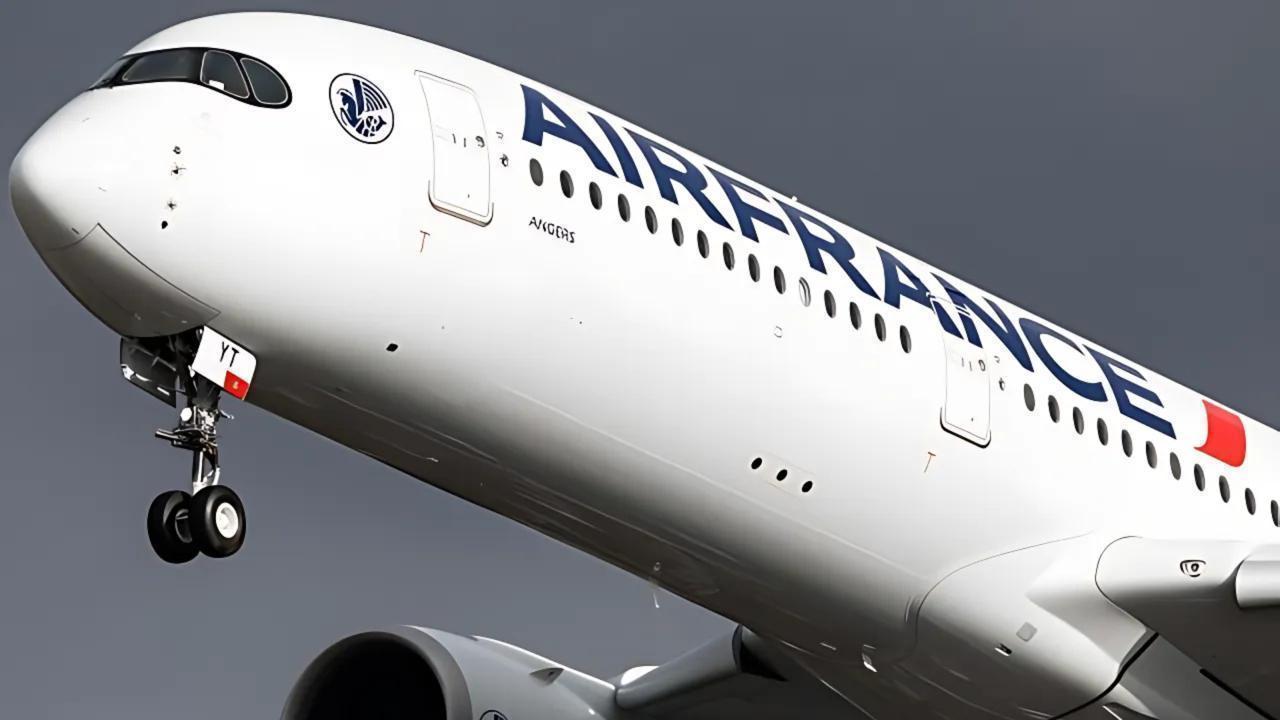
Photo : X / Air Journal
A strategic fleet shift for efficiency
In a significant fleet planning update, Air France-KLM has confirmed that it will convert an order for four Airbus A350-1000 aircraft into the smaller A350-900 variant. The move reflects the Franco-Dutch airline group’s sharpened focus on operational flexibility, fuel efficiency, and aligning aircraft capacity with evolving market conditions. The adjustment also underscores a cautious approach to widebody fleet expansion as global passenger demand patterns continue to shift in the post-pandemic environment.
According to company executives, the revised order allows the group to optimise its long-haul operations while maintaining high standards of passenger comfort and meeting environmental targets. While the A350-1000 is Airbus’ largest twin-engine widebody, the A350-900 offers a slightly smaller capacity but comparable range, making it well-suited for a broader mix of routes.
Why the Switch Makes Sense
Air France-KLM’s decision to move away from the A350-1000 comes as international air travel recovery shows signs of slowing in some markets. The group has been monitoring forward bookings and load factors across its network and sees greater operational versatility in the A350-900. With around 300-350 seats depending on configuration, the A350-900 can be more easily deployed on both high-density and medium-demand routes.
Air France, in particular, has already been integrating the A350-900 into its fleet since 2019, reporting strong performance in terms of fuel burn, maintenance efficiency, and passenger satisfaction. By contrast, the A350-1000’s larger seating capacity, while advantageous on high-volume intercontinental routes, could present challenges in maintaining profitability on thinner routes in a softer demand climate.
Fuel Efficiency and Environmental Goals
The A350-900’s smaller size does not mean compromising on range or fuel efficiency—in fact, it offers a lower per-trip operating cost while still being able to fly ultra-long-haul missions. Airbus data suggests the A350-900 can deliver fuel savings of up to 25% compared to previous-generation widebodies, aligning with Air France-KLM’s stated goal of cutting CO₂ emissions per passenger-kilometer by 30% by 2030.
Benjamin Smith, CEO of Air France-KLM, has reiterated that environmental performance is now a key driver in all fleet decisions. “The A350-900 fits perfectly into our strategy of modernising the fleet with more fuel-efficient, next-generation aircraft,” Smith said. “We are making decisions today that will keep us competitive and sustainable for decades to come.”
Operational Flexibility Across the Network
The A350-900 offers Air France-KLM the ability to serve both premium-heavy business routes and leisure-oriented long-haul destinations without the risk of excess capacity. This is particularly important as the group navigates shifting travel demand between Europe, North America, Asia-Pacific, and Africa.
Fleet planners have also noted that the A350-900’s lower maximum take-off weight compared to the A350-1000 can result in lower airport fees and reduced maintenance cycles for certain components, further improving cost control.
Impact on Airbus and the A350 Program
While Airbus loses four orders for its flagship A350-1000 from Air France-KLM, the manufacturer maintains the sale within its A350 family. The switch will likely have minimal impact on Airbus’ delivery schedule, as production slots can be reassigned to other customers. The A350 program continues to enjoy strong demand, particularly from airlines seeking to replace ageing Boeing 777 and Airbus A340 fleets.
Industry analysts point out that the A350-1000 has found its primary customer base among carriers operating ultra-high-density routes, such as Qatar Airways and British Airways, whereas the A350-900 remains the more popular and versatile variant globally.
Market Context: The Ultra-Long-Haul Debate
The decision also touches on a wider industry conversation about the economics of ultra-long-haul aircraft. While the pandemic initially spurred interest in long-range, point-to-point operations, the cost pressures of fuel, crew, and maintenance have led some carriers to reconsider. Instead, many are finding that smaller, highly efficient long-haul jets offer a better risk-to-reward ratio, especially when connecting through major hubs.
For Air France-KLM, the A350-900’s ability to operate profitably on a variety of missions—from Paris to Los Angeles, to Amsterdam to Johannesburg—gives it a strategic advantage.
Customer Experience and Cabin Configuration
Air France’s A350-900s are fitted with its latest long-haul cabins, featuring fully flat business class seats with direct aisle access, premium economy with enhanced recline, and spacious economy seating. KLM, which is expected to receive A350-900s in the future, is also planning to introduce upgraded cabin products to align with its premium positioning.
The shift in aircraft type is not expected to alter the group’s commitment to passenger comfort. Instead, the change could accelerate cabin standardisation, ensuring consistent service quality across the long-haul fleet.
Financial Implications and Fleet Growth
From a financial standpoint, the A350-900’s lower acquisition and operating costs compared to the A350-1000 support Air France-KLM’s cautious capital expenditure strategy. The group remains focused on improving its balance sheet after the heavy losses sustained during the COVID-19 pandemic.
Analysts believe that this type swap reflects a preference for incremental capacity growth, with the flexibility to scale up or down as market conditions dictate. It also positions the group to respond quickly to competitive pressures without locking itself into high fixed costs.
Competitor Comparisons
Air France-KLM’s move is part of a broader trend among major airlines adjusting their widebody orders. Lufthansa, Singapore Airlines, and Cathay Pacific have all recently reassessed aircraft orders to better align with current market realities. In many cases, airlines are prioritising smaller, more efficient models that can operate profitably even when demand fluctuates.
This strategic conservatism reflects the uncertainty still present in the global aviation market, particularly around fuel prices, geopolitical tensions, and uneven regional recovery rates.
Delivery Timelines and Integration
The converted A350-900s are expected to enter service over the next few years, replacing older Airbus A330 and Boeing 777 models in the Air France and KLM fleets. This transition will not only lower average fleet age but also reduce maintenance complexity by standardising on fewer aircraft types.
The group is also likely to leverage the A350-900’s commonality with the A350-1000 in terms of pilot training and maintenance, ensuring minimal disruption to operations despite the change in variant.
A Pragmatic Approach to Fleet Modernisation
Air France-KLM’s decision to swap A350-1000 orders for A350-900s is a pragmatic move shaped by market realities, environmental commitments, and financial discipline. While the larger A350-1000 remains a technological marvel, the A350-900 offers a more versatile and efficient platform for the airline’s current strategic needs.
By choosing moderation over aggressive capacity expansion, Air France-KLM is positioning itself for resilience in an industry where adaptability is key. This recalibration sends a message to the market: in today’s aviation landscape, it’s not always the biggest aircraft that wins, but the one best matched to the mission.
Air France-KLM A350 order, Airbus A350-900 fleet



Advances in Aerospace Technology and Commercial Aviation Recovery
Insights into breakthrough aerospace technologies and commercial aviation’s recovery amid 2025 chall

Defense Modernization and Strategic Spending Trends
Explore key trends in global defense modernization and strategic military spending shaping 2025 secu

Tens of Thousands Protest in Serbia on Anniversary of Deadly Roof Collapse
Tens of thousands in Novi Sad mark a year since a deadly station roof collapse that killed 16, prote

Canada PM Carney Apologizes to Trump Over Controversial Reagan Anti-Tariff Ad
Canadian PM Mark Carney apologized to President Trump over an Ontario anti-tariff ad quoting Reagan,

The ad that stirred a hornets nest, and made Canadian PM Carney say sorry to Trump
Canadian PM Mark Carney apologizes to US President Trump after a tariff-related ad causes diplomatic

Bengaluru-Mumbai Superfast Train Approved After 30-Year Wait
Railways approves new superfast train connecting Bengaluru and Mumbai, ending a 30-year demand, easi




