Post by : Amit
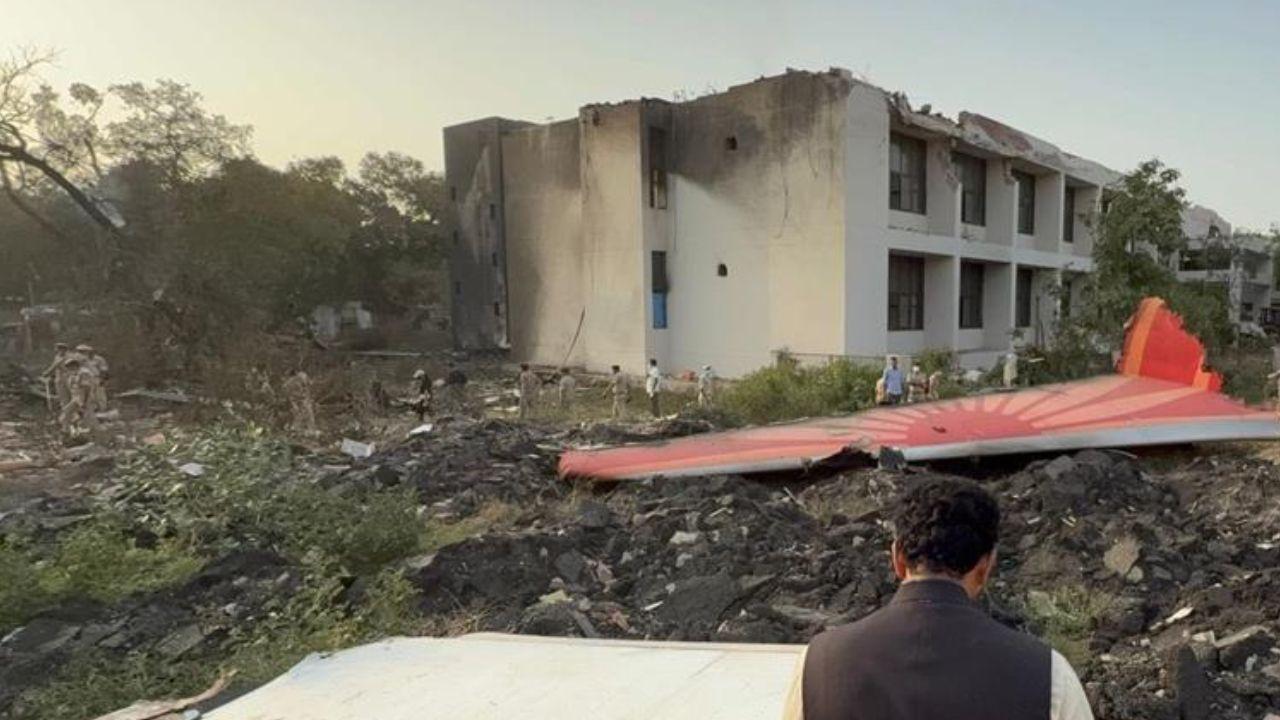
Photo:Indian civil aviation ministry
Ahmedabad, June 2025 — The Indian aviation community and the nation at large are mourning an unprecedented tragedy. Air India Flight AI 171, a Boeing 787 Dreamliner destined for London, crashed mere seconds after departing Ahmedabad on June 12, resulting in the loss of 241 lives out of the 242 passengers and crew on board. This devastating accident marks the first fatal crash involving a Dreamliner since its introduction to commercial service sixteen years ago, sending shockwaves across the global aviation industry.
The incident unfolded quickly and mysteriously. According to early investigative reports and airport surveillance footage, the aircraft had just lifted off the runway and began its ascent when, after approximately fifteen seconds, it suddenly began an unexpected descent. What caught immediate attention was that the landing gear was still deployed at this critical moment—a highly unusual situation that investigators believe may have significantly contributed to the aircraft’s loss of lift and eventual crash. This raises pressing questions about whether technical malfunctions or operational errors played a role.
A range of factors are currently under intense scrutiny. One critical area of focus is the possibility that the engines failed to produce sufficient thrust to sustain normal climb performance. Coupled with this is the examination of the aircraft’s flap settings during takeoff—incorrect flap configurations can drastically impair lift and control. Additionally, the extreme heat wave sweeping Ahmedabad at the time, with temperatures soaring as high as 42°C (107.6°F), is being analyzed for its impact on air density, engine efficiency, and aerodynamic lift—conditions that can challenge even the most advanced aircraft systems.
The Ministry of Civil Aviation has swiftly initiated a high-level investigation, enlisting the expertise of aviation safety specialists from India, as well as international partners from the United States’ Federal Aviation Administration (FAA) and the United Kingdom’s Air Accidents Investigation Branch (AAIB). Their collaborative probe is comprehensive, covering every possible cause, including the performance of the engines and thrust control during takeoff, the status and function of the landing gear and flaps, pilot decisions related to takeoff speed and procedures, and the functioning of autopilot and autothrottle systems. Special attention is also being paid to the aircraft’s angle-of-attack sensors, which provide critical data on the aircraft’s orientation relative to oncoming air.
While the flight data recorder (commonly known as the black box) has been successfully recovered from the crash site, the cockpit voice recorder remains missing, leaving a crucial piece of the puzzle yet to be found. Authorities remain hopeful that its retrieval will shed more light on cockpit communications and any potential anomalies during the ill-fated takeoff.
Amidst the heartbreak, a single survivor has been identified from the flight, though details about their condition and identity are still emerging. Tragically, the crash also affected the ground below, with the aircraft impacting a nearby residential area. This secondary devastation has added to the human toll, with casualties and property damage reported. Rescue and emergency teams are actively working to secure the site, provide aid, and support the affected families.
In the wake of this tragedy, regulatory authorities in India have ordered emergency inspections of all Boeing 787 Dreamliners operating within the country to ensure their airworthiness and operational safety. Parallel inspections are underway in other countries with Dreamliner fleets, including Japan and the United States. Boeing has pledged full cooperation with all investigating agencies and expressed deep sorrow over the accident, reaffirming its commitment to aviation safety.
The final investigation report is expected to be published within three months. This detailed document will incorporate analysis of flight data, crew interviews, witness statements, and simulated reconstructions of the takeoff conditions, especially the challenges posed by the extreme heat. The overarching objective remains to pinpoint the precise cause or combination of causes that led to this catastrophic failure and to recommend actionable measures to prevent any recurrence.
As families and the aviation community await answers, this tragedy serves as a solemn reminder of the inherent risks of flight and the critical importance of rigorous safety protocols, advanced engineering, and constant vigilance. The hope is that through thorough investigation and decisive action, the skies will become safer for all travelers in the future.
#trending#latest#AirIndiaCrash#Boeing787Crash#FlightAI171#AhmedabadPlaneCrash#AviationAccident#PlaneCrashInvestigation#CivilAviationIndia#AirIndiaNews#AircraftFailure#AviationSafety



Advances in Aerospace Technology and Commercial Aviation Recovery
Insights into breakthrough aerospace technologies and commercial aviation’s recovery amid 2025 chall

Defense Modernization and Strategic Spending Trends
Explore key trends in global defense modernization and strategic military spending shaping 2025 secu

Tens of Thousands Protest in Serbia on Anniversary of Deadly Roof Collapse
Tens of thousands in Novi Sad mark a year since a deadly station roof collapse that killed 16, prote

Canada PM Carney Apologizes to Trump Over Controversial Reagan Anti-Tariff Ad
Canadian PM Mark Carney apologized to President Trump over an Ontario anti-tariff ad quoting Reagan,

The ad that stirred a hornets nest, and made Canadian PM Carney say sorry to Trump
Canadian PM Mark Carney apologizes to US President Trump after a tariff-related ad causes diplomatic

Bengaluru-Mumbai Superfast Train Approved After 30-Year Wait
Railways approves new superfast train connecting Bengaluru and Mumbai, ending a 30-year demand, easi




