Post by : Amit
A high-altitude emergency unfolded across European skies on July 2 when Air India’s long-haul flight AI 103, operating from Delhi to Washington D.C., was forced to make an unscheduled emergency landing in Vienna, Austria, after a mid-air technical malfunction. The incident has not only disrupted the travel plans of over 200 passengers onboard but also rekindled a broader debate around the operational preparedness of India’s national carrier as it undergoes one of the most ambitious transformations in global aviation history.
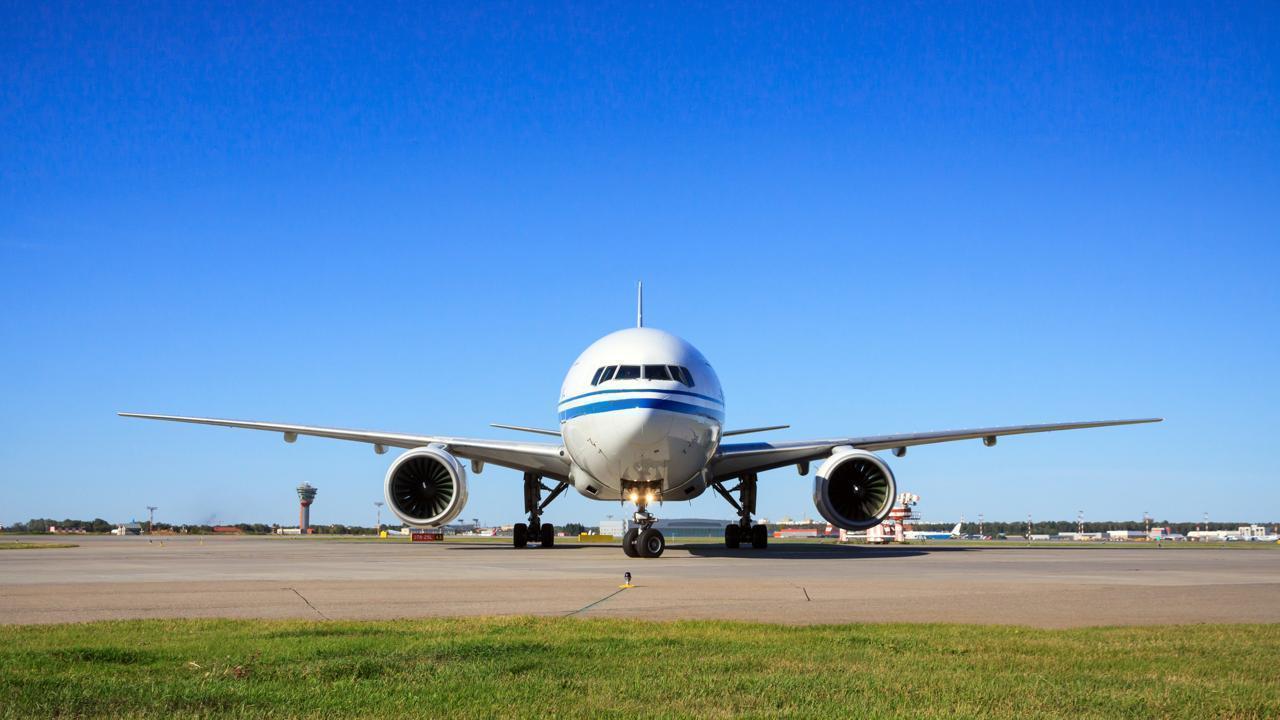
Flight AI 103, operated by a Boeing 777, took off from Indira Gandhi International Airport, New Delhi, with its destination set for Washington Dulles International Airport in the United States. While the journey began without issue, a technical anomaly was detected by the flight crew while cruising above European airspace.
The flight crew, trained in international aviation safety protocols, immediately opted to divert the flight to the nearest suitable airport. They selected Vienna International Airport as a precautionary measure to conduct a comprehensive technical inspection. The aircraft landed safely, with no injuries or cabin pressure issues reported. While the swift decision by the cockpit crew was praised within aviation circles for prioritizing safety, passengers were left shaken, stranded, and anxious, many of them turning to social media platforms to express their frustration.
For the passengers, the experience was distressing. Confusion dominated the ground situation as many travelers complained about poor communication, lack of timely updates, and uncertainty about the next steps. While Air India did provide hotel accommodation, meals, and logistical assistance, passengers expected more clarity and professionalism in handling such a disruption.
Social media posts from onboard passengers described the experience as “chaotic,” citing long waits for updates, unanswered queries, and a sense of being “abandoned in a foreign land.” Some also pointed out the irony of facing such issues on an airline that is aggressively positioning itself as a global premium carrier.
In a statement released shortly after the incident, Air India confirmed that the diversion was due to a “technical issue” and reiterated that passenger safety remains its topmost priority. The airline emphasized that such decisions are taken in the interest of maximum caution and in accordance with global safety regulations.
While the airline expressed regret over the inconvenience caused to passengers, it also stated that the ground team in Vienna was mobilized immediately to provide assistance and that technical teams were deployed to assess the aircraft’s condition before resuming operations.
The Vienna diversion is more than just a one-off incident—it is a stark reminder of the legacy challenges Air India still grapples with, despite the ambitious modernization plans set in motion by the Tata Group following its acquisition of the airline in January 2022.
Air India, once considered a symbol of national pride, has been through decades of underperformance, largely due to bureaucratic inefficiencies, financial mismanagement, and aging infrastructure. The Tata Group, since taking over, has committed to reviving the airline through sweeping changes, including:
A $70 billion order of 470 new aircraft from Boeing and Airbus, the largest order in Indian aviation history.
A complete brand overhaul, including new uniforms, livery, lounges, and digital services.
Integration of its four airline brands under the Air India umbrella—Air India, Vistara, AirAsia India, and Air India Express—to create a seamless full-service and low-cost carrier ecosystem.
A focus on global route expansion and positioning India as an international aviation hub.
However, despite these grand plans, operational shortcomings—such as the Vienna diversion—continue to plague the airline and are emerging as the biggest threat to its brand resurgence.
At the heart of the issue is Air India’s legacy fleet, many aircraft in which are over 15 years old. These wide-body jets are more susceptible to technical malfunctions, require frequent maintenance, and contribute to higher fuel costs, downtime, and carbon emissions. Until the new aircraft orders are delivered and operational (which could take 3–5 years to materialize fully), the airline remains dependent on this older fleet.
Comparatively, global competitors like Emirates, Singapore Airlines, and Qatar Airways have consistently invested in fleet renewal and maintenance, giving them an edge in operational reliability. Air India is trying to catch up—but in aviation, trust is built slowly and lost quickly.
Aviation analysts were quick to weigh in on the Vienna incident. While emphasizing that technical diversions are not rare, experts pointed out that Air India has faced multiple such occurrences in recent months, including:
Technical faults leading to delayed or cancelled international flights.
Passenger complaints regarding cabin maintenance, in-flight services, and IT glitches during check-ins.
Instances of inadequate ground staff coordination at foreign airports.
“The Vienna landing is a symptom of a deeper malaise,” noted a senior aviation expert. “Until Air India addresses its outdated systems, overworked engineering teams, and inadequate crisis management protocols, it will continue to face such setbacks.”
While Air India has been actively repositioning itself through advertisements, loyalty programs, and digital campaigns, incidents like this undermine public trust. Especially in an era where airline reviews, ratings, and passenger experiences can go viral instantly, a single misstep can result in reputational damage that takes months—if not years—to repair.
The Vienna diversion has therefore added urgency to Air India’s need to:
Establish transparent and timely communication protocols with passengers during disruptions.
Upgrade engineering and maintenance teams to meet global standards.
Ensure predictive maintenance systems are operational on older aircraft.
Train staff across departments—flight crew, ground crew, and customer care—in crisis communication and customer sensitivity.
India is now the third-largest domestic aviation market in the world and is poised to become a key global transit hub. With its geostrategic location, booming economy, and a burgeoning middle class, the potential for Air India to evolve into a world-class airline is immense.
But potential alone is not enough. The Vienna incident shows that while ordering next-gen aircraft like the Airbus A350 or Boeing 787 Dreamliner is vital, transformational success depends equally on day-to-day operational excellence.
The Tata Group, which has transformed companies like Tata Motors, Taj Hotels, and TCS, now faces its greatest aviation challenge: instilling a culture of excellence in Air India. This means that every employee—from engineers to executives—must uphold the values of safety, punctuality, transparency, and service.
The Vienna emergency landing of Flight AI 103 was handled safely, and the airline rightly prioritized safety. But the passenger experience, the communication failures, and the technical lapse point to the larger transformation hurdles Air India must overcome.
For passengers, it was a distressing delay. For Air India, it was a high-altitude warning signal—a reminder that brand transformation isn’t about glossy uniforms or bigger planes alone, but about the small daily victories in reliability, professionalism, and care.
As the world watches India's aviation story unfold, every Air India flight will be judged—not just on where it takes off and lands, but how it gets there.
Washington, India



Advances in Aerospace Technology and Commercial Aviation Recovery
Insights into breakthrough aerospace technologies and commercial aviation’s recovery amid 2025 chall

Defense Modernization and Strategic Spending Trends
Explore key trends in global defense modernization and strategic military spending shaping 2025 secu

Tens of Thousands Protest in Serbia on Anniversary of Deadly Roof Collapse
Tens of thousands in Novi Sad mark a year since a deadly station roof collapse that killed 16, prote

Canada PM Carney Apologizes to Trump Over Controversial Reagan Anti-Tariff Ad
Canadian PM Mark Carney apologized to President Trump over an Ontario anti-tariff ad quoting Reagan,

The ad that stirred a hornets nest, and made Canadian PM Carney say sorry to Trump
Canadian PM Mark Carney apologizes to US President Trump after a tariff-related ad causes diplomatic

Bengaluru-Mumbai Superfast Train Approved After 30-Year Wait
Railways approves new superfast train connecting Bengaluru and Mumbai, ending a 30-year demand, easi




