Post by : Amit
Photo : X / Roberto Mocholí
Airbus Banks on A350F to Redefine the Future of Cargo Aviation
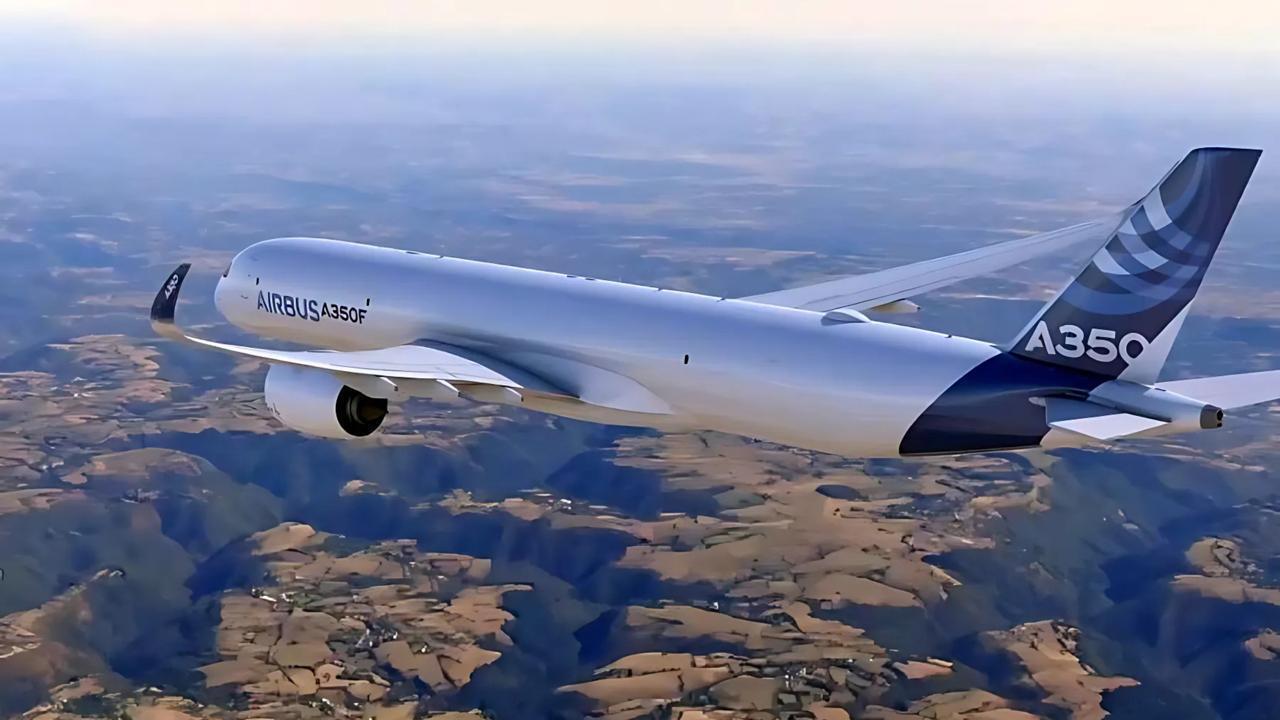
Airbus is placing a major bet on the freighter market's evolving demands with the development of its A350F, a new-generation cargo aircraft designed to strike a better balance of performance, payload, and fuel efficiency. As global air cargo dynamics shift, the European manufacturer believes the A350F is arriving at just the right moment—with a design shaped not just by innovation, but by a keen understanding of where the freighter sector is headed.
Delivering a Competitive Edge in a Shifting Market
According to Airbus executives, the A350F has been engineered to address what operators have long sought: a next-generation aircraft that doesn't compromise between capacity and operating economics. While rival offerings exist in the freighter space, particularly from Boeing’s 777F and the upcoming 777-8F, Airbus maintains that the A350F’s all-composite frame, larger cargo door, and lower fuel burn give it a clear advantage.
Speaking at the Farnborough Airshow and in ongoing customer briefings, Airbus marketing head Crawford Hamilton emphasized that the aircraft’s performance envelope is aligned with long-term industry trends—especially the rising cost of fuel and stricter sustainability targets. Hamilton argued that the A350F will not only replace aging jets like the 747-400F but will also outperform newer competitors in environmental and economic terms.
Tailored for the Post-Pandemic Cargo Boom
The launch of the A350F comes at a moment when air freight has taken on greater importance than ever before. While the pandemic disrupted passenger traffic, it turbocharged demand for cargo capacity. As global supply chains scrambled to meet surging e-commerce volumes and medical transport needs, freighters became essential.
Even with pandemic pressures easing, the long-term shift toward air freight shows no signs of slowing. Airbus has positioned the A350F as a future-ready answer to this trend—a modern aircraft designed to meet evolving cargo profiles, network flexibility, and ESG compliance. Operators are looking not just at raw payload anymore, but lifecycle cost, noise footprints, emissions profiles, and digital capabilities.
Why the A350F Is a Game-Changer
Based on the proven A350-1000 passenger platform, the freighter variant is purpose-built rather than retrofitted. This allows for more optimal structural design from day one. The aircraft boasts over 109 tonnes of payload and a range of more than 4,700 nautical miles. According to Airbus, this enables it to serve all major cargo routes efficiently while staying within ICAO’s emissions standards.
Another key innovation is the oversized cargo door positioned on the main deck, allowing for faster and more versatile loading operations. In a sector where turnaround time can make or break profitability, this operational edge is expected to resonate strongly with carriers and freight forwarders.
Sustainability at the Core of the Design
With increasing regulatory scrutiny on aviation’s environmental impact, Airbus is banking on the A350F’s cleaner footprint as a major selling point. The aircraft is built with over 70% advanced materials, including carbon-fiber composites and titanium, which reduce weight and enhance fuel efficiency. Hamilton and other Airbus leaders have stressed that this sustainable design philosophy isn’t just marketing—it’s a necessary evolution.
Noise emissions are also expected to be lower than legacy models, helping operators meet tighter restrictions at key hub airports. With ESG targets now influencing aircraft procurement decisions more than ever before, Airbus believes the A350F is tailored for a future where sustainability is tied to profitability.
Market Interest Signals Strong Uptake Potential
Even before entry into service, the A350F is attracting attention from major players in the cargo world. Air Lease Corporation, Singapore Airlines, CMA CGM Air Cargo, and Etihad are among the customers already signed up. Airbus says this interest validates its reading of the market and shows a genuine appetite for alternatives to Boeing’s longstanding freighter dominance.
While Boeing still controls a majority share of the freighter market—particularly with its 747, 767, and 777 models—Airbus is confident the A350F will help shift the balance. The company has indicated that the aircraft is on track for a 2026 entry into service, with development progressing steadily.
Replacing the Aging Workhorses of the Skies
Much of the A350F’s future success hinges on replacing older cargo aircraft still flying today. The Boeing 747-400F, once the backbone of global freight, is nearing the end of its economic life. Operators are increasingly eyeing modern alternatives that offer lower maintenance needs, better fuel economy, and improved dispatch reliability.
With a favorable payload-to-range ratio and digital onboard systems, the A350F is positioned not just as a replacement but as a performance upgrade. Airbus expects that its new freighter will carve out a strong niche not only in established markets like North America and Europe but also in fast-growing regions such as Southeast Asia, Latin America, and the Middle East.
Flexibility for Operators Seeking Profit and Resilience
The post-pandemic landscape has taught cargo operators the importance of adaptability. The A350F’s design allows airlines to adjust capacity, mission profiles, and route plans in response to fluctuating market demands. Its ability to integrate into mixed fleets—with commonality benefits for A350 passenger operators—is seen as a major cost and training advantage.
Moreover, as air freight becomes more digitized and automated, the A350F’s onboard systems are being configured to support seamless integration into digital tracking, predictive maintenance, and logistics platforms.
Airbus Eyes Long-Term Freighter Leadership
While Airbus may be the challenger in the freighter market, the A350F represents a well-timed and strategically sound entry. Company executives are confident that as more carriers look for long-term cargo fleet solutions, the A350F will emerge as the platform of choice.
As fuel prices remain volatile, environmental rules grow stricter, and cargo markets diversify, Airbus is betting that its new freighter will hit the sweet spot. It’s not just about hauling tonnes from point A to B anymore—it’s about doing so efficiently, cleanly, and competitively. And in Airbus’s view, that’s exactly where the A350F will lead the way.
Aviation, Cargo Plane, Freighter



Advances in Aerospace Technology and Commercial Aviation Recovery
Insights into breakthrough aerospace technologies and commercial aviation’s recovery amid 2025 chall

Defense Modernization and Strategic Spending Trends
Explore key trends in global defense modernization and strategic military spending shaping 2025 secu

Tens of Thousands Protest in Serbia on Anniversary of Deadly Roof Collapse
Tens of thousands in Novi Sad mark a year since a deadly station roof collapse that killed 16, prote

Canada PM Carney Apologizes to Trump Over Controversial Reagan Anti-Tariff Ad
Canadian PM Mark Carney apologized to President Trump over an Ontario anti-tariff ad quoting Reagan,

The ad that stirred a hornets nest, and made Canadian PM Carney say sorry to Trump
Canadian PM Mark Carney apologizes to US President Trump after a tariff-related ad causes diplomatic

Bengaluru-Mumbai Superfast Train Approved After 30-Year Wait
Railways approves new superfast train connecting Bengaluru and Mumbai, ending a 30-year demand, easi




