Post by : Amit
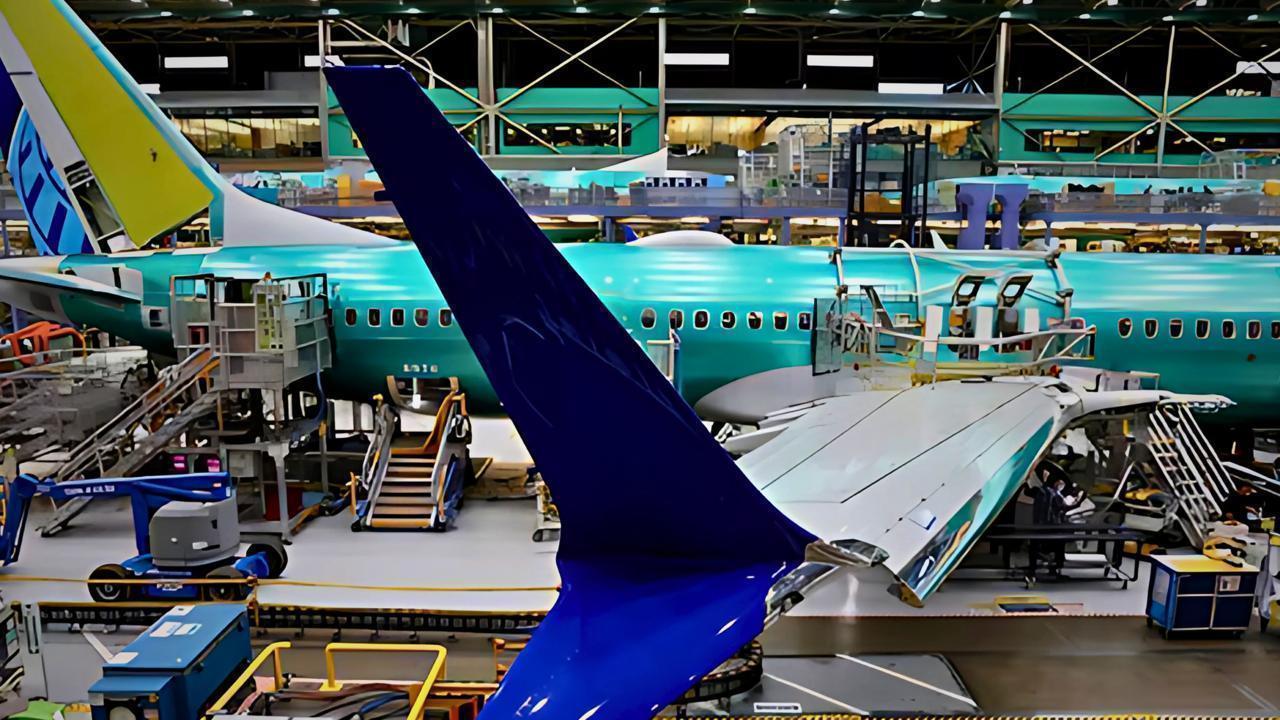
Photo: Reuters
June 25, 2025 | Toulouse — Airbus has reached a major milestone in its cutting-edge wing research program, successfully testing its adaptable “morphing wing” technologies on a modified Cessna Citation VII business jet. This latest phase of development demonstrates the aircraft manufacturer’s push to create smarter, more efficient, and more sustainable wings for future commercial aircraft.
The test campaign, part of Airbus’s Extra Performance Wing program, involves installing a scaled-down version of an advanced wing on the Citation testbed. The test wing incorporates variable surfaces, active load control, and flow optimization features, mimicking how birds adjust their wing shapes during flight for maximum efficiency. The result: an aircraft wing capable of changing shape in real time to adapt to various flight conditions, reducing drag, improving fuel efficiency, and increasing overall aerodynamic performance.
This innovation is a key part of Airbus's long-term vision to improve fuel burn and cut emissions, aligning with the industry's broader net-zero targets by 2050. By using a smaller jet like Citation VII, Airbus can accelerate the evaluation of multiple smart wing configurations without the complexities or costs associated with full-scale commercial prototypes.
Airbus has partnered with several technology companies and research institutions across Europe to develop this concept, which includes technologies such as pop-up spoilers, multifunctional trailing edges, and gust-load alleviation mechanisms. Engineers are using the Citation platform to analyze how different wing surfaces can respond autonomously to turbulence, optimize lift during takeoff and landing, and reduce structural stress during cruise.
The Extra Performance Wing program began in 2021 and forms part of Airbus’s broader UpNext initiative, which focuses on testing disruptive technologies in real operational environments. Earlier iterations of this program included work with composite materials, 3D-printed structures, and embedded sensors.
Although the current demonstrator is scaled down and mounted on a business jet, Airbus says the technologies being tested are scalable and adaptable for future application on narrowbody and widebody commercial jets, including next-generation aircraft families.
The test aircraft features one conventional Citation wing and one morphing research wing, allowing Airbus engineers to compare aerodynamic behavior and efficiency metrics in real-time. This unique setup gives direct A/B performance data under identical flight conditions.
Looking ahead, Airbus plans to expand flight testing through 2026, with future campaigns potentially exploring hybrid-electric integration and compatibility with sustainable aviation fuels (SAF). The insights gained from this morphing wing program could shape the design of Airbus's zero-emission aircraft concepts and further advance industry goals around decarbonization.
Airbus, Folding wing



Advances in Aerospace Technology and Commercial Aviation Recovery
Insights into breakthrough aerospace technologies and commercial aviation’s recovery amid 2025 chall

Defense Modernization and Strategic Spending Trends
Explore key trends in global defense modernization and strategic military spending shaping 2025 secu

Tens of Thousands Protest in Serbia on Anniversary of Deadly Roof Collapse
Tens of thousands in Novi Sad mark a year since a deadly station roof collapse that killed 16, prote

Canada PM Carney Apologizes to Trump Over Controversial Reagan Anti-Tariff Ad
Canadian PM Mark Carney apologized to President Trump over an Ontario anti-tariff ad quoting Reagan,

The ad that stirred a hornets nest, and made Canadian PM Carney say sorry to Trump
Canadian PM Mark Carney apologizes to US President Trump after a tariff-related ad causes diplomatic

Bengaluru-Mumbai Superfast Train Approved After 30-Year Wait
Railways approves new superfast train connecting Bengaluru and Mumbai, ending a 30-year demand, easi




