Post by : Meena Rani
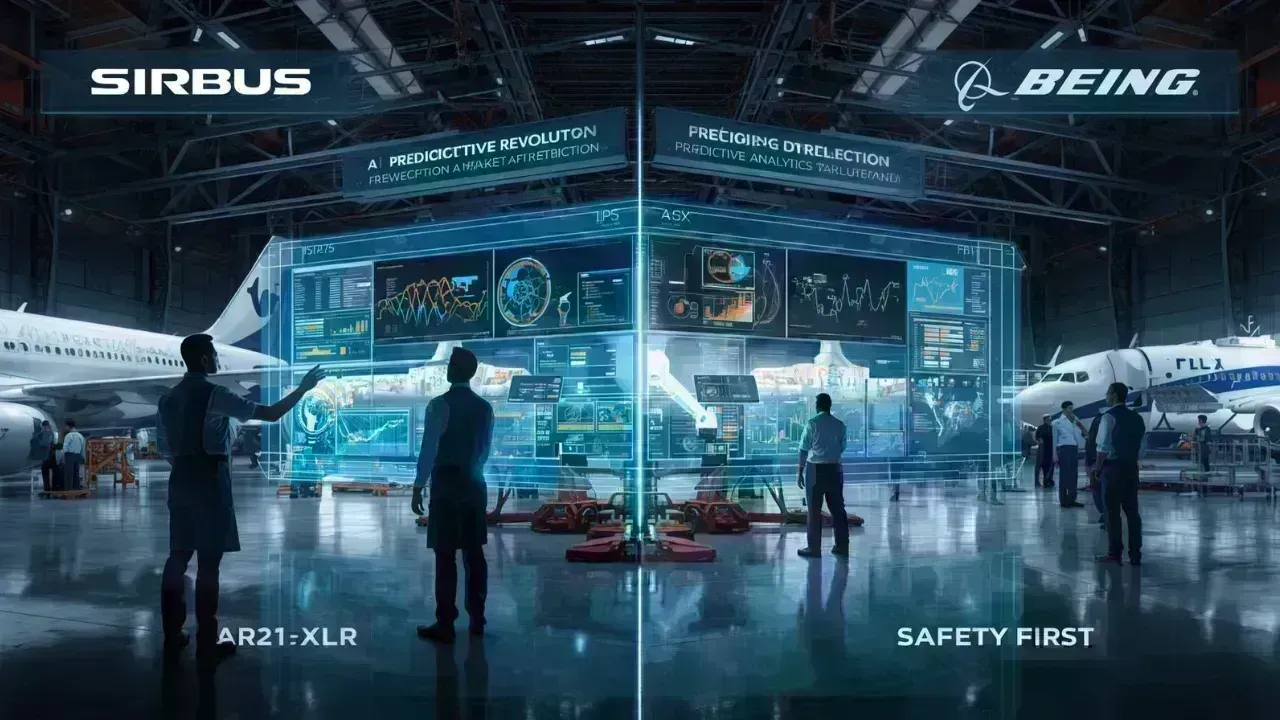
Artificial intelligence (AI) is transforming aircraft maintenance, offering unprecedented insights into predictive maintenance, operational efficiency, and safety. Airbus and Boeing, the two largest commercial aircraft manufacturers, are racing to implement AI solutions that enhance fleet reliability, reduce downtime, and optimize maintenance costs. But which company is truly leading the AI-driven maintenance revolution?
The Rise of AI in Aviation Maintenance
Traditionally, aircraft maintenance followed a scheduled, reactive approach. Components were replaced based on usage hours or time intervals, often leading to unnecessary costs or unexpected failures. AI introduces predictive and prescriptive maintenance, leveraging data from sensors, flight operations, and environmental factors to forecast potential failures before they occur.
Airbus has invested heavily in its Skywise platform, a cloud-based data ecosystem that collects and analyzes operational data from thousands of aircraft worldwide. Skywise enables airlines to predict maintenance needs, optimize part replacements, and schedule repairs more efficiently.
Skywise uses AI algorithms to identify patterns in engine performance, component wear, and flight conditions. For instance, abnormal vibration patterns can signal potential engine issues, allowing preemptive action before a failure occurs.
Airbus shares insights with airlines and suppliers, creating a collaborative environment where data from multiple operators improves predictive accuracy. This ecosystem approach enhances reliability across the entire Airbus fleet.
Boeing has adopted AI in maintenance through its digital twin technology, integrated with advanced analytics platforms. Digital twins are virtual replicas of individual aircraft, enabling simulation of wear-and-tear scenarios, system performance, and maintenance outcomes.
Boeing’s AI systems continuously monitor in-service aircraft, comparing real-time data against digital twin predictions. This enables early detection of anomalies and proactive scheduling of maintenance tasks.
By analyzing data across fleets, Boeing identifies trends that inform design improvements, supply chain planning, and maintenance procedures. Airlines benefit from reduced AOG (Aircraft on Ground) time and lower overall maintenance costs.
While both manufacturers leverage AI extensively, their approaches differ in focus and execution:
Airbus emphasizes a centralized data ecosystem (Skywise) connecting aircraft, airlines, and suppliers. Boeing prioritizes individual digital twins, offering detailed simulations for each aircraft.
Both systems improve predictive maintenance accuracy, but Skywise benefits from aggregated fleet data, while Boeing’s digital twin offers highly specific insights per aircraft. Airlines often use a combination of both approaches for optimal results.
Airbus integrates AI insights into flight operations planning, maintenance scheduling, and supply chain logistics. Boeing focuses on integrating AI with aircraft design and digital twin simulations, enhancing long-term predictive capabilities.
AI-driven maintenance is transforming airline operations, reducing costs, improving reliability, and minimizing delays.
Predictive maintenance reduces unnecessary part replacements, labor costs, and AOG events, leading to significant financial benefits for airlines.
AI insights help airlines optimize maintenance windows, align schedules with flight operations, and minimize disruptions to passengers.
Early detection of potential failures ensures regulatory compliance, enhances passenger safety, and prevents catastrophic failures that could damage brand reputation.
The AI-driven maintenance revolution is only beginning. Both Airbus and Boeing are investing in advanced machine learning, edge computing, and autonomous inspection technologies.
AI-powered drones and robots are increasingly used to inspect aircraft exteriors and engines, reducing manual labor and improving inspection accuracy.
Continuous learning algorithms improve predictive accuracy over time, enabling airlines to adopt condition-based maintenance as a standard practice.
Future aircraft, including Airbus’s A321XLR and Boeing’s 737 MAX series, will incorporate AI maintenance capabilities from design to operations, creating a seamless predictive ecosystem across the lifecycle.
Both Airbus and Boeing are pioneers in AI-driven maintenance, each with unique approaches. Airbus excels in creating a collaborative, data-rich ecosystem with Skywise, benefiting from fleet-wide insights. Boeing leverages detailed digital twins, providing aircraft-specific precision and predictive power. Ultimately, leadership depends on perspective: airlines seeking fleet-level efficiency may favor Airbus, while those requiring granular aircraft-level insights may lean toward Boeing. The real winner is the aviation industry, which now enjoys unprecedented safety, reliability, and efficiency through AI innovation.
#AIinAviation #PredictiveMaintenance #AirbusSkywise #BoeingDigitalTwin #AircraftReliability #AviationInnovation #MaintenanceRevolution #FleetOptimization #AerospaceTech #SafetyFirst



Advances in Aerospace Technology and Commercial Aviation Recovery
Insights into breakthrough aerospace technologies and commercial aviation’s recovery amid 2025 chall

Defense Modernization and Strategic Spending Trends
Explore key trends in global defense modernization and strategic military spending shaping 2025 secu

Tens of Thousands Protest in Serbia on Anniversary of Deadly Roof Collapse
Tens of thousands in Novi Sad mark a year since a deadly station roof collapse that killed 16, prote

Canada PM Carney Apologizes to Trump Over Controversial Reagan Anti-Tariff Ad
Canadian PM Mark Carney apologized to President Trump over an Ontario anti-tariff ad quoting Reagan,

The ad that stirred a hornets nest, and made Canadian PM Carney say sorry to Trump
Canadian PM Mark Carney apologizes to US President Trump after a tariff-related ad causes diplomatic

Bengaluru-Mumbai Superfast Train Approved After 30-Year Wait
Railways approves new superfast train connecting Bengaluru and Mumbai, ending a 30-year demand, easi




