Post by : Meena Rani
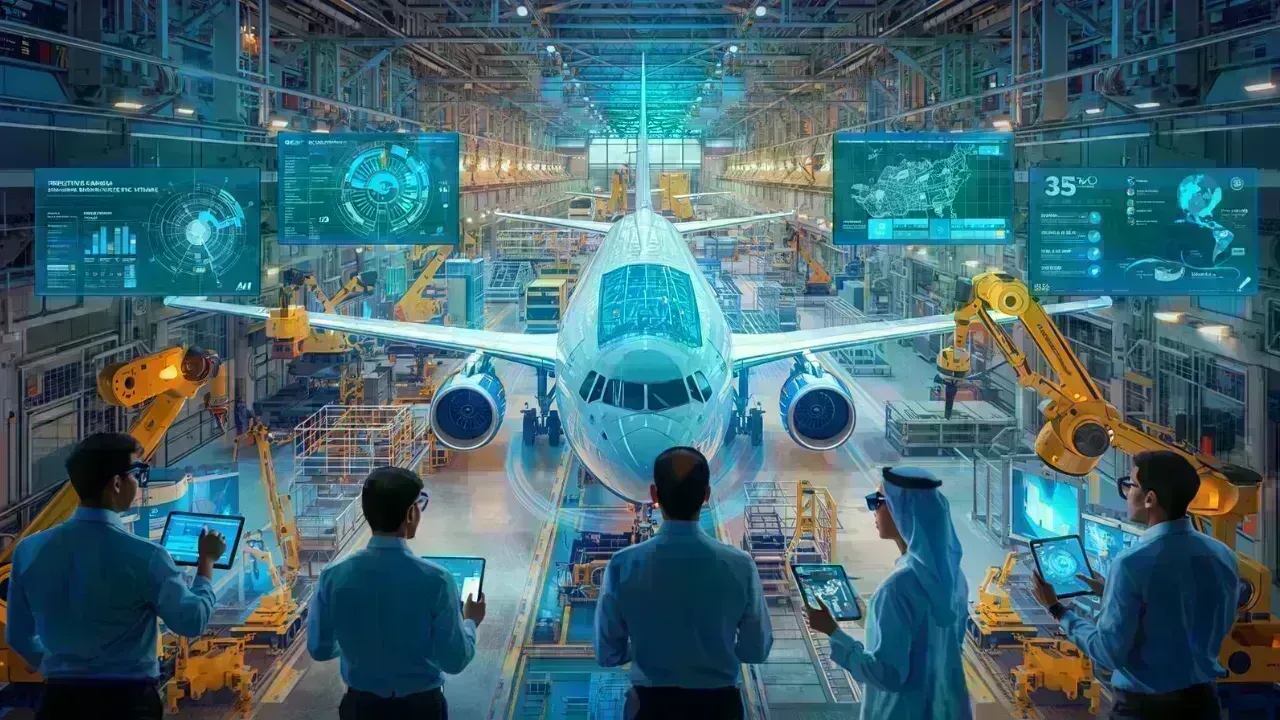
Airbus is leading the aviation manufacturing revolution by integrating digital twin technology, artificial intelligence (AI), and robotics into its aircraft assembly processes. This innovation enables the company to simulate, optimize, and monitor assembly workflows in real-time, significantly improving efficiency, precision, and flexibility in production.
A digital twin factory is a virtual replica of a physical production environment. It mirrors the entire assembly line, machinery, and processes, allowing engineers to simulate production scenarios, detect potential bottlenecks, and test process improvements before implementing them in the real world.
Artificial intelligence plays a critical role in the digital twin factory. By analyzing data from assembly lines, AI identifies inefficiencies, predicts equipment maintenance needs, and suggests process improvements.
AI monitors machinery performance in real-time, detecting signs of wear or malfunction. Predictive maintenance minimizes downtime, prevents costly breakdowns, and ensures consistent production rates.
Before any changes are implemented on the assembly floor, AI simulates new workflows, testing for potential issues. This “virtual trial-and-error” approach saves time, reduces waste, and enhances safety.
Robotics complement human workers by performing repetitive, high-precision tasks such as drilling, fastening, and material handling. Robotics integration reduces errors, accelerates production, and enhances worker safety.
Airbus uses cobots to work alongside human technicians. Cobots assist with lifting, alignment, and inspection, improving efficiency while allowing skilled workers to focus on complex assembly tasks.
Robotic systems, combined with AI, perform real-time inspections to ensure parts meet stringent specifications. This reduces defects, improves safety, and ensures consistent aircraft quality.
The implementation of digital twin technology, AI, and robotics has transformed Airbus’s assembly processes in several key ways:
Digital twins enable Airbus to identify inefficiencies, optimize workflows, and reduce assembly time without disrupting ongoing production.
AI-driven simulations allow Airbus to quickly adapt to design changes, new aircraft variants, and shifts in production demand.
Real-time monitoring, predictive maintenance, and robotic precision ensure high-quality assembly while reducing workplace accidents.
Optimized workflows, fewer errors, and predictive maintenance contribute to lower operational costs and better resource utilization.
The A321XLR, Airbus’s long-range narrow-body aircraft, benefits significantly from the digital twin factory. Simulation models optimize assembly sequences for new components, ensuring timely delivery despite the high production ramp-up.
By integrating supply chain data into the digital twin, Airbus can anticipate delays, adjust assembly schedules, and coordinate with suppliers to maintain uninterrupted production.
Digital twin insights help allocate human resources effectively, ensuring technicians are deployed where they are most needed, reducing idle time and maximizing productivity.
Airbus’s digital twin factory represents a paradigm shift in aerospace manufacturing. As AI algorithms, robotics, and data analytics continue to evolve, the factory of the future will be smarter, more adaptive, and capable of producing aircraft faster and more efficiently than ever before.
Advanced AI models will predict component failures, optimize energy use, and continuously improve workflows, enabling fully autonomous production planning.
Airbus plans to link digital twin factories across its global production network, creating a unified, data-driven ecosystem for aircraft assembly that shares insights in real-time.
Digital twin technology also supports Airbus’s sustainability initiatives by minimizing material waste, reducing energy consumption, and streamlining logistics to lower carbon emissions.
Airbus’s digital twin factory demonstrates how AI, robotics, and virtual simulations are revolutionizing aircraft assembly. By integrating cutting-edge technology, Airbus enhances efficiency, quality, and safety while maintaining flexibility in production. This innovation not only supports high-demand aircraft programs like the A321XLR but also sets a new standard for the global aerospace industry.
#AerospaceTech #DigitalTwin #AirbusInnovation #AIinManufacturing #RoboticsAssembly #A321XLR #SmartFactory #PredictiveMaintenance #SustainableAerospace



Advances in Aerospace Technology and Commercial Aviation Recovery
Insights into breakthrough aerospace technologies and commercial aviation’s recovery amid 2025 chall

Defense Modernization and Strategic Spending Trends
Explore key trends in global defense modernization and strategic military spending shaping 2025 secu

Tens of Thousands Protest in Serbia on Anniversary of Deadly Roof Collapse
Tens of thousands in Novi Sad mark a year since a deadly station roof collapse that killed 16, prote

Canada PM Carney Apologizes to Trump Over Controversial Reagan Anti-Tariff Ad
Canadian PM Mark Carney apologized to President Trump over an Ontario anti-tariff ad quoting Reagan,

The ad that stirred a hornets nest, and made Canadian PM Carney say sorry to Trump
Canadian PM Mark Carney apologizes to US President Trump after a tariff-related ad causes diplomatic

Bengaluru-Mumbai Superfast Train Approved After 30-Year Wait
Railways approves new superfast train connecting Bengaluru and Mumbai, ending a 30-year demand, easi




