Post by : Amit
Photo : X / Sawyer Merritt
From Concept to Reality
Amazon’s autonomous vehicle unit, Zoox, is shifting gears in its bid to launch one of the world’s first fully operational robotaxi services. In an announcement on August 6, Zoox confirmed that it is expanding both its testing programs and operational scope, signaling growing confidence in the readiness of its self-driving technology.
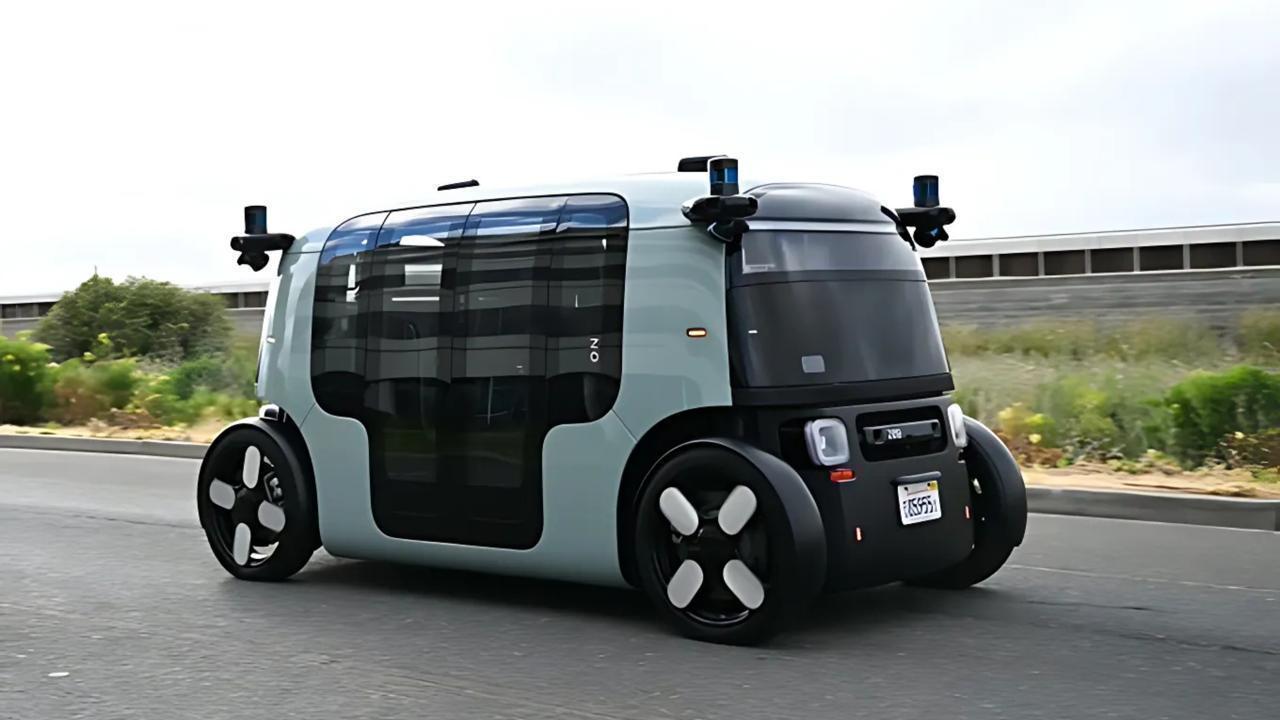
Founded in 2014 and acquired by Amazon in 2020, Zoox has long been known for its distinctive, carriage-style autonomous vehicles that lack a steering wheel or traditional driver’s seat. The design, meant to be purpose-built for autonomy rather than adapted from a conventional car, positions Zoox as a standout in the crowded self-driving field.
Breaking Away from the Pack
While competitors like Waymo and Cruise have logged years of testing with modified production vehicles, Zoox’s approach has always been different. Its custom-built robotaxi seats passengers face-to-face in a compact, fully electric pod, prioritizing comfort, visibility, and space efficiency.
By controlling the vehicle design, software, and manufacturing process under one roof, Zoox believes it can deliver a more seamless passenger experience and scale operations faster. This vertical integration mirrors Amazon’s broader business philosophy — owning as much of the supply chain as possible to maximize control and efficiency.
Expanding the Testing Grounds
Zoox’s latest announcement includes an expansion of its testing fleet in Las Vegas, San Francisco, and Seattle. Each city poses unique challenges for autonomous driving systems — from dense, unpredictable traffic patterns to complex intersections and diverse weather conditions.
The company is also pursuing regulatory approvals for fully driverless passenger service in Nevada and California. While current trials still require safety operators, Zoox executives say the goal is to begin offering true driverless rides to the public within the next two years.
The Vegas Advantage
Las Vegas, in particular, has emerged as a critical proving ground. Its wide streets, relatively predictable traffic flows, and supportive regulatory environment make it an ideal test city. Zoox’s fleet there has been running daily routes with employee passengers, collecting valuable operational data and fine-tuning responses to real-world driving situations.
Nevada’s willingness to embrace autonomous vehicle technology could give Zoox a head start in scaling beyond pilot projects. Local officials see the potential for robotaxis to reduce congestion, improve safety, and offer more sustainable transportation options.
Safety First, But Moving Fast
Autonomous vehicle safety remains a focal point in both public perception and regulatory scrutiny. Zoox says its robotaxi platform has undergone millions of virtual simulations and hundreds of thousands of on-road test miles. The vehicle’s sensor suite — combining lidar, radar, and high-resolution cameras — provides 360-degree coverage, enabling it to detect and respond to hazards from all directions.
CTO Jesse Levinson emphasized that Zoox will not launch commercial service until the company is confident its system can operate safely without a human driver. “Safety is not just a box to check — it’s our core product,” Levinson said.
Competing in a High-Stakes Race
The global robotaxi market is projected to be worth more than $150 billion by 2035, according to industry analysts. Heavyweights like Alphabet’s Waymo, GM’s Cruise, Baidu’s Apollo Go, and Tesla’s forthcoming “robotaxi network” are all chasing the same goal: to be first to scale a profitable, fully autonomous ride-hailing service.
Zoox’s key differentiator — a vehicle built from scratch for autonomy — could be both an advantage and a challenge. On one hand, it avoids compromises inherent in retrofitting existing cars; on the other, it requires a more complex manufacturing and regulatory approval process.
Amazon’s backing gives Zoox a deep well of capital, logistics expertise, and cloud computing power through AWS. These resources could prove decisive as the company moves from development to commercialization.
A Passenger-First Vision
Unlike some competitors that still envision a driver seat “just in case,” Zoox’s robotaxi is unapologetically driverless. Four passengers sit face-to-face, with sliding doors, panoramic windows, and a flat floor maximizing space.
The interior design includes touchscreens for trip information, climate control, and entertainment, while the vehicle’s autonomous control system adjusts acceleration and braking for smoothness — a critical factor for passenger comfort.
Zoox has also prioritized accessibility, ensuring its cabins can accommodate passengers with mobility aids. This aligns with growing demands for ride-hailing services to be more inclusive.
From Ridesharing to Logistics?
While Zoox’s current mission is urban passenger transport, analysts speculate that Amazon could eventually leverage the technology for logistics. The same driverless pod concept could be adapted for last-mile delivery, ferrying goods instead of people — a move that would fit neatly into Amazon’s e-commerce empire.
For now, Zoox executives are focused on winning the trust of urban commuters. They believe the shift to autonomous shared mobility could eventually reduce the number of privately owned cars, freeing up road space and lowering emissions.
The Regulatory Tightrope
Navigating the regulatory landscape will be one of Zoox’s toughest challenges. In the U.S., autonomous vehicle laws vary widely from state to state, with some jurisdictions requiring human oversight and others allowing fully driverless operations under strict conditions.
California, one of Zoox’s key markets, has recently tightened rules following high-profile safety incidents involving other autonomous fleets. Zoox says it has been proactive in engaging with regulators, sharing safety data, and inviting officials to experience test rides firsthand.
Public perception is another hurdle. While surveys show curiosity about autonomous rides, they also reveal significant hesitancy. High-profile crashes involving autonomous systems — even those from unrelated companies — can set back adoption timelines.
The Economics of Robotaxis
For the robotaxi model to work financially, operators need high utilization rates and low operational costs. Removing the driver is the biggest cost saver, but only if the system can run reliably without frequent manual intervention.
Zoox’s vertically integrated approach could allow it to optimize everything from battery performance to routing algorithms, squeezing out efficiencies competitors might miss. However, the upfront costs of vehicle production and infrastructure deployment remain steep.
Some analysts believe robotaxi services may initially operate at a loss, subsidized by parent companies until scale is achieved — a playbook Amazon has used successfully in other industries.
Looking Ahead to Launch
Zoox has not given a firm launch date for public robotaxi service, but internal targets suggest mid-decade deployment in at least one major U.S. city. From there, the company could expand regionally, starting with cities that offer favorable regulations and strong demand for urban mobility solutions.
As autonomous technology matures, Zoox envisions a network where passengers summon rides through an app, pay per trip or via subscriptions, and travel in zero-emission, self-driving pods — all without ever seeing a steering wheel.
Amazon’s Strategic Play
For Amazon, Zoox is more than a moonshot. It represents a long-term bet on transportation as a service, one that could integrate with other parts of its business. Whether moving people or packages, the ability to deploy autonomous fleets could cut costs, reduce delivery times, and open new revenue streams.
In the broader mobility market, such a service could also give Amazon a competitive edge against tech giants pursuing similar goals.
A Changing Urban Landscape
If Zoox succeeds, city transportation could look very different by the early 2030s. Reduced car ownership, quieter streets, and cleaner air are just some of the potential benefits. But realizing that vision will require not just technological achievement, but also public trust, regulatory alignment, and careful rollout strategies.
Zoox’s latest moves suggest it believes the pieces are starting to come together. Whether they add up to the first truly scalable robotaxi network will depend on how well Zoox navigates the critical next few years — and whether the public is ready to step into a car that drives itself, with no one in the driver’s seat.
Zoox robotaxi, Amazon Zoox, Autonomous vehicles



Advances in Aerospace Technology and Commercial Aviation Recovery
Insights into breakthrough aerospace technologies and commercial aviation’s recovery amid 2025 chall

Defense Modernization and Strategic Spending Trends
Explore key trends in global defense modernization and strategic military spending shaping 2025 secu

Tens of Thousands Protest in Serbia on Anniversary of Deadly Roof Collapse
Tens of thousands in Novi Sad mark a year since a deadly station roof collapse that killed 16, prote

Canada PM Carney Apologizes to Trump Over Controversial Reagan Anti-Tariff Ad
Canadian PM Mark Carney apologized to President Trump over an Ontario anti-tariff ad quoting Reagan,

The ad that stirred a hornets nest, and made Canadian PM Carney say sorry to Trump
Canadian PM Mark Carney apologizes to US President Trump after a tariff-related ad causes diplomatic

Bengaluru-Mumbai Superfast Train Approved After 30-Year Wait
Railways approves new superfast train connecting Bengaluru and Mumbai, ending a 30-year demand, easi




