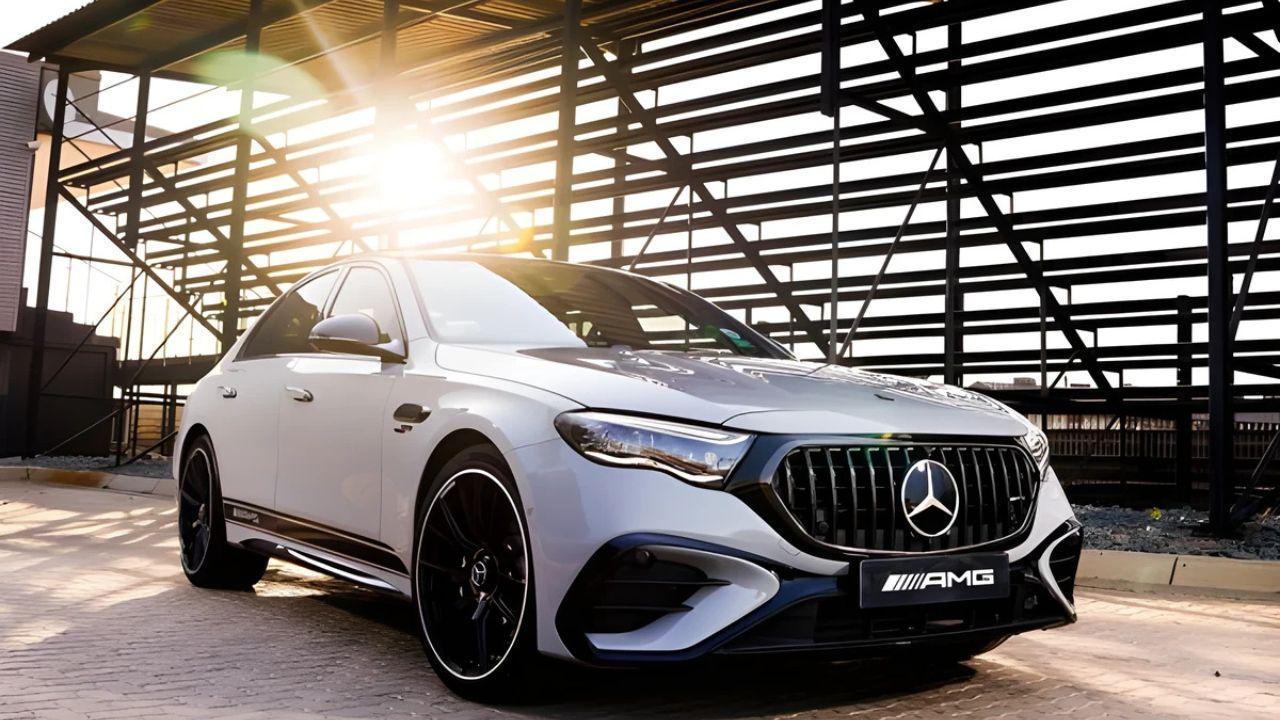
Post by : Avinab Raana
Photo : X / Motor Magnet
In the hush of AMG’s design studios, behind closed doors, there’s tension between passion and profit. The engineers sketch curves, the product planners map power outputs, and the marketing team imagines the roar-less version of a legend. But for now, AMG is holding back. The storied performance brand acknowledges the allure of an electric coupe, a sleek two-door machine that could capture hearts and shift perceptions. Yet it also admits it needs something crucial: proof that people will buy it in numbers big enough to justify the gamble. This quiet moment of possibility, caught between what AMG wants to make and what makes business sense, may define the brand’s electric future.
AMG is not new to electrification. It already offers plug-in hybrids and high-power E Performance variants, and has committed to launching its first fully electric model: the four-door C590, designed to compete with the likes of the Porsche Taycan. Alongside that sedan and a sporty electric SUV in the works, the electric coupe is under serious consideration. The platform intended for it would be the AMG.EA architecture, which is being built to support electrified powertrains with sufficient performance and flexibility. The EA platform is central to AMG’s strategy, expected to host several upcoming EVs.
A two-door performance silhouette carries more than just aesthetic cachet for AMG. The coupe embodies emotional appeal: instant recognition, drama, and a link to a legacy of fast, bold machines. AMG’s past electric coupe, the SLS Electric Drive, showed the world what the brand could do without its iconic V-8 roar, hinting at how stealthy torque could still thrill. For purists and enthusiasts, an electric coupe offers a chance to see AMG’s power and agility in a more modern, clean powertrain package. The coupe is not just a car; it’s statement, status, and identity.
Despite all the excitement, AMG is cautious. The brand’s CEO has publicly framed the issue as a balance between emotional desire and rational business sense. Creating a two-door EV requires significant investment distinct chassis tuning, specialized body engineering, crash testing, manufacturing modifications, and a luxury interior suite that matches expectations. AMG wants confidence there is enough demand to offset those costs. Market size, price sensitivity, regulatory costs, and future resale value are all variables that could tilt the business case toward “no” if assumptions don’t align.
AMG has emphasized that there is no green-light yet. Executives say that defining the “target picture” of the electric coupe depends on understanding evolving customer preferences, regulatory hurdles, battery tech, and whether infrastructure supports it.Combustion engine models will remain, at least for now, while AMG evaluates timeframes ripples in the market may influence whether a coupe demands immediate action or remains an optional halo project far in the future. AMG’s electrification isn’t a sprint; it’s a measured shift.
If AMG does decide to move forward, the EA platform offers several advantages. Designed for electric architecture, it supports high performance powertrains and advanced computing systems for torque vectoring, driver aids, and cooling. Electric drive systems can deliver instantaneous torque and precision handling. With modern battery tech, heat management, and lightweight materials, an electric coupe could outperform many internal combustion equivalents in acceleration, cornering, and responsiveness. AMG knows this. It has the tools; it’s determining whether the demand and price points exist to make a production coupe viable.
In many markets, regulatory pressure is pushing automakers toward zero emissions vehicles. Cities are tightening emissions rules, offering incentives for EVs, and imposing penalties on high polluting vehicles. Yet demand for EVs varies region by region. Luxury performance buyers tend to expect certain things—sound, feel, exclusivity making their purchase decisions more complex. AMG is likely studying regions where strong EV infrastructure exists, where buyers are aligned with luxury EVs, and where there is willingness to pay premium for performance. Global supply chain costs, battery material costs, and manufacturing complexity also weigh heavily.
Even if the electric coupe isn’t massively profitable, AMG sees appeal in using such a car as a halo model. These prestige models draw attention, elevate brand perception, and underscore engineering leadership. They demonstrate what AMG’s electric systems are capable of when pushed to extremes. That kind of vehicle helps sell kinder-hybrids and EV sedans by association. For brands like AMG, reputation matters as much as unit volume sometimes. An electric coupe can serve as a statement: AMG is not just following electrification, but mastering it.
The luxury electric vehicle market is already heating up. Porsche, Audi, BMW, and others are investing heavily in EVs across sedans, SUVs, and coupes. For AMG to launch an electric coupe, it must measure up to rivals not just in performance but in luxury, range, charging convenience, and after-sales service. Customers comparing the upcoming EVs want real driving range, fast charging infrastructure, distinctive styling, and tech. If AMG misses in any of those areas, the electric coupe may struggle, especially given its higher likely price point.
Performance tuning, noise engineering, user interface, interior comfort, and luxury features expect to be top notch. Early buyers will scrutinize whether an EV coupe feels “Amg-like”: do the handling, acceleration, driving dynamics, and exclusivity match the combustion heritage? Range and charging speed will be watched closely—if customers feel that they’re sacrificing practicality for show, they may balk. AMG is evaluating whether battery tech is mature enough to support these expectations without pushing cost out of reach.
Building an electric coupe involves more than just engineering risks, it carries financial exposure. Development costs, parts, battery supply, regulatory compliance, crash test certs, tooling, and marketing would represent a large investment. If sales volumes are low, returns may be modest or delayed. But successful execution promises rewards: strong margins, elevated brand perception, new customer segments, and increased relevance in an industry accelerating toward electrification. For investors and stakeholders, this decision could be viewed as a test of AMG’s ability to adapt.
AMG has laid out that its EV rollout will not be a single leap but a phased journey. Hybrids remain part of the mix in upcoming years, even as EV sedans and SUVs grow in importance. The electric coupe, if it happens, may follow once cost curves improve, battery energy density increases, charging networks are robust, and consumer confidence in EVs deepens. AMG’s CEO has described developing technology track projects, evaluating emotional resonance, and aligning with brand identity as key parts of deciding whether the coupe is justifiable.
For AMG to give the project the green light, several conditions must click. First, customer demand at the price point must be sufficient. Second, battery cost and supply must be favorable lithium, cobalt, rare earths, etc., need to be secure. Third, charging infrastructure must support long range and fast charging for buyers expecting performance. Fourth, regulatory subsidies or incentives could tip the balance. Fifth, internal capability engineering, production, quality, design all must align. If any major factor falls short, AMG may delay or shelve the coupe.
AMG’s dilemma reflects a broader question for performance brands: how to preserve identity when moving from engines and exhaust notes to silence and instant torque. Some potential customers want a faux V-8 sound or design cues that evoke past glories. Others embrace new tech but still demand exclusivity, driving dynamics, upholstery, finish options, customization. The electric coupe may need to satisfy both traditionalists and early adopters. AMG is conscious of this tension and is seeking compromise designs that evoke heritage while embracing new electric essence.
The idea of a new electric coupe from AMG excites both hearts and spreadsheets. It has the potential to elevate the brand in the EV age, to showcase AMG engineering, and to deliver a high performance vehicle that gambled with tradition in favor of innovation. Yet the risk is real: high cost, uncertain demand, and fierce competition make the decision far from trivial. For now AMG remains in listening mode, evaluating market appetite, assessing costs, and imagining what could be. If all signs align, the electric coupe may soon roll out and with it, a bold statement that performance doesn’t require an internal combustion engine.
Electric coupe, AMG.EA platform, Business case



Advances in Aerospace Technology and Commercial Aviation Recovery
Insights into breakthrough aerospace technologies and commercial aviation’s recovery amid 2025 chall

Defense Modernization and Strategic Spending Trends
Explore key trends in global defense modernization and strategic military spending shaping 2025 secu

Tens of Thousands Protest in Serbia on Anniversary of Deadly Roof Collapse
Tens of thousands in Novi Sad mark a year since a deadly station roof collapse that killed 16, prote

Canada PM Carney Apologizes to Trump Over Controversial Reagan Anti-Tariff Ad
Canadian PM Mark Carney apologized to President Trump over an Ontario anti-tariff ad quoting Reagan,

The ad that stirred a hornets nest, and made Canadian PM Carney say sorry to Trump
Canadian PM Mark Carney apologizes to US President Trump after a tariff-related ad causes diplomatic

Bengaluru-Mumbai Superfast Train Approved After 30-Year Wait
Railways approves new superfast train connecting Bengaluru and Mumbai, ending a 30-year demand, easi




