Post by : Saif
Australia is facing one of its darkest moments in recent history after a deadly gun attack at Bondi Beach that targeted a Jewish Hanukkah celebration. The attack shocked the nation, took innocent lives, and raised serious concerns about rising hate and extremism. Yet, in the middle of grief and fear, a strong message has emerged from Australia’s leaders and communities: hate will not break the country’s spirit.
Six days after the attack, Prime Minister Anthony Albanese attended a memorial event at the Great Synagogue in Sydney. Speaking with emotion and resolve, he described Australia’s Jewish community as “completely unbreakable.” His words were not just a message to Jewish Australians, but to the entire nation and the world.
The mass shooting took place on December 14 at Bondi Beach during a public Hanukkah celebration. Fifteen people were killed and dozens were injured. Authorities have described it as the worst mass shooting in Australia in nearly 30 years. Police are investigating the incident as an act of terrorism motivated by antisemitism.
According to investigators, the attack was allegedly carried out by a father and son. The father, 50-year-old Sajid Akram, was shot dead by police at the scene. His 24-year-old son, Naveed Akram, survived after being in a coma and has since been charged with 59 serious offences, including murder and terrorism. Police say they believe the attackers were inspired by the Islamic State group.
The scale and nature of the violence deeply disturbed Australians. Bondi Beach is known worldwide as a place of joy, tourism, and community life. Seeing it become a scene of terror left many people shaken and heartbroken.
In response, security was tightened across the country. Police patrols were increased, especially around Jewish schools, synagogues, and community centers. Authorities said these steps were necessary to prevent further antisemitic violence and to reassure the public.
Prime Minister Albanese said the memorial service he attended showed unity and strength. He described the gathering as a moment filled with resilience, faith, love, and comfort. He also announced a national day of reflection to honor the victims and to stand together against hatred.
However, the attack has also brought criticism of the government. Some critics say the current laws are not strong enough to deal with rising antisemitism and extremist behavior, especially since the start of the Gaza war, which has increased tensions in many countries, including Australia.
In response to these concerns, Albanese promised stronger hate laws. He said violence driven by hate has no place in Australia and that the government must act firmly to protect all communities.
The New South Wales state government also moved quickly. It announced plans to tighten both hate crime laws and gun control measures. One major step is a new bill set to be introduced in parliament to ban the public display of symbols and flags linked to terrorist organizations. This includes groups such as al-Qaeda, Islamic State, Hamas, Hezbollah, Boko Haram, and Al Shabaab.
New South Wales Attorney General Michael Daley said displaying such symbols is meant to intimidate and scare people. He said no one should be allowed to glorify violence or terrorism in public spaces.
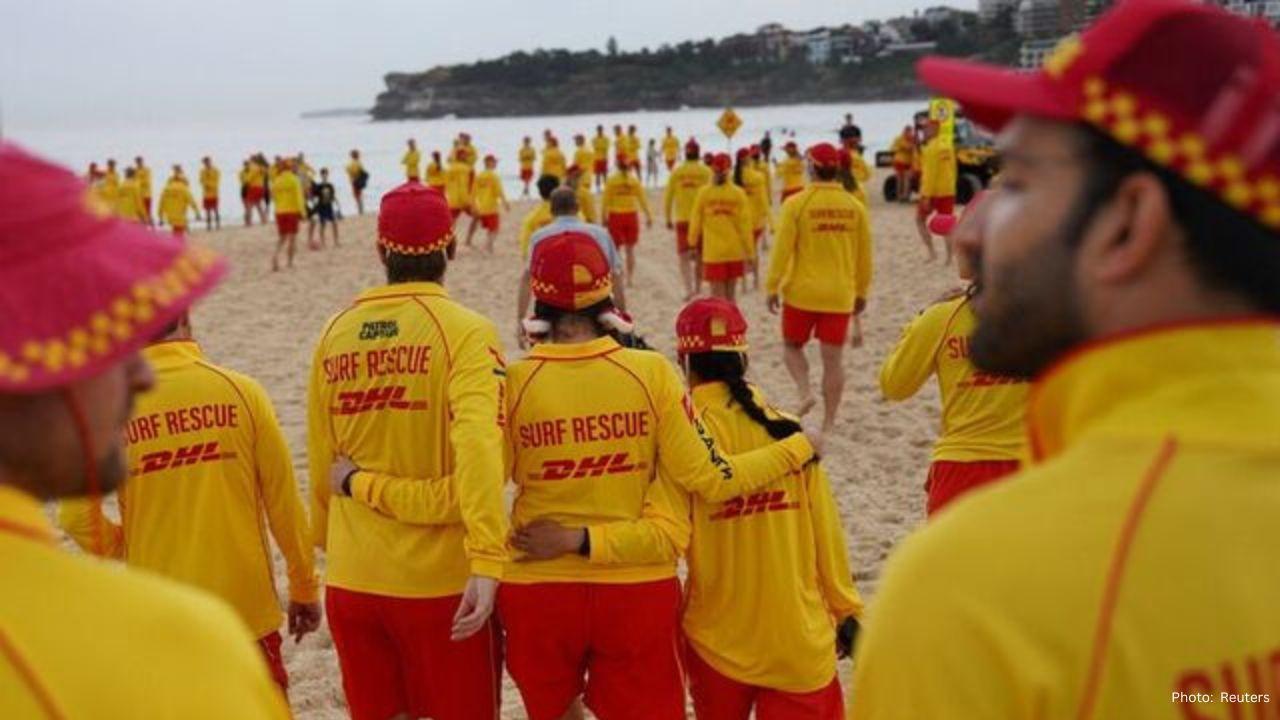
While political leaders debated laws and security, communities focused on healing and respect. Bondi Beach, which had been closed and heavily restricted after the shooting, slowly returned to life. Around 1,000 surf lifesavers went back on duty, restarting regular patrols.
Before beginning their work, the lifesavers stood together on the sand in their red and yellow uniforms. They observed a moment of silence to honor the victims. This simple act showed solidarity not only with the victims but also with the Jewish community.
Peter Agnew, president of Surf Life Saving Australia, said the tribute was a sign of respect and support. He said it was important for people to stand together, especially during such painful times.
Earlier, members of the Jewish community had gathered at Bondi Beach for prayers. Hundreds of swimmers and surfers formed a large circle in the water, creating a powerful image of unity and remembrance. These moments showed that while hatred can cause harm, it cannot erase compassion and human connection.
This tragedy has forced Australia to look closely at the growing problem of hate-driven violence. It has raised questions about how society deals with extremist ideas, how early warnings are handled, and how communities can be better protected.
At the same time, it has shown the strength of ordinary people. From lifesavers and first responders to faith leaders and citizens, many stepped forward to support one another. The message was clear: Australia’s diversity is a strength, not a weakness.
Prime Minister Albanese’s statement that the Jewish community is “completely unbreakable” reflects a larger truth. The attack caused deep pain, but it also brought people together. It reminded the nation that democracy, respect, and shared values must always stand stronger than fear.
As Australia prepares for its national day of reflection, the focus remains on honoring the victims, supporting the wounded, and ensuring such an attack never happens again. Stronger laws may help, but lasting change will come from unity, education, and the courage to stand against hate in all its forms.
The road ahead will not be easy. Healing takes time, and trust must be rebuilt. But the response from leaders and communities shows that Australia is determined to move forward — together, united, and unbroken.
#trending #latest #Australia #BondiAttack #StandAgainstHate #JewishCommunity #Unity #NoToTerrorism #Peace #Humanity #Sydney #NationalReflection



Advances in Aerospace Technology and Commercial Aviation Recovery
Insights into breakthrough aerospace technologies and commercial aviation’s recovery amid 2025 chall

Defense Modernization and Strategic Spending Trends
Explore key trends in global defense modernization and strategic military spending shaping 2025 secu

Tens of Thousands Protest in Serbia on Anniversary of Deadly Roof Collapse
Tens of thousands in Novi Sad mark a year since a deadly station roof collapse that killed 16, prote

Canada PM Carney Apologizes to Trump Over Controversial Reagan Anti-Tariff Ad
Canadian PM Mark Carney apologized to President Trump over an Ontario anti-tariff ad quoting Reagan,

The ad that stirred a hornets nest, and made Canadian PM Carney say sorry to Trump
Canadian PM Mark Carney apologizes to US President Trump after a tariff-related ad causes diplomatic

Bengaluru-Mumbai Superfast Train Approved After 30-Year Wait
Railways approves new superfast train connecting Bengaluru and Mumbai, ending a 30-year demand, easi




