Post by : Amit
Photo : X / The Jakarta Post
A Historic Defense Deal in the Indo‑Pacific
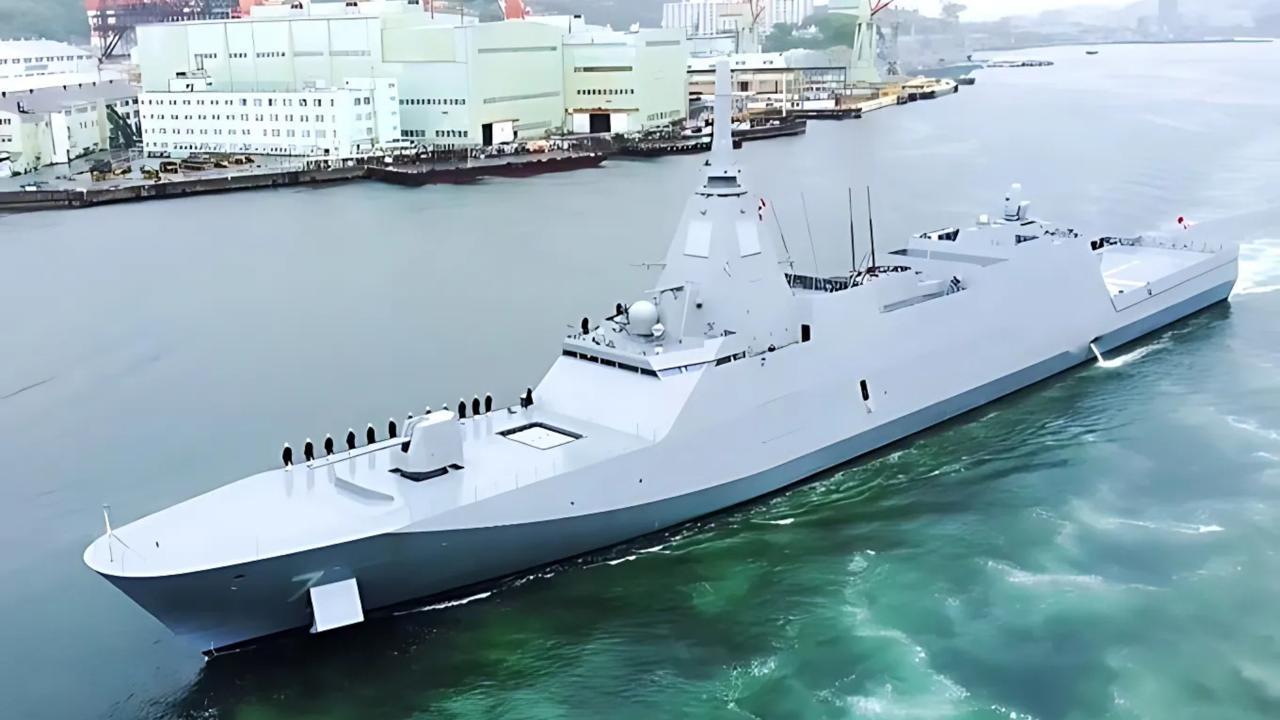
In a landmark move set to reshape naval power dynamics in the Indo‑Pacific, Australia has announced plans to purchase 11 advanced warships from Japan. The deal — the first of its kind between the two nations — underscores the growing strategic partnership as both countries seek to counter evolving security threats in the region.
The announcement came after high‑level defense and diplomatic talks in Canberra and Tokyo, signaling not only a major procurement milestone but also a shift in Japan’s own defense export policy. The transfer marks one of Japan’s most significant arms sales since it eased long‑standing restrictions on weapons exports in 2014.
Australian Defence Minister Richard Marles described the agreement as “a transformative step in our maritime capability and a clear signal of our shared commitment to a free and open Indo‑Pacific.”
Strategic Implications for the Region
The acquisition will provide the Royal Australian Navy with some of the most sophisticated surface combatants in the region. While officials have not disclosed specific ship classes or contract value, defense sources suggest that the vessels will incorporate advanced radar, missile defense systems, and anti‑submarine warfare capabilities tailored for high‑end conflict scenarios.
Analysts say the deal reflects both nations’ concern over rising tensions in the South China Sea and broader maritime disputes in Asia. By deepening defense ties, Australia and Japan are positioning themselves as key pillars of a regional security network alongside the United States.
“This is not just about ships — it’s about strategic alignment,” said Euan Graham, senior fellow at the International Institute for Strategic Studies. “Japan is becoming a more proactive defense partner, and Australia is diversifying its naval suppliers to enhance resilience.”
Japan’s Shift Toward Defense Exports
The deal highlights Japan’s evolving defense posture. For decades, Tokyo maintained a near‑total ban on exporting lethal weapons, a policy rooted in its post‑World War II pacifist constitution. But faced with an increasingly unstable regional environment, Japan has gradually relaxed those restrictions, allowing arms exports to close allies and partners.
Prime Minister Fumio Kishida has framed the policy shift as essential for Japan’s national security and for supporting like‑minded nations in Asia and the Pacific. The Australian contract will likely serve as a benchmark for future defense sales, giving Japanese shipbuilders a stronger foothold in the global naval market.
Industry experts believe Mitsubishi Heavy Industries and Japan Marine United are likely contenders for building the vessels, which could involve a mix of Japanese production and Australian assembly to ensure local industrial participation.
Boosting Australia’s Naval Modernization
For Australia, the warship purchase forms part of a broader defense modernization effort. Alongside the trilateral AUKUS partnership with the United States and United Kingdom, which will provide nuclear‑powered submarines in the 2030s, Canberra is investing heavily in its surface fleet to maintain maritime superiority.
The new warships are expected to complement existing destroyers and frigates, enhancing Australia’s ability to conduct multi‑mission operations ranging from sea control to humanitarian response. The vessels will also strengthen interoperability with Japan’s Maritime Self‑Defense Force and other allied navies during joint exercises.
“This procurement gives Australia more flexibility and a stronger deterrent posture,” said Marcus Hellyer, a defense analyst at Strategic Analysis Australia. “It’s a clear signal that Canberra intends to project power and protect its sea lanes.”
Domestic and Industrial Considerations
The Australian government has indicated that it will seek industrial offsets as part of the deal, ensuring that local shipyards, suppliers, and workers benefit from the program. While full domestic construction may not be feasible due to schedule and cost factors, hybrid production — with final outfitting or sustainment in Australia — is under discussion.
Such an approach would mirror arrangements seen in other major defense programs, balancing speed of delivery with long‑term industrial development. The deal could also provide opportunities for technology transfer in shipbuilding, propulsion, and combat systems integration.
Regional Reactions and Diplomatic Balancing
The announcement is likely to draw a sharp response from Beijing, which has criticized previous defense pacts between Australia, Japan, and the U.S. as destabilizing. Chinese officials have warned that such moves could fuel an arms race in the Indo‑Pacific.
However, Australian leaders maintain that the purchase is a defensive measure aimed at safeguarding trade routes and deterring aggression. “This acquisition strengthens our ability to contribute to regional stability, not undermine it,” Marles emphasized.
Japan has also been careful to frame the deal within its constitutional limits, portraying the sale as part of broader efforts to support partners and ensure collective security.
Aligning with Broader Strategic Initiatives
The Australia‑Japan warship deal complements other regional defense initiatives, including the Quad grouping of Australia, Japan, India, and the United States, which has pledged greater maritime cooperation. It also aligns with Washington’s strategy of empowering allies to share the burden of maintaining Indo‑Pacific security.
By sourcing vessels from Japan, Australia reduces its over‑reliance on European suppliers while forging closer ties with an Asian partner that shares similar concerns about freedom of navigation and regional stability.
Delivery Timeline and Next Steps
Details on the delivery schedule have not been finalized, but officials suggest that the first vessels could enter Australian service before the end of the decade. Both governments will finalize technical specifications, industrial arrangements, and training programs over the next two years.
Australian naval personnel are expected to begin training alongside Japanese counterparts to familiarize themselves with the ship systems and operating doctrines. Joint exercises will likely expand as the partnership deepens, laying the groundwork for seamless integration once the vessels are delivered.
Broader Implications for the Defense Industry
The deal is also a major boost for Japan’s defense industrial base, which has long struggled to secure export contracts despite its reputation for high‑quality engineering. Winning a contract with a trusted partner like Australia could open doors to future sales in Southeast Asia, Europe, and the Middle East.
For Australia, diversifying procurement sources could enhance supply chain resilience, particularly at a time when defense manufacturing faces global bottlenecks. “By building closer ties with Japan, Australia gains not just ships, but access to a reliable partner in sustaining them,” Hellyer noted.
The agreement between Australia and Japan represents more than a defense contract — it is a strategic statement about the future security architecture of the Indo‑Pacific. With both nations concerned about maritime stability, the warship purchase demonstrates a willingness to deepen defense integration and share responsibility for safeguarding regional sea lanes.
As the ships are built and delivered over the coming years, the deal is expected to strengthen bilateral relations, enhance interoperability with allied forces, and reinforce deterrence against potential threats. It also underscores Japan’s emergence as a credible defense exporter and Australia’s determination to modernize its navy at pace.
“This is an historic step for both nations,” Graham said. “It reflects a shared recognition that the Indo‑Pacific’s security challenges require strong, coordinated action — and that partnerships are the foundation for meeting them.”
Australia, Japan, Defense Pact



Advances in Aerospace Technology and Commercial Aviation Recovery
Insights into breakthrough aerospace technologies and commercial aviation’s recovery amid 2025 chall

Defense Modernization and Strategic Spending Trends
Explore key trends in global defense modernization and strategic military spending shaping 2025 secu

Tens of Thousands Protest in Serbia on Anniversary of Deadly Roof Collapse
Tens of thousands in Novi Sad mark a year since a deadly station roof collapse that killed 16, prote

Canada PM Carney Apologizes to Trump Over Controversial Reagan Anti-Tariff Ad
Canadian PM Mark Carney apologized to President Trump over an Ontario anti-tariff ad quoting Reagan,

The ad that stirred a hornets nest, and made Canadian PM Carney say sorry to Trump
Canadian PM Mark Carney apologizes to US President Trump after a tariff-related ad causes diplomatic

Bengaluru-Mumbai Superfast Train Approved After 30-Year Wait
Railways approves new superfast train connecting Bengaluru and Mumbai, ending a 30-year demand, easi




