Post by : Saif
Australia is facing a difficult and emotional moment as one of its most respected literary events, the Adelaide Writers’ Week, has been cancelled. The decision followed a major backlash after a Palestinian-Australian author was removed from the program. What began as a move meant to avoid tension has instead opened a deep national debate about free speech, censorship, fear, and cultural fairness.
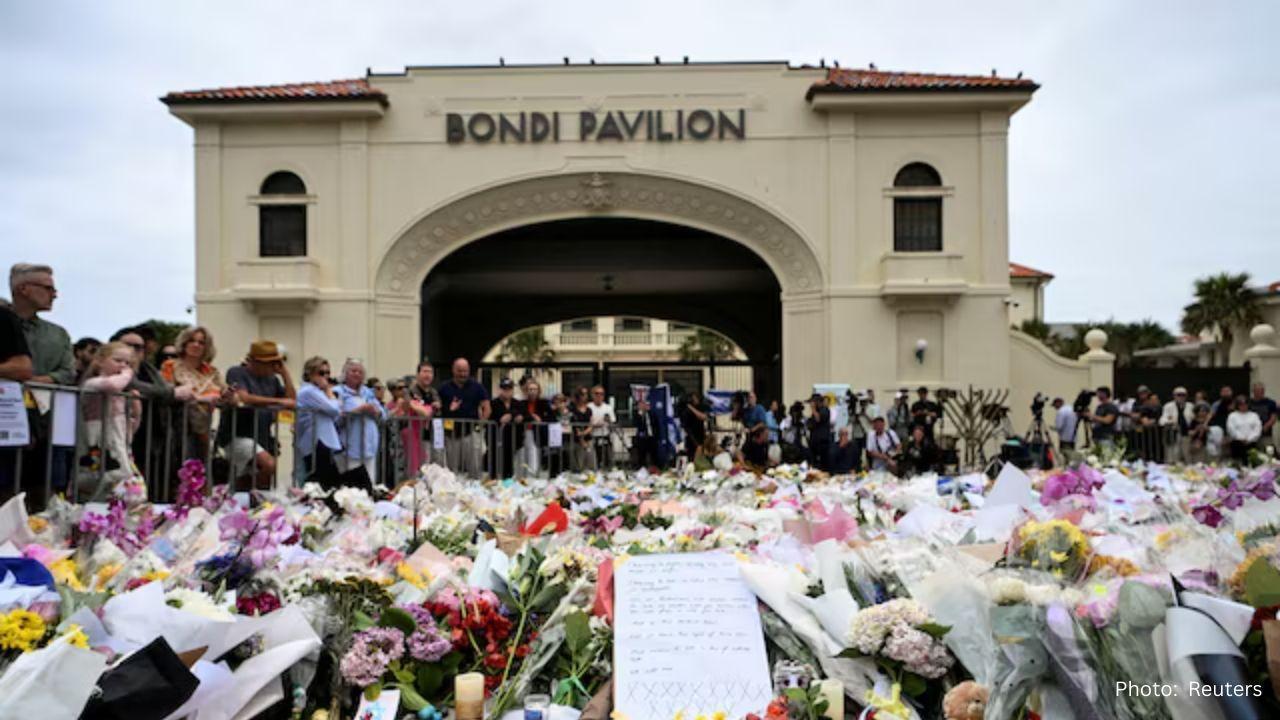
At the center of the controversy is novelist and academic Randa Abdel-Fattah, who was disinvited from the festival by the event’s board. The board said her appearance would not be “culturally sensitive” so soon after the deadly shooting at a Jewish Hanukkah celebration at Bondi Beach in Sydney last month. That attack killed 15 people and shocked the entire nation.
The shooting, which police say was inspired by the Islamic State group, led to strong calls across Australia to confront antisemitism and violent extremism. Governments at both state and federal levels responded by proposing tighter hate speech laws and limits on protests and slogans. While these actions were meant to protect communities, critics say they also risk limiting free expression.
The festival’s decision to remove Abdel-Fattah quickly backfired. More than 180 writers announced they would boycott the event. High-profile international authors withdrew their participation, including former New Zealand Prime Minister Jacinda Ardern, British novelist Zadie Smith, Australian writer Kathy Lette, American author Percival Everett, and former Greek finance minister Yanis Varoufakis.
Soon after, Louise Adler, the festival’s director, resigned. Adler, who is Jewish and the daughter of Holocaust survivors, said she could not accept a decision that silenced a writer because of political pressure. In a powerful public statement, she warned that banning voices out of fear sets a dangerous example and weakens Australia’s democratic values.
“This decision weakens freedom of speech,” Adler wrote, adding that it signals a future where pressure groups decide who is allowed to speak and who is not.
Abdel-Fattah herself strongly condemned the move, calling it “a blatant and shameless act of anti-Palestinian racism and censorship.” She argued that excluding her did not protect communities but instead punished her identity and views. Many supporters echoed this concern, saying that removing one voice does nothing to heal national wounds.
Facing intense criticism, the Adelaide Festival board later apologized. In a public statement, it admitted the decision caused more division rather than unity. The board said it acted out of respect for a grieving community but accepted that the outcome was harmful. Ultimately, the board announced the festival would be cancelled entirely and that remaining members would step down.
The situation has sparked a wider discussion across Australia. Many people are asking where the line should be drawn between sensitivity and censorship. While protecting communities from hate is essential, so is protecting open discussion—especially at a writers’ festival, a place meant for ideas, debate, and diverse voices.
Prime Minister Anthony Albanese added to the national moment by announcing a day of mourning on January 22 to honor the victims of the Bondi Beach attack. The grief is real and deep, and the need for safety is clear. However, critics argue that fear must not guide cultural decisions.
The board later claimed the issue was not about identity or political disagreement, but about how freedom of expression is changing after what it called the worst terror attack in Australia’s history. Still, many writers and readers remain unconvinced.
This episode shows how fragile freedom of speech can be during times of crisis. When emotions run high, institutions may choose silence over dialogue. But history often shows that open conversation, even when uncomfortable, is the path toward understanding.
Writers’ festivals exist to challenge ideas, not avoid them. Cancelling an entire event because one voice was deemed too sensitive sends a troubling message—not only to writers but to society as a whole.
Australia now faces a choice. It can protect its democratic values by allowing peaceful expression and debate, or it can let fear decide who gets heard. The cancellation of Adelaide Writers’ Week may be remembered as more than a cultural loss. It may become a warning about what happens when silence replaces courage.
#trending #latest #AustraliaNews #FreeSpeech #WritersFestival #AdelaideWritersWeek #CensorshipDebate #CulturalFreedom #HumanRights #LiteraryCommunity



Advances in Aerospace Technology and Commercial Aviation Recovery
Insights into breakthrough aerospace technologies and commercial aviation’s recovery amid 2025 chall

Defense Modernization and Strategic Spending Trends
Explore key trends in global defense modernization and strategic military spending shaping 2025 secu

Tens of Thousands Protest in Serbia on Anniversary of Deadly Roof Collapse
Tens of thousands in Novi Sad mark a year since a deadly station roof collapse that killed 16, prote

Canada PM Carney Apologizes to Trump Over Controversial Reagan Anti-Tariff Ad
Canadian PM Mark Carney apologized to President Trump over an Ontario anti-tariff ad quoting Reagan,

The ad that stirred a hornets nest, and made Canadian PM Carney say sorry to Trump
Canadian PM Mark Carney apologizes to US President Trump after a tariff-related ad causes diplomatic

Bengaluru-Mumbai Superfast Train Approved After 30-Year Wait
Railways approves new superfast train connecting Bengaluru and Mumbai, ending a 30-year demand, easi




