Post by : Avinab Raana
Photo : X / PR Newswire Top Stories
Autel Energy Completes First U.S. EV + BESS Integration
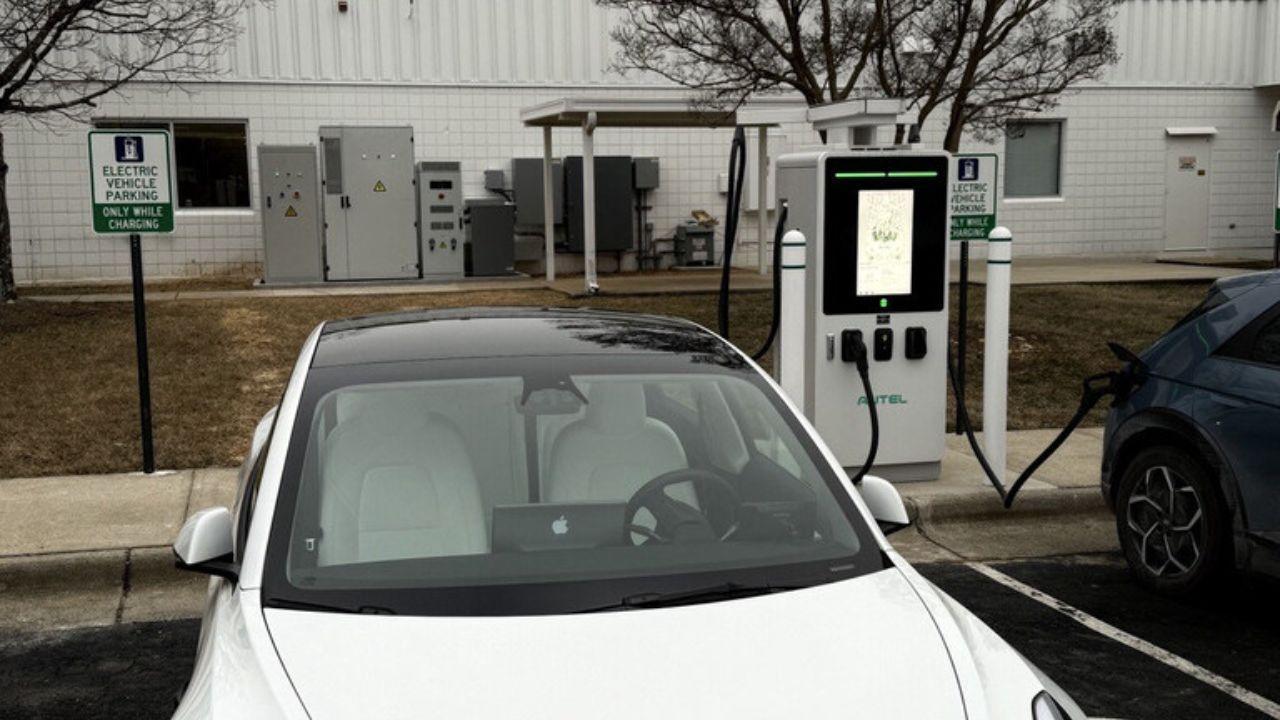
Autel Energy has successfully completed its first fully integrated project combining EV charging and Battery Energy Storage System (BESS) in the United States. This landmark installation, approved by Duke Energy, sits at Autel’s manufacturing facility in Greensboro, North Carolina. It features a 250 kWh battery cabinet tied to a 125 kW power conversion system, enabling the site to power one DC fast charger (Autel MaxiCharger) alongside two Compact DC units. With this move, Autel demonstrates its capacity to deliver turnkey EV battery storage solutions that balance power, resilience, and cost efficiency.
The Greensboro project marks more than a proof of concept. It signals Autel Energy’s expansion of its offerings to wide-ranging, grid-friendly turnkey design services across the U.S. The company is now quoting EV + BESS installations nationwide, with more sites expected to be energized before the end of 2025. With utility-compliance, safety certifications, and modular architecture, the solutions are tailored for commercial sites, fleet operators, municipalities, and others who need scalable fast-charging plus storage capabilities.
Meeting Grid Demands with Battery Storage Integration
Energy markets in many U.S. regions face challenges from peak demand charges and fluctuating grid supply. Autel Energy’s EV + BESS model addresses these by using storage to handle demand-charge peaks, shifting loads to off-peak periods, and reducing strain on the grid. In Greensboro, the battery system works in tandem with charging units to smooth out power usage. By leveraging the battery during highest cost periods, site operators can cut electricity costs significantly.
In addition to cost savings, integration of EV charging with BESS increases energy resilience. Autel’s design allows for greater uptime when grids are under stress, and the storage system can serve as backup or buffer during short interruptions. Because the systems are modular, future expansion—adding more chargers, increasing storage or tying renewable sources into the mix—is simpler than with standard standalone chargers.
Turnkey Services: From Design to Deployment
Autel Energy is not just selling components; it is delivering end-to-end services. Each project begins with site modeling and engineering assessments, followed by design work, permitting, utility approval, installation, commissioning, and long-term monitoring. The Greensboro installation is fully permitted by Duke Energy, demonstrating Autel’s ability to navigate regulatory and interconnection hurdles.
Standardized design templates allow Autel to scale systems from 250 kWh to multi-megawatt hours, depending on client needs. Clients receive systems built with UL 9540A certified BESS components, ensuring safety and quality. Equipment and installation processes are designed to be compliant with local utility interconnection rules, making the standards consistent across different jurisdictions. This turnkey service model removes much of the risk, complexity, and delay often associated with energy storage and EV charging installations.
Operational Efficiency and Cost Management
One of the central drivers behind combining EV charging with battery storage is improved cost management. Autel’s solution allows sites to avoid or reduce expensive utility demand charges by shifting when power is drawn heavily. The integrated system in Greensboro reduces demand spikes by using stored energy during those peaks, while charging units can operate when electricity pricing is more favorable.
Furthermore, energy storage smooths power flows to allow fast chargers to operate without overloading local infrastructure. By moderating when and how fast a charger draws from the grid, the system helps avoid the need for expensive grid upgrades or penalties for power surges. Over time, these savings in energy cost, infrastructure investment, and operational inefficiencies contribute to better total cost of ownership for site hosts.
Safety, Certification, and Grid Compatibility
Safety has been central to Autel’s approach. The battery cabinet deployed in Greensboro is built with certified components, and the whole system meets UL 9540A standards. These certifications ensure the battery energy storage behaves predictably under stress, heat, or fault conditions. Autel also designs its systems to adhere to utility interconnection requirements, which vary by state and utility.
Compatibility with grid infrastructure and regulatory frameworks is one of the biggest hurdles in energy storage deployments. Autel addresses this by partnering with utilities like Duke Energy, by designing systems that meet local interconnection rules, and by incorporating engineering that supports safe operation under a variety of grid conditions. This attention to compliance has allowed its first project to clear regulatory approvals, helping build trust in its turnkey model.
Market Demand and Target Customers
Autel Energy is positioning its EV + BESS solutions for several market segments. Fleet operators, commercial site owners, municipalities, utility partners, and sites eligible for federal funding under programs like NEVI (National Electric Vehicle Infrastructure) are key targets. Those customers often face high demand charges, require reliability, or wish to ensure resilience and sustainability in their charging operations.
By offering storage plus charging, Autel enables clients to support higher power chargers without paying escalating electricity costs or facing punitive demand charges. For example, a fleet depot installing multiple DC fast chargers would otherwise need large grid upgrades; pairing those chargers with storage mitigates or avoids some of that cost. Similarly, sites in remote or less reliable grid areas can benefit from storage backup in case of outages or grid instability.
Scalability and Future Plans
Autel’s business strategy includes deploying several more EV + BESS projects before 2026, building on the Greensboro installation. Its solution is designed for scalability: modular battery and charger additions, energy storage expansion, and ability to integrate renewable energy sources such as solar or wind where feasible.
Autel is also preparing standardized quoting tools so that clients can get price estimates, timetables, and engineering designs more quickly. This speed in quoting and deployment is part of becoming a preferred provider in a rapidly growing market. As demand for EV charging rises across commercial settings, having proven, utility-approved models gives Autel a competitive advantage.
Environmental Benefits and Grid Stability
Combining EV charging with battery energy storage offers environmental advantages beyond emissions reduction. By reducing reliance on grid power during peak fossil-fuel generation periods, Autel’s integrated systems help lower carbon footprints. Storage systems can absorb excess renewable energy when available, then dispense it when renewable generation dips or demand spikes.
In addition, grid stability improves when large charging loads are buffered by storage. Sudden spikes in charging demand—say, from a fleet charging many vehicles simultaneously—can stress local grids and cause voltage issues. Autel’s BESS alleviates those stresses, enabling smoother power draw and reducing the need for expensive grid reinforcement or contingency power solutions.
Challenges and Considerations
Despite the promise, integrating EV charging with storage is complex. Engineering challenges include ensuring battery lifetime under frequent charge/discharge cycles, managing thermal performance, and handling maintenance of both battery and charger units. Cost remains high for large energy storage systems, and return on investment depends heavily on how much clients can save via demand charge reduction.
Furthermore, permitting and utility interconnection processes remain lengthy in many jurisdictions. Autel has managed approvals in North Carolina, but repeating that across varied state regulatory environments requires navigating different codes, safety inspections, and utility requirements. Users considering adoption must also account for physical space, site layout, and local logistical constraints.
Implications for the Broader EV Ecosystem
Autel’s turnkey model could help accelerate adoption of high-power EV charging infrastructure nationwide. As more fleet operators, municipalities, and commercial sites face pressure to electrify, having reliable, cost-efficient, and utility-approved systems simplifies decision making. Autel Energy’s work demonstrates that combining storage with charging is not only feasible but increasingly practical.
This trend also encourages utilities to update grid planning, rate structures, and incentives for EV + BESS deployments. Because customers saving on demand charges also reduce peak load pressures on utilities, there is incentive alignment. Public policy, grant funding, and utility partnerships may increasingly favor integrated systems like those Autel is offering.
Autel Energy Powers Toward a Sustainable Charging Future
Autel Energy’s launch of its integrated EV battery storage turnkey solutions marks an important moment in the evolution of charging infrastructure. The successful Greensboro project proves that combining fast charging with energy storage, regulatory compliance, and utility collaboration can deliver real economic and environmental value.
As Autel scales its offerings, it will help lower barriers for businesses that want to deploy high-power fast charging without incurring high energy costs or grid burdens. The path forward involves not just more chargers, but smarter systems that integrate storage, flexibility, and resilience. Autel’s model points toward a future where EV charging is sustainable, cost-effective, and able to support the growing momentum of electrification.
For business owners, fleet operators, and municipalities planning their EV transition, Autel’s turnkey EV + BESS solutions offer a compelling blueprint. Energized sites before the end of 2025 are not just possible—they are now being delivered. The promise of efficient, grid-friendly, and future-ready EV charging is arriving sooner than many expected.
Autel Energy, EV battery storage, Turnkey energy solutions



Advances in Aerospace Technology and Commercial Aviation Recovery
Insights into breakthrough aerospace technologies and commercial aviation’s recovery amid 2025 chall

Defense Modernization and Strategic Spending Trends
Explore key trends in global defense modernization and strategic military spending shaping 2025 secu

Tens of Thousands Protest in Serbia on Anniversary of Deadly Roof Collapse
Tens of thousands in Novi Sad mark a year since a deadly station roof collapse that killed 16, prote

Canada PM Carney Apologizes to Trump Over Controversial Reagan Anti-Tariff Ad
Canadian PM Mark Carney apologized to President Trump over an Ontario anti-tariff ad quoting Reagan,

The ad that stirred a hornets nest, and made Canadian PM Carney say sorry to Trump
Canadian PM Mark Carney apologizes to US President Trump after a tariff-related ad causes diplomatic

Bengaluru-Mumbai Superfast Train Approved After 30-Year Wait
Railways approves new superfast train connecting Bengaluru and Mumbai, ending a 30-year demand, easi




