Post by : Saif
Bangladesh is facing one of its most tense moments in recent years after the death of a young student leader triggered violent protests across the country. The killing of Sharif Osman Hadi, a rising political voice among students and youth activists, has shaken public confidence, deepened political divisions, and raised serious concerns about peace ahead of the national elections scheduled for February.
Hadi, 32, was a spokesperson for Inquilab Mancha, a platform that describes itself as a revolutionary cultural and political movement. He became widely known for his role in the student-led protests that forced former Prime Minister Sheikh Hasina to flee the country in 2024. In recent months, he had emerged as a strong voice demanding political reform and greater accountability from those in power. He was also preparing to contest the upcoming elections, making his death even more sensitive and politically charged.
Last Friday, while launching his election campaign in Dhaka, Hadi was shot in the head by masked attackers. The incident shocked the nation. He was rushed to a local hospital and later flown to Singapore for advanced treatment. After spending six days on life support, doctors declared him dead on Thursday. News of his death spread rapidly and led to an immediate outpouring of anger and grief across Bangladesh.
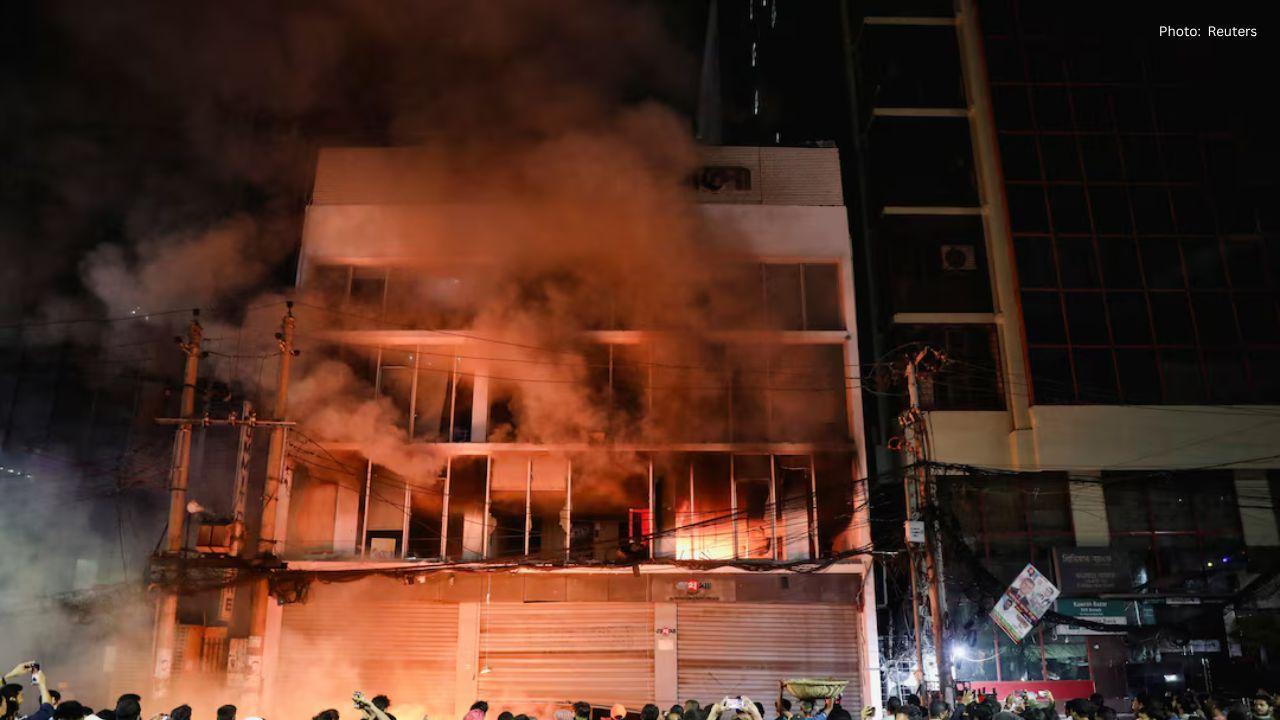
As his body was prepared to be brought back for burial, crowds gathered in large numbers. What began as mourning soon turned into violent protests in several cities. Demonstrators, many chanting slogans in Hadi’s name, vandalised buildings, set fires, and clashed with security forces. Videos shared on social media showed mobs attacking the offices of leading newspapers, including Prothom Alo and the Daily Star, symbols of mainstream media in the country.
Firefighters were called in to control blazes, and journalists trapped inside buildings had to be rescued. Police and paramilitary forces were deployed in large numbers to prevent further damage, but tensions remained high in many areas. In several districts, protesters blocked highways, disrupting transport and daily life.
The unrest was not limited to the capital. In Rajshahi, protesters used a bulldozer to demolish an office of the Awami League, the party of former Prime Minister Hasina. In Chittagong, the country’s main port city, demonstrators attacked the Indian Assistant High Commission and set fire to a house belonging to a former Awami League education minister. Cultural landmarks were also targeted. The historic home of Sheikh Mujibur Rahman, Bangladesh’s first president and Hasina’s father, was vandalised and burned once again. The well-known cultural organisation Chhayanaut in Dhaka was also attacked and set on fire.
These attacks show that the anger on the streets is not only about one killing. They reflect deeper frustration with the political system, long-standing divisions, and growing anti-India sentiment. Hadi was known as a strong critic of India, and his supporters believe foreign influence has harmed Bangladesh’s democracy. Earlier in the week, even before his death, hundreds of protesters marched toward the Indian High Commission, shouting slogans and demanding that Hasina be sent back from India to face justice.
Bangladesh is currently governed by an interim administration led by Nobel Peace Prize winner Muhammad Yunus. He took charge in August 2024 after Hasina fled during massive student protests. His government promised reforms, free elections, and a new political beginning. However, delays in reforms and growing political pressure have caused fresh protests in recent months. Hasina’s Awami League party has been barred from the upcoming vote, but it has warned that excluding it could lead to unrest.
In a televised address after Hadi’s death, Yunus described the killing as a major loss for the country’s political and democratic future. He urged people to remain calm and warned that violence would only damage Bangladesh’s chances of holding a fair and credible election. He promised a transparent investigation and said those responsible would be brought to justice. The interim government also declared Saturday a day of state mourning, with flags flown at half-mast and special prayers held nationwide.
While these steps show concern, many citizens remain unconvinced. Protesters are demanding quick arrests and clear answers. For them, Hadi’s death is not just a crime but a symbol of how unsafe political participation has become. Young activists fear that speaking out can now cost them their lives.
This crisis comes at a critical time. Elections are meant to restore democratic order after years of political turmoil. Instead, the violence risks pushing the country deeper into instability. Attacks on media houses threaten press freedom. Burning cultural institutions weakens national unity. Targeting diplomatic missions harms Bangladesh’s international image.
The challenge for the interim government is enormous. It must ensure law and order without using excessive force. It must investigate the killing honestly, without political bias. And it must rebuild trust among citizens who are tired of broken promises and repeated cycles of violence.
Sharif Osman Hadi’s death has become a turning point. Whether it leads to justice and reform, or more chaos and division, will depend on the actions taken in the coming days. Bangladesh stands at a crossroads. Calm leadership, fair investigation, and respect for democratic values are now more important than ever.
#trending #latest #BangladeshUnrest #StudentLeaderDeath #SharifOsmanHadi #BangladeshPolitics #DhakaProtests #ElectionCrisis #SouthAsiaNews #armustnews



Advances in Aerospace Technology and Commercial Aviation Recovery
Insights into breakthrough aerospace technologies and commercial aviation’s recovery amid 2025 chall

Defense Modernization and Strategic Spending Trends
Explore key trends in global defense modernization and strategic military spending shaping 2025 secu

Tens of Thousands Protest in Serbia on Anniversary of Deadly Roof Collapse
Tens of thousands in Novi Sad mark a year since a deadly station roof collapse that killed 16, prote

Canada PM Carney Apologizes to Trump Over Controversial Reagan Anti-Tariff Ad
Canadian PM Mark Carney apologized to President Trump over an Ontario anti-tariff ad quoting Reagan,

The ad that stirred a hornets nest, and made Canadian PM Carney say sorry to Trump
Canadian PM Mark Carney apologizes to US President Trump after a tariff-related ad causes diplomatic

Bengaluru-Mumbai Superfast Train Approved After 30-Year Wait
Railways approves new superfast train connecting Bengaluru and Mumbai, ending a 30-year demand, easi




