Post by : Amit
Photo : Instagram / Marketing.Stories
Sudden Crash Sends Shock Through Aviation Community
A Beechcraft B200 Super King Air aircraft crashed shortly after initiating takeoff from London Southend Airport in the early hours of Sunday, July 13, 2025, sending emergency services into high alert and prompting an urgent investigation into the cause of the incident. The aircraft came down within the airport perimeter, triggering a full-scale emergency response from airport fire crews and Essex Police.
The incident, which occurred just moments after rotation during the takeoff roll, has raised serious concerns over the aircraft's condition and possible mechanical or operational failures. Airport officials have confirmed that no commercial passenger flights were involved, as the Beech B200 is typically used for private, chartered, or utility operations.
Aircraft Details: Beechcraft B200 Super King Air
The aircraft involved in the crash was identified as a Beechcraft Super King Air B200, a widely used twin-engine turboprop known for its versatility in business aviation, medical transport, and surveillance roles. The B200 is a proven performer in short-haul operations and is equipped with two Pratt & Whitney Canada PT6A engines.
Built for performance in regional and general aviation sectors, the aircraft is generally praised for its reliability. However, the model is not immune to performance issues under specific conditions such as sudden wind shear, engine imbalance, or system failures during high workload phases like takeoff or landing.
Crash Timeline and Initial Witness Accounts
According to early reports, the aircraft had taxied normally and lined up for departure from one of Southend’s main runways. Shortly after takeoff, the aircraft is said to have struggled to gain altitude and reportedly veered off its flight path before crashing within airport boundaries. Witnesses at the airport reported hearing a sudden “engine surge” or abnormal noise just before the aircraft descended sharply.
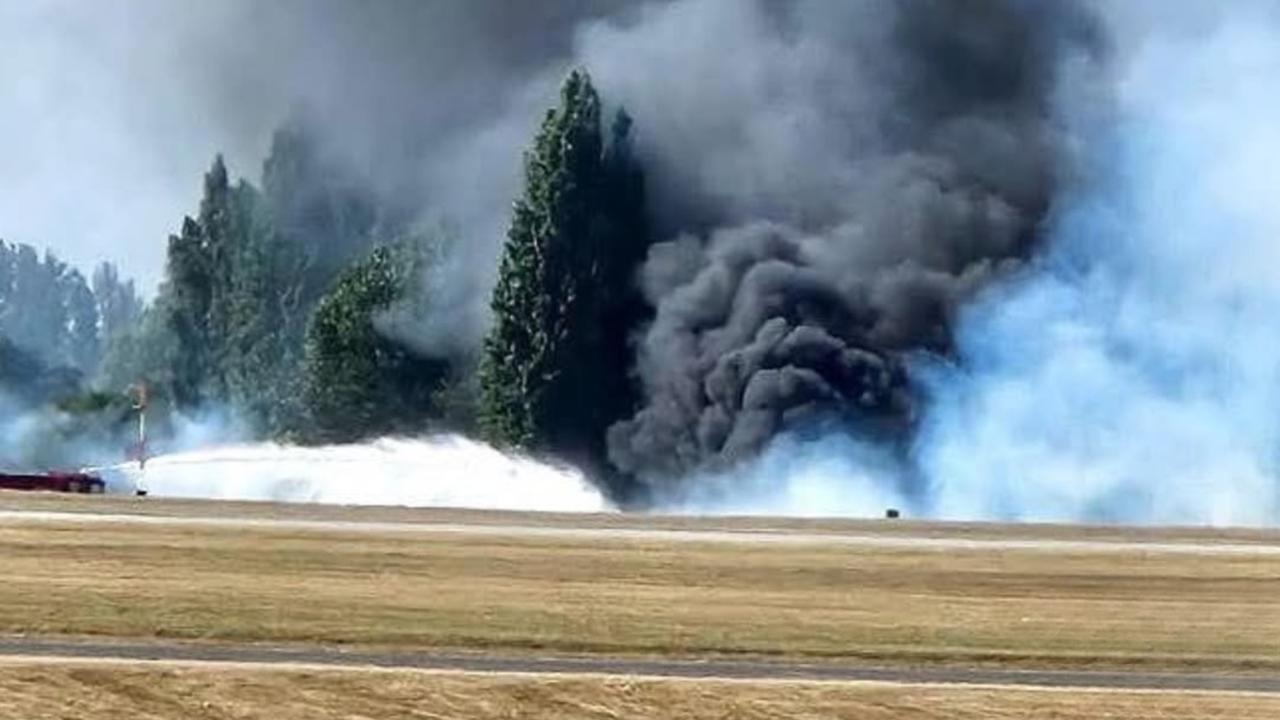
Eyewitness accounts also describe thick smoke rising from the crash site shortly after impact, followed by the rapid arrival of fire and rescue vehicles. Several fire engines and ambulances were seen stationed along the affected runway, while airport operations were temporarily suspended to prioritise rescue efforts and preserve the crash scene for investigators.
Emergency Services Respond Within Minutes
Essex Fire and Rescue Services confirmed that multiple fire units were dispatched to the scene within minutes of the incident. Their teams worked quickly to suppress any risk of fire and stabilize the wreckage. Local police and airport security cordoned off the area, ensuring safety for nearby airport personnel and preserving the scene for aviation investigators.
As of this writing, authorities have not officially confirmed the number of people on board or their condition. However, unverified early reports suggest that the aircraft had a limited number of occupants, possibly a pilot and one or two crew or passengers. Updates from health authorities and the Air Accidents Investigation Branch (AAIB) are expected later in the day.
Investigators Mobilized: AAIB Takes Over the Case
The UK’s Air Accidents Investigation Branch (AAIB) has confirmed that its inspectors have been dispatched to London Southend to launch a formal investigation into the crash. Their focus will be on examining flight data, weather conditions at the time of departure, pilot experience, maintenance logs, and communication with air traffic control.
AAIB officials are expected to examine the cockpit voice recorder (CVR), if equipped, as well as the aircraft’s maintenance history and any recent reports of technical issues. A preliminary report is expected within a few days, though a full investigation could take several weeks or months, depending on findings.
Flight Suspensions and Runway Disruption
Operations at London Southend Airport were partially suspended in the immediate aftermath of the crash. While other parts of the terminal remained functional, the affected runway was closed for several hours to accommodate emergency crews and investigators. Passengers on commercial flights were advised to check with their airlines for potential delays or re-routes.
Southend Airport issued a statement confirming that emergency protocols were followed and that staff coordinated closely with external agencies to manage the situation safely. The airport has since reopened its secondary runway for limited operations, though residual delays are likely to continue throughout the day.
Safety Questions Re-emerge Around General Aviation
Though the Beechcraft King Air series is considered a robust and dependable platform, this latest crash may renew scrutiny of general aviation safety standards in the UK. While commercial aviation maintains rigorous inspection and pilot certification frameworks, smaller aircraft in private or special-use roles can sometimes fall into regulatory grey zones.
Aviation analysts point out that factors such as pilot fatigue, underreported technical issues, or insufficient pre-flight checks can contribute to accidents during high-risk flight phases. With takeoff being among the most critical moments of any flight, even minor anomalies in thrust, balance, or configuration can lead to sudden loss of control.
Historical Context and Previous Incidents
The UK has seen a number of general aviation incidents involving similar turboprop aircraft over the past decade, though most have been isolated events. The Beechcraft King Air family, including B200 variants, has a long global service history with relatively low accident rates when maintained and operated within recommended guidelines.
Still, accidents involving these aircraft often trigger a wave of internal reviews by operators, particularly charter services and medical evacuation providers who depend heavily on such airframes. Insurance agencies and civil aviation boards may also initiate their own inquiries alongside official investigations.
Public Reaction and Industry Response
The crash has drawn immediate attention from the UK aviation community, including pilot forums, industry associations, and airport safety experts. Many are calling for renewed investment in predictive maintenance tools, enhanced runway safety procedures, and updated pilot training for emergency scenarios.
Public reactions on social media have ranged from concern to praise for the quick action of emergency services. Aviation blogs and independent safety analysts have also begun speculating on possible causes, though official commentary remains cautious until the AAIB completes its initial findings.
Awaiting the Preliminary Report
As the situation stabilizes and the wreckage is cleared for analysis, all eyes now turn to the AAIB’s preliminary report, which will be crucial in identifying the root cause of the crash. Whether this incident was the result of mechanical failure, environmental factors, or pilot error, the outcome is likely to influence future safety guidance across regional and general aviation sectors.
Until then, the incident serves as a stark reminder of the thin margin for error in aviation—and the vital importance of rapid emergency response and transparent investigations in preserving trust and safety in the skies.
Aviation, Europe



Advances in Aerospace Technology and Commercial Aviation Recovery
Insights into breakthrough aerospace technologies and commercial aviation’s recovery amid 2025 chall

Defense Modernization and Strategic Spending Trends
Explore key trends in global defense modernization and strategic military spending shaping 2025 secu

Tens of Thousands Protest in Serbia on Anniversary of Deadly Roof Collapse
Tens of thousands in Novi Sad mark a year since a deadly station roof collapse that killed 16, prote

Canada PM Carney Apologizes to Trump Over Controversial Reagan Anti-Tariff Ad
Canadian PM Mark Carney apologized to President Trump over an Ontario anti-tariff ad quoting Reagan,

The ad that stirred a hornets nest, and made Canadian PM Carney say sorry to Trump
Canadian PM Mark Carney apologizes to US President Trump after a tariff-related ad causes diplomatic

Bengaluru-Mumbai Superfast Train Approved After 30-Year Wait
Railways approves new superfast train connecting Bengaluru and Mumbai, ending a 30-year demand, easi




