Post by : Amit
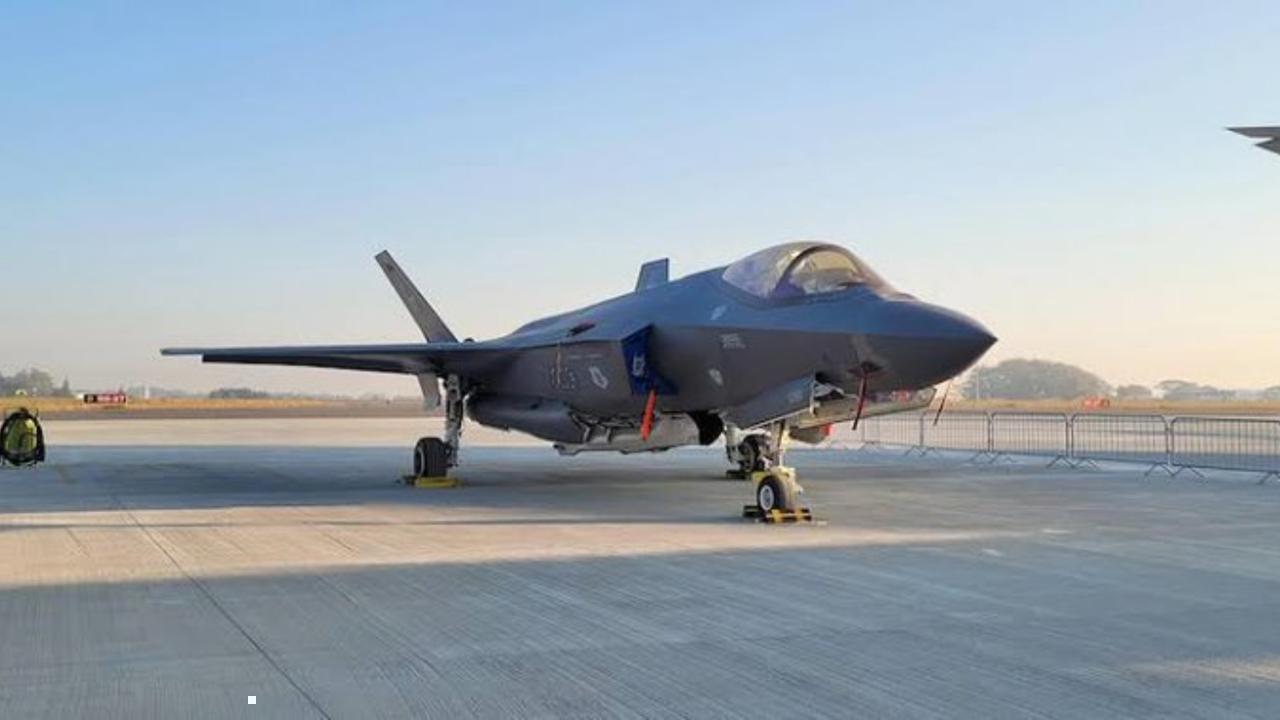
Photo : X / Beats in Brief
Belgium Doubles Down on F-35s Amid Growing Strategic Commitments
Belgium has formally decided to acquire an additional 11 Lockheed Martin F-35A fighter jets, taking its total fleet to 45. The announcement, made by Defense Minister Ludivine Dedonder, underscores Belgium’s intent to not only solidify its NATO obligations but also to position itself more decisively within Europe’s next-generation air combat ambitions—particularly the Future Combat Air System (FCAS).
The decision, though long expected in military circles, carries far-reaching implications for Belgium’s operational capacity, European defense integration, and its industrial standing in forthcoming sixth-generation fighter programs.
Strategic Shift: Beyond the Original Plan
Belgium initially ordered 34 F-35As in 2018 as replacements for its aging F-16s under a controversial €3.8 billion program that stirred intense political and public debate at the time. Critics questioned the operational need, cost, and overdependence on U.S. systems. However, six years later, the geopolitical environment looks markedly different.
With NATO refocusing on high-readiness forces and Russia’s continued aggression in Eastern Europe reshaping security calculations, Belgium has shifted from a reactive to a proactive posture.
Minister Dedonder emphasized this change: “We must now be able to rely on scalable air power, integrated with both NATO and EU operations. These additional F-35s will allow us to meet evolving threats and maintain interoperability.”
The added 11 aircraft will enhance Belgium’s ability to maintain a more robust rotation for NATO’s Very High Readiness Joint Task Force (VJTF), reinforce Baltic air policing missions, and contribute to long-range strike planning alongside key allies such as the U.S., the U.K., the Netherlands, and Italy.
Industrial Ambitions: The FCAS Signal
Perhaps more intriguing than the expanded F-35 acquisition is Belgium’s simultaneous announcement of interest in playing a larger industrial and strategic role in Europe’s FCAS program—a multinational effort led by France, Germany, and Spain to develop a sixth-generation fighter by 2040.
Though Belgium is not a formal member of the FCAS core group, Dedonder revealed that Brussels is exploring entry pathways—either as a second-tier partner or through subsystem development—particularly in areas like secure cloud networking, engine subsystems, and electronic warfare technologies.
"Belgium does not intend to be a passive consumer of defense technology,” Dedonder told Aviation Week. “We are investing in capabilities and partnerships that will position our defense industry in the future European security architecture.”
That’s a sharp pivot from the past, when Belgium’s domestic defense industry played a relatively limited role in air systems procurement.
Sources within the Belgian Ministry of Defense suggest the country is already negotiating collaboration channels with Dassault Aviation, Airbus Defence and Space, and Safran. Industry insiders believe Belgium could bring niche expertise in avionics software and NATO-compatible integration standards, which would complement the FCAS ecosystem’s modular approach.
Aligning with NATO’s 2% Target and EU Defense Goals
Belgium’s new purchase also marks a concrete step toward meeting NATO’s long-urged 2% GDP defense spending benchmark. After years of underinvestment, Belgium has raised its defense budget significantly in recent years, and with this new acquisition, its 2025 defense outlay will edge closer to the NATO target—currently sitting at 1.65%.
This move is strategic, not just symbolic. As NATO increases its emphasis on collective readiness and high-tech air superiority in response to both Russian threats and the rise of China as a global military power, F-35s remain a critical pillar of alliance air operations.
Moreover, this investment helps Belgium straddle the line between transatlantic dependence and European strategic autonomy—a balance EU leaders increasingly demand. The European Commission’s new European Defence Industrial Strategy (EDIS) encourages member states to strengthen indigenous development while staying aligned with NATO.
Operational Footprint: Ready for Joint Strike Missions
From an operational standpoint, Belgium’s enhanced fleet significantly increases its ability to engage in joint strike, ISR (intelligence, surveillance, reconnaissance), and deterrence missions.
The Royal Belgian Air Force (RBAF) plans to base its F-35As at Florennes and Kleine Brogel air bases. Initial deliveries are already underway, with the first jets undergoing testing and pilot training in the U.S.
According to Air Commodore Bart De Smet, “With 45 aircraft, we gain flexibility in rotating units for readiness, sustainment, and deployments. We can now realistically plan for dual-theater participation in NATO and EU-led air campaigns.”
Belgium’s F-35s will be fully integrated into NATO’s Allied Command Operations framework, including its air tasking orders, air defense planning, and live training drills across the European theater.
Interoperability at the Core
One reason Belgium opted to expand its F-35 fleet, rather than diversify into European platforms like the Eurofighter or Rafale, lies in interoperability.
NATO’s air component is increasingly standardizing around the F-35 platform. Several allies—including Poland, Finland, the Netherlands, Denmark, Norway, Italy, and the U.K.—have adopted or expanded their fleets. This harmonization reduces logistical and training costs while enabling integrated operations across borders.
The F-35’s data fusion and real-time link capabilities are crucial in multi-domain operations. Belgium's additional aircraft will increase its capacity to conduct networked missions alongside other F-35 users in real-time combat environments.
Minister Dedonder emphasized, “This is not just about airframes. It’s about access to a shared operational brain. Belgium will be part of that neural web.”
Industrial Offsets: Belgian Companies in the Supply Chain
While much of the platform is U.S.-developed, Belgium is working to expand its footprint in the F-35 supply chain. Key firms like SABCA and Sonaca have already secured contracts for airframe components, flight control surfaces, and structural assemblies.
With the new order, Belgian officials are pushing for enhanced industrial offset agreements. The Ministry of Defense confirmed ongoing discussions with Lockheed Martin to increase local supplier integration, particularly in software maintenance, avionics testing, and logistics support.
If successful, these steps could position Belgian SMEs to benefit from sustained involvement not only in the F-35 but also in broader defense electronics markets.
Public Reception: Wariness Lingers Despite Strategic Logic
Domestically, the decision has sparked mixed reactions. While security analysts praise the move as strategically sound, some political factions and civil society groups have raised concerns about costs and long-term dependency on U.S. systems.
Green and socialist lawmakers argue that the F-35 expansion diverts funds from climate mitigation, health care, and education. “Buying 11 more stealth jets while people are struggling to pay rent sends the wrong message,” said MP Eva Declercq from the Ecolo party.
Others warn that Belgium risks being locked into a defense ecosystem increasingly dictated by U.S. technology export controls, limiting future autonomy.
Yet, government officials counter that in the current geopolitical context, investment in high-readiness deterrence is not optional. “This is not the time for illusions. Airpower is central to our national and collective security,” Minister Dedonder said in response.
The Next Two Decades of Belgian Airpower
The dual strategy—acquiring a near-complete F-35 fleet while entering the conversation on FCAS—signals Belgium’s intent to remain relevant in both present and future air combat ecosystems.
The F-35s will likely form the backbone of Belgian airpower through the 2040s, while early participation in FCAS could ensure a smoother generational transition. By maintaining strong links with NATO and stepping closer to Franco-German initiatives, Belgium is hedging its defense future on both fronts.
With Russia’s war in Ukraine still reshaping Europe’s strategic calculus and the Asia-Pacific’s uncertainty growing, Belgium’s decision appears more calculated than rushed.
Belgium Finds Its Voice in Europe's Defense Future
For a country often seen as a junior partner in European defense affairs, Belgium’s latest moves represent a notable evolution. Expanding its F-35 fleet to 45 gives Brussels the tactical teeth it needs to stand tall in NATO, while its interest in FCAS shows strategic foresight.
By marrying present interoperability with future integration, Belgium is taking measured steps to ensure it doesn’t just follow in Europe’s defense journey—it helps shape the path forward.
Belgium, 34 F, 35A, Aviation



Advances in Aerospace Technology and Commercial Aviation Recovery
Insights into breakthrough aerospace technologies and commercial aviation’s recovery amid 2025 chall

Defense Modernization and Strategic Spending Trends
Explore key trends in global defense modernization and strategic military spending shaping 2025 secu

Tens of Thousands Protest in Serbia on Anniversary of Deadly Roof Collapse
Tens of thousands in Novi Sad mark a year since a deadly station roof collapse that killed 16, prote

Canada PM Carney Apologizes to Trump Over Controversial Reagan Anti-Tariff Ad
Canadian PM Mark Carney apologized to President Trump over an Ontario anti-tariff ad quoting Reagan,

The ad that stirred a hornets nest, and made Canadian PM Carney say sorry to Trump
Canadian PM Mark Carney apologizes to US President Trump after a tariff-related ad causes diplomatic

Bengaluru-Mumbai Superfast Train Approved After 30-Year Wait
Railways approves new superfast train connecting Bengaluru and Mumbai, ending a 30-year demand, easi




