Post by : Amit
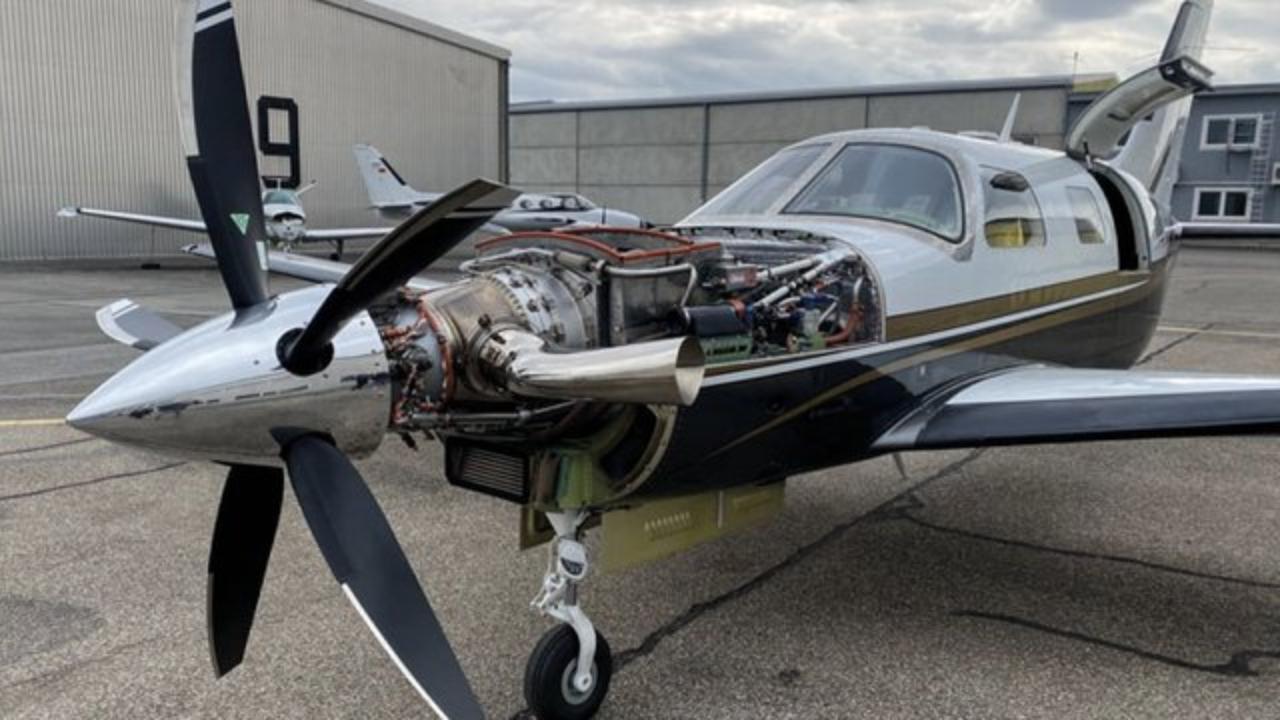
Photo : X / Aviation International News
A Strategic Leap in Turboprop Aviation
In the world of turboprop aviation, where performance, reliability, and efficiency define operational success, aircraft upgrades aren’t merely enhancements—they’re strategic reinventions. Blackhawk Aerospace, one of the industry's foremost upgrade specialists, is now taking aim at a venerable workhorse of the skies: the TBM 700 series. With its latest initiative to retrofit these aircraft with the more powerful Pratt & Whitney PT6A-67P engine, Blackhawk is offering operators a leap forward in capability, longevity, and value.
As announced at the EAA AirVenture Oshkosh 2025 event, Blackhawk is currently preparing to begin certification of its new XP67P engine upgrade program tailored specifically for TBM 700 models—particularly the A and B variants. The move underscores Blackhawk's ongoing mission to modernize legacy aircraft fleets with cutting-edge powerplants, effectively rewriting the performance envelope of aircraft that might otherwise be considered past their prime.
The new engine upgrade, if certified on schedule by mid-2026, could breathe new life into hundreds of TBM 700s still in active use around the world.
Breathing New Life Into a Proven Platform
The TBM 700 series, developed by French aircraft manufacturer SOCATA (now Daher), has earned a strong reputation for being one of the fastest single-engine turboprops in its class. Launched in the early 1990s, these aircraft were originally fitted with the Pratt & Whitney PT6A-64 engine, delivering up to 700 shaft horsepower. Over time, the aircraft gained popularity in both civilian and special mission sectors for its performance, simplicity, and cost-effectiveness.
However, in today’s more demanding environment of higher payloads, hotter climates, and stringent safety requirements, many early TBM 700s are showing signs of aging. Upgrading their powerplants represents a logical evolution—not just to extend lifespan, but to bring these aircraft into alignment with 21st-century operational demands.
Blackhawk’s new XP67P program seeks to install the same PT6A-67P engine already flying on later TBM 850 and 900 models. This engine produces a maximum of 1,244 shaft horsepower—nearly double that of the original TBM 700 configuration. While it’s expected that power output will be flat-rated to 850 shp for certification compliance, the benefits in terms of climb rate, cruise speed, and hot-and-high performance will still be dramatic.
FAA Certification and Modifications Underway
Blackhawk is no stranger to retrofitting high-performance engines into legacy airframes. Over the past two decades, the company has completed hundreds of successful conversions for King Airs, Cessnas, and even helicopters. The XP67P for TBM 700s will follow a similar certification path.
During the AirVenture announcement, Blackhawk confirmed that it has already begun work with the FAA on an amended supplemental type certificate (STC). Certification efforts are focusing initially on the TBM 700A and 700B variants, which share similar airframe characteristics.
The retrofit process will involve more than just a straight engine swap. Key supporting modifications will include a new engine mount, updated cowlings, revised exhaust configurations, and integration with the TBM's existing avionics suite. Blackhawk will also provide a newly calibrated engine gauge system and flight manual supplements to reflect the enhanced performance parameters.
Flight testing is expected to begin in Q4 of 2025, with certification targeted for Q2 or Q3 of 2026.
Performance Gains Worth the Investment
So what does this upgrade mean for TBM operators in real-world terms? Quite a bit, according to Blackhawk’s early estimates.
The XP67P engine is expected to deliver significantly faster climb rates, with the upgraded TBM 700 likely reaching FL310 in under 18 minutes, compared to around 28 minutes in stock configurations. Cruise speeds may jump to over 320 knots true airspeed, aligning the aircraft more closely with newer-generation TBMs—and even exceeding the performance of some twin-engine competitors.
Perhaps more importantly for many operators, the enhanced hot-and-high capabilities make the aircraft much more versatile in mountainous regions or tropical climates, where density altitude can severely impact safety margins and payload limits.
Fuel burn will, of course, be slightly higher—Blackhawk estimates an increase of 10–12% during cruise. However, this is offset by shorter flight times and enhanced reliability, given the XP67P’s lower operating temperatures and longer time-between-overhaul (TBO) intervals.
For operators involved in air ambulance, charter, or utility roles, where performance and dispatch reliability are paramount, the benefits may outweigh the costs significantly.
A Business Case for Extending Asset Lifespan
The aviation industry is increasingly focused on sustainability and asset optimization. As new aircraft prices continue to climb and lead times stretch due to supply chain backlogs, upgrading existing platforms is becoming a more attractive alternative.
Blackhawk’s XP67P program offers TBM 700 owners a pathway to extend the economic life of their aircraft by another 10–15 years—potentially doubling its book value with a relatively straightforward modification.
Given that many TBM 700s on the resale market are priced between $1.2 and $1.6 million, and the XP67P upgrade is likely to cost between $750,000 and $850,000 (final pricing is still pending), the value proposition becomes clear. For less than half the price of a factory-new TBM 960, operators can achieve similar performance with a proven airframe and reduced ownership costs.
Additionally, the upgrade qualifies as a capital improvement, meaning it may offer depreciation advantages for commercial operators under U.S. tax law—a further incentive in today’s tight-margin environment.
A Growing Interest in Retrofit Solutions
Blackhawk believes there is a substantial market for the XP67P upgrade. According to industry databases, more than 300 TBM 700A and 700B models are still flying globally. Many of these are owned by individual operators, flight schools, government agencies, and corporate flight departments looking to stretch their capital investment.
At Oshkosh, the company revealed it has already received over a dozen expressions of interest in the upgrade, with at least five TBM owners committing to early retrofit slots pending certification. Initial installations are expected to be carried out at Blackhawk’s headquarters in Waco, Texas, with the company planning to train a network of authorized installation centers in the U.S. and Europe.
European operators, in particular, have shown interest due to stricter emissions regulations and operational limitations in high-density airports. The XP67P’s better climb performance could enable quicker departures and reduce ground delays—another cost-saving advantage.
The Broader Significance of the Blackhawk Approach
The XP67P upgrade doesn’t just extend the life of TBM aircraft—it serves as a case study in how the aftermarket aviation industry is evolving.
As sustainability becomes a central pillar in aviation policy, upgrades like this offer a greener path compared to building entirely new airframes. Retrofitting more efficient engines helps lower carbon emissions, reduce material waste, and extend the useful life of existing resources—all goals aligned with aviation’s broader decarbonization efforts.
Moreover, engine upgrades paired with avionics modernization (as many TBM 700 owners are already doing) can bring legacy aircraft close to full NextGen compliance, improving their long-term regulatory viability in controlled airspace.
Operator Voices Welcome the Move
Several TBM owners and pilots attending the Oshkosh announcement expressed strong interest in the upgrade.
Mike Graber, a Texas-based charter operator who owns a 1999 TBM 700B, said, “We love the TBM platform, but in hot Texas summers, we’re always fighting density altitude issues. This new engine could turn our 25-year-old bird into a mission-ready machine for the next decade.”
Other voices echoed that sentiment, including Mark Donnelly, a flight instructor specializing in turbine aircraft. “For training purposes, the added climb rate and power margin will make a big difference. It brings new relevance to a proven airframe,” he noted.
As the aviation market continues to recover from supply chain bottlenecks and fluctuating demand, solutions like Blackhawk’s XP67P engine upgrade for the TBM 700 may become the new normal. Instead of retiring airframes prematurely, operators are now empowered to modernize, customize, and re-optimize their aircraft—extending utility and improving returns on investment.
If certification proceeds as planned, Blackhawk could set yet another benchmark in the aftermarket aviation space. And for TBM 700 operators, it signals a compelling opportunity to turn back the clock on their aircraft, without compromising on modern performance standards.
Aviation, Engine Upgrade, TBM 700 Series



Advances in Aerospace Technology and Commercial Aviation Recovery
Insights into breakthrough aerospace technologies and commercial aviation’s recovery amid 2025 chall

Defense Modernization and Strategic Spending Trends
Explore key trends in global defense modernization and strategic military spending shaping 2025 secu

Tens of Thousands Protest in Serbia on Anniversary of Deadly Roof Collapse
Tens of thousands in Novi Sad mark a year since a deadly station roof collapse that killed 16, prote

Canada PM Carney Apologizes to Trump Over Controversial Reagan Anti-Tariff Ad
Canadian PM Mark Carney apologized to President Trump over an Ontario anti-tariff ad quoting Reagan,

The ad that stirred a hornets nest, and made Canadian PM Carney say sorry to Trump
Canadian PM Mark Carney apologizes to US President Trump after a tariff-related ad causes diplomatic

Bengaluru-Mumbai Superfast Train Approved After 30-Year Wait
Railways approves new superfast train connecting Bengaluru and Mumbai, ending a 30-year demand, easi




