Post by : Amit
Photo : X / Machine Maker
Bengaluru’s BMTC Adds 148 New Electric Buses with Eco and Safety Upgrades
In a major step toward green urban mobility, the Bangalore Metropolitan Transport Corporation (BMTC) has rolled out 148 new non-air-conditioned electric buses, equipped with upgraded safety and environmental features, to serve India’s bustling tech capital. The deployment marks a significant milestone in Bengaluru’s public transport modernization plan and reflects the city’s growing commitment to clean and inclusive transit systems.
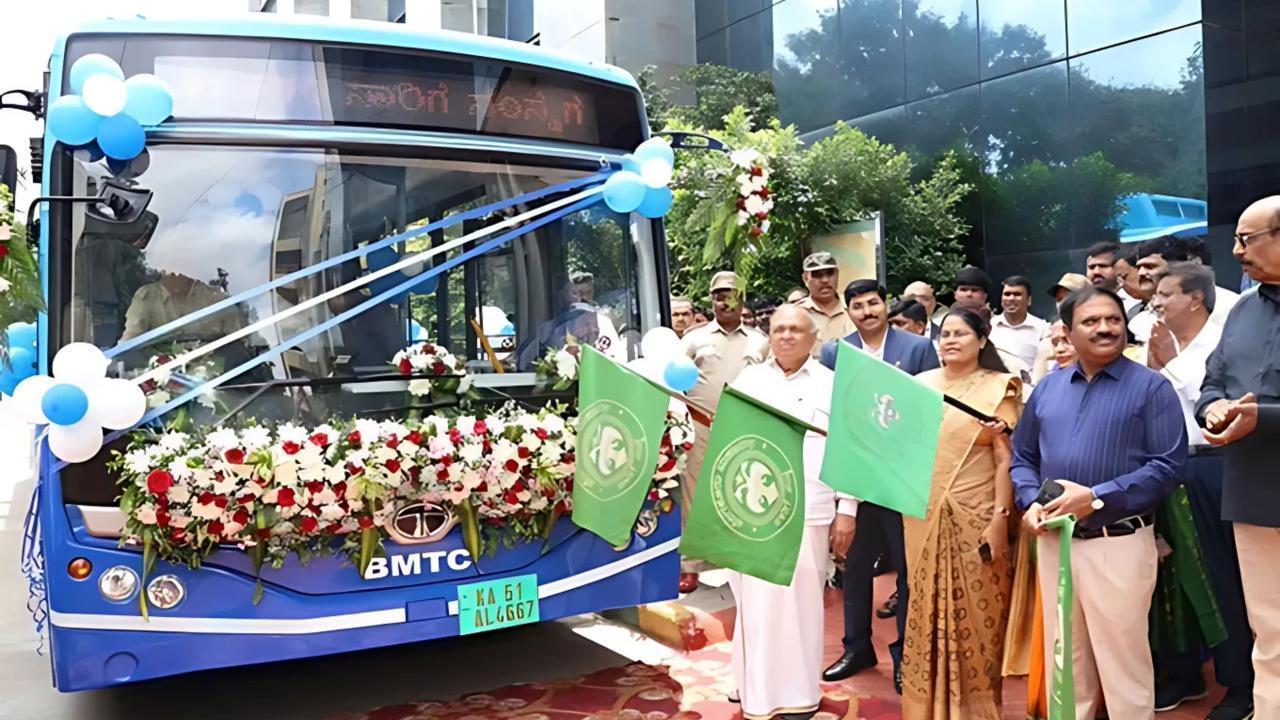
These buses, which are part of BMTC’s broader electric vehicle (EV) strategy, were officially flagged off on July 16 by Karnataka’s Transport Minister Ramalinga Reddy. Built by Olectra Greentech Limited, the e-buses are designed not only to reduce the city’s carbon footprint but also to enhance passenger security—especially for women commuters, who remain disproportionately affected by safety concerns in public transportation.
A Green Push in a Polluted City
Bengaluru, once known as India’s Garden City, has in recent years become a byword for traffic congestion and urban pollution. As private vehicle ownership soared and diesel-powered buses aged, the need for cleaner alternatives grew more urgent. The introduction of these non-AC e-buses is part of BMTC’s multi-year transition to an electric fleet, aimed at curbing emissions and improving air quality in the metro area.
According to BMTC officials, the addition of 148 electric buses brings the total number of EVs in the fleet to 494, with more scheduled for delivery under a phased electrification program. These buses will primarily operate along high-density corridors across the city, helping reduce pollution in heavily congested areas such as Majestic, Silk Board, Whitefield, and Electronic City.
The new fleet is expected to cut CO₂ emissions by over 4,000 tonnes annually, according to estimates from Olectra. This aligns with India’s broader climate goals, including its target of achieving net-zero emissions by 2070 and promoting the FAME-II scheme (Faster Adoption and Manufacturing of Hybrid and Electric Vehicles).
Safety First: Onboard Surveillance and Emergency Alerts
What sets this deployment apart isn’t just its electric drivetrain—it’s the robust suite of passenger safety features designed with real-world vulnerabilities in mind.
Each bus comes fitted with:
For women passengers, these measures are particularly significant. With crimes against women on public transport remaining a national concern, BMTC’s focus on preventive surveillance and real-time alert systems is seen as a progressive move. The panic buttons are connected directly to a control room that can alert the nearest police outpost, enhancing the likelihood of immediate intervention.
“These aren’t just green buses—they’re safe buses,” said BMTC Managing Director G. Sathyavathi. “We’ve engineered them to meet not only our sustainability targets but also the real needs of passengers, especially women who rely on public transport daily.”
Built for the Bengaluru Commute
Designed by Olectra, one of India’s leading electric bus manufacturers, the new e-buses are built to withstand Bengaluru’s unique traffic and weather challenges. They feature low-floor designs for ease of access, wide entry and exit doors, and digital information panels for route guidance.
Though non-air-conditioned, the buses are well-ventilated and optimized for energy efficiency, making them practical for the city's moderate climate. Non-AC designs also consume 40–50% less battery than their AC counterparts, significantly extending operational range and reducing charging frequency—an important consideration given the still-developing EV charging infrastructure across Karnataka.
The electric buses will be maintained under a Gross Cost Contract (GCC) model, in which Olectra will manage maintenance, servicing, and charging, while BMTC focuses on operations. This public-private operational structure is gaining traction across Indian cities as it reduces upfront capital expenditure for transport agencies and shifts technical maintenance to specialists.
Public Reception and Ridership Expectations
Initial public reaction has been largely positive. Daily commuters, particularly office-goers and students, have welcomed the idea of a cleaner, quieter ride—free from diesel fumes and engine rattle. The absence of AC has sparked some debate online, but BMTC officials have defended the decision on environmental and economic grounds.
At Rs. 5 to Rs. 15 per ride (depending on distance), the non-AC e-bus remains one of the most affordable and eco-friendly options for daily commuting in Bengaluru. Officials hope that reliable service and safety upgrades will encourage more citizens to switch from private vehicles to public transport, easing the city’s worsening traffic gridlock.
According to transport analysts, if even 5% of daily car users switch to BMTC e-buses, it could reduce peak-hour congestion by up to 20% on some routes.
Aligning with State and National EV Goals
This rollout is a crucial part of Karnataka’s EV Policy, which aims to electrify 50% of BMTC’s fleet by 2030. The state government has been an early mover in EV adoption, offering tax breaks for electric vehicle buyers and setting up charging corridors along major roads.
The buses are also funded partially under the FAME-II national scheme, which provides incentives to public transit bodies to switch to electric mobility. Under this program, the central government subsidizes the cost of procurement while local bodies handle operations.
By tying into both national and state strategies, BMTC is ensuring that Bengaluru is not just keeping pace, but setting standards in sustainable urban transit.
Addressing the Challenges
Despite the positives, the road ahead is not without obstacles. Challenges include:
BMTC officials confirmed that 100% of e-bus drivers have undergone EV-specific training, and that depot upgrades are already underway to accommodate growing EV volumes. Future tenders may also include AC variants and longer-range models, depending on route performance and commuter feedback.
BMTC’s Broader Transformation Plan
The 148-bus deployment is part of a larger vision to transform BMTC into a smart, sustainable, and tech-enabled transit agency. Other elements in the pipeline include:
The long-term goal is to position BMTC not just as a bus operator, but as an integrated mobility service provider—one that can match global standards in efficiency, inclusivity, and sustainability.
Why This Rollout Matters
BMTC’s new electric fleet rollout may appear incremental, but its implications are far-reaching. At a time when Indian cities are choking on traffic and emissions, public transport is being reimagined as a climate tool, a safety net, and a civic equalizer. By deploying buses that address not just pollution, but people’s safety, BMTC is crafting a compelling argument for public transport as the default choice, not a last resort.
It also offers a blueprint for other Indian cities grappling with similar challenges—from Delhi’s smog to Mumbai’s overburdened buses. As states and city corporations prepare their EV transition roadmaps, Bengaluru’s experience will serve as both a guide and a cautionary tale.
Bmtc, Electric Bus



Advances in Aerospace Technology and Commercial Aviation Recovery
Insights into breakthrough aerospace technologies and commercial aviation’s recovery amid 2025 chall

Defense Modernization and Strategic Spending Trends
Explore key trends in global defense modernization and strategic military spending shaping 2025 secu

Tens of Thousands Protest in Serbia on Anniversary of Deadly Roof Collapse
Tens of thousands in Novi Sad mark a year since a deadly station roof collapse that killed 16, prote

Canada PM Carney Apologizes to Trump Over Controversial Reagan Anti-Tariff Ad
Canadian PM Mark Carney apologized to President Trump over an Ontario anti-tariff ad quoting Reagan,

The ad that stirred a hornets nest, and made Canadian PM Carney say sorry to Trump
Canadian PM Mark Carney apologizes to US President Trump after a tariff-related ad causes diplomatic

Bengaluru-Mumbai Superfast Train Approved After 30-Year Wait
Railways approves new superfast train connecting Bengaluru and Mumbai, ending a 30-year demand, easi




