Post by : Amit
Photo : X / Boeing 777X
A Landmark Milestone in Boeing’s Cargo Strategy
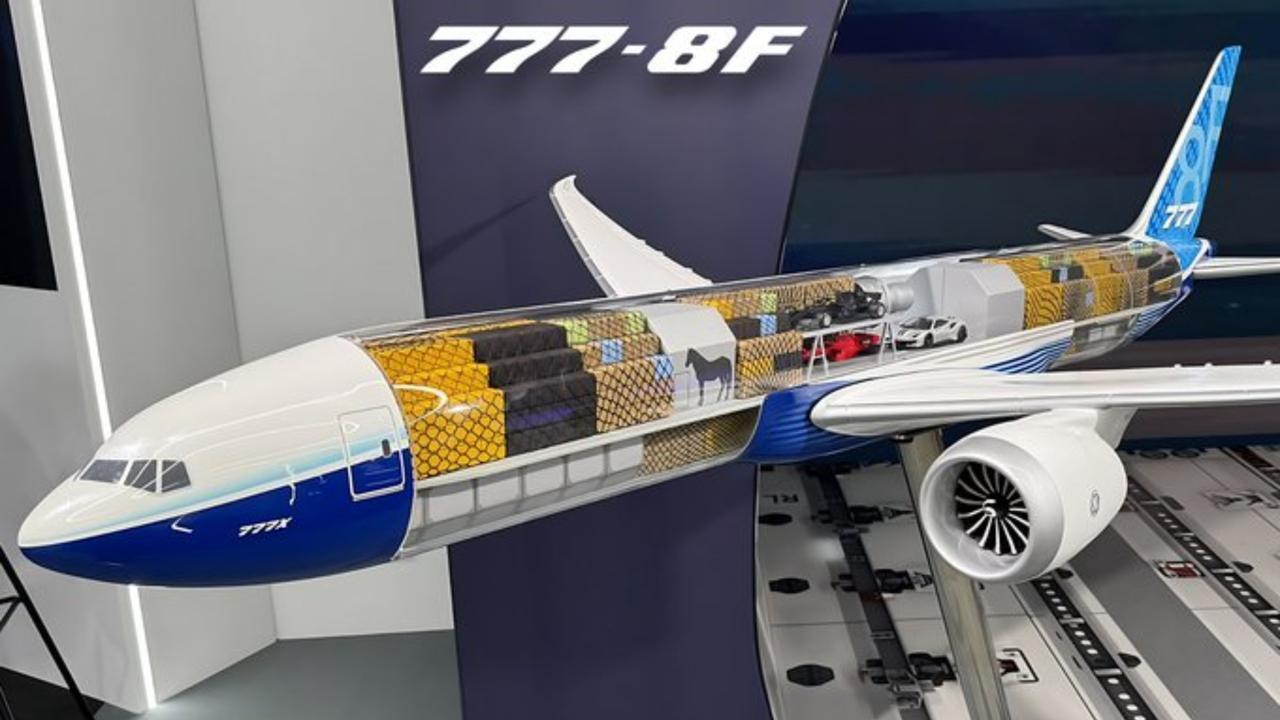
Boeing has begun building the first 777-8 Freighter, a significant milestone not only for the aerospace giant but for the entire global logistics and cargo industry. This move launches a new chapter in Boeing’s long-range twin-engine freighter program, combining the proven engineering of the 777X family with state-of-the-art cargo performance.
The 777-8F will be the world’s largest and longest-range twin-engine freighter, setting a new standard in payload capacity, fuel efficiency, and range. Boeing’s decision to push forward with this project highlights the strong demand for next-generation freighters amid an evolving logistics landscape, intensified e-commerce pressure, and tightening environmental standards.
Meeting the Market’s Growing Cargo Appetite
The global air cargo sector has seen tremendous shifts post-COVID, with demand for reliable, fuel-efficient freighters accelerating. Boeing’s 777-8F is designed to carry over 118 metric tonnes (about 130 US tons) of payload with a range of 8,167 kilometers (approximately 4,410 nautical miles), making it ideal for long-haul, high-volume routes.
According to Boeing’s own Commercial Market Outlook, air cargo traffic is expected to double over the next 20 years, with the global freighter fleet projected to grow by more than 60% by 2042. The 777-8F fits perfectly into that forecast, combining operational efficiency with cargo scalability for major carriers and logistics players.
Boeing says this new model is not just about scale—it also meets the ICAO’s 2028 CO₂ emissions regulations ahead of time, giving carriers an environmental and economic edge. That advantage comes into sharp focus as regulatory scrutiny increases and cargo operators seek greener fleets without sacrificing capacity or speed.
Production Begins at Everett: Legacy Meets Innovation
The first 777-8 Freighter is now in production at Boeing’s widebody facility in Everett, Washington—a site historically tied to the 747 program and now transitioning to support next-gen aircraft like the 777X. Boeing has retooled key segments of the Everett plant to accommodate 777-8F builds, including new automated fuselage assembly lines and upgrades to handle composite wing structures.
This is significant from a manufacturing and supply chain standpoint. Boeing’s focus on modular assembly and digital integration (including digital twin simulations and real-time part monitoring) will not only improve build efficiency but also reduce rework and long-term maintenance needs. With over 95% parts commonality with the passenger 777X, the freighter will benefit from established supplier ecosystems, ensuring faster turnaround and scalable supply lines.
As part of its manufacturing strategy, Boeing has also reaffirmed long-term contracts with Tier 1 suppliers for composite wing panels, avionics systems, and landing gear structures, ensuring a smoother path to delivery schedules and cost optimization.
Big Orders, Big Stakes: Qatar Airways Leads the Charge
The 777-8 Freighter program was officially launched in January 2022 with a blockbuster order from Qatar Airways, which committed to up to 34 units (including options). This deal alone, valued at over $20 billion, kicked off a wave of interest from major cargo players like Lufthansa Cargo, Cargolux, and Etihad Cargo—all looking to future-proof their fleets.
Qatar Airways will receive the first 777-8F in 2027, and its CEO, Akbar Al Baker, has repeatedly emphasized the strategic value of this aircraft in maintaining the airline’s cargo leadership. He pointed out that the freighter’s range and payload efficiency will allow the airline to cut down on operating costs while expanding into more direct, long-haul cargo routes that avoid traditional hubs.
Etihad and Lufthansa have echoed this view, noting that the 777-8F could become the "backbone" of their next-generation cargo fleets, particularly for high-value pharmaceuticals, express logistics, and intercontinental perishables markets.
Sustainability Takes Center Stage
One of the most compelling features of the 777-8F is its environmental profile. Powered by GE9X engines—the most fuel-efficient engines in their class—the aircraft is expected to offer 25% lower fuel use and emissions per ton compared to older freighters. This translates into lower operating costs and a smaller carbon footprint for airlines under pressure from ESG investors and regulators alike.
Boeing says the aircraft has also been designed with advanced aerodynamics, including raked wingtips and noise-reducing technologies, making it more suitable for urban airport operations where noise restrictions are tight. As sustainability becomes a purchasing criterion, the 777-8F gives airlines a platform to modernize responsibly.
In addition, Boeing’s support services—like its digital Fleet Insight platform and predictive maintenance tools—will be integrated into the freighter’s lifecycle operations, offering operators better planning tools for minimizing fuel burn and unplanned downtime.
Strategic Investment Across the Value Chain
The launch of the 777-8 Freighter is not just an aviation story; it's a major investment play across the aerospace supply chain. From composite material providers in Japan and Italy to avionics manufacturers in the U.S. and Europe, the program is stimulating billions of dollars in value.
One of Boeing’s key supply chain partners for this program is Spirit AeroSystems, which manufactures forward fuselage sections. The company has invested heavily in expanding its composite fabrication capabilities to meet 777X family demand. Similarly, GE Aerospace has ramped up production of the GE9X engine, with dedicated test stands and an expanded MRO footprint in Ohio and Germany.
Tier 2 and Tier 3 suppliers—including those in the fasteners, wire harness, and modular system domains—have seen a rise in order volumes as Boeing locks in long-lead components for initial deliveries starting 2027.
The program is also creating thousands of jobs across multiple U.S. states, including Washington, South Carolina, Kansas, and Ohio, with ripple effects into training, tooling, and digital manufacturing infrastructure.
Competitive Landscape: Airbus and the A350F
While Boeing enjoys a head start in large twin-engine freighters, competition is heating up. Airbus has been advancing its A350 Freighter, expected to enter service in 2026. Although the A350F boasts strong fuel efficiency and environmental performance, Boeing’s advantage lies in payload capacity and fleet commonality.
The 777-8F will be able to carry more cargo than the A350F while offering better integration for carriers already operating 777s or 777X aircraft. Boeing's emphasis on common pilot type rating and shared MRO tools across the 777X family adds an operational edge that Airbus may struggle to match in the near term.
Industry analysts suggest that while both freighters will find markets, Boeing's early production and strong initial customer base give it a momentum that could dominate the large freighter space for at least the next decade.
Eyes on 2027
With production now officially underway, all eyes turn toward flight testing, certification, and ramp-up. Boeing plans to begin initial test flights in 2026, with first deliveries to Qatar Airways expected in 2027. The certification process is being closely watched, especially after the regulatory scrutiny following the 737 MAX grounding and the delays in the 777X passenger variant.
However, Boeing says lessons learned from those episodes have been fully integrated into its engineering and certification workflow. It is working closely with the FAA and global regulators to ensure transparency and early documentation for the 777-8F program.
Internally, Boeing is also boosting digital twin simulations, integrated assembly monitoring, and automated inspection to streamline both safety and quality in the build process.
More Than Just a Freighter
The start of production for the 777-8 Freighter signals more than just the birth of a new aircraft. It’s a strategic pivot toward the future of air cargo—a future that demands more capacity, more efficiency, and more environmental responsibility.
In a world reshaped by global e-commerce, pharmaceutical transport, and integrated supply chains, Boeing’s latest freighter offers a timely solution. It promises not only to support the growing cargo market but also to drive significant economic and environmental dividends across its global supplier base.
As the aviation world counts down to 2027, the 777-8 Freighter stands poised to redefine what’s possible in long-haul cargo transport.
Boeing 777X, Cargo Plane



Advances in Aerospace Technology and Commercial Aviation Recovery
Insights into breakthrough aerospace technologies and commercial aviation’s recovery amid 2025 chall

Defense Modernization and Strategic Spending Trends
Explore key trends in global defense modernization and strategic military spending shaping 2025 secu

Tens of Thousands Protest in Serbia on Anniversary of Deadly Roof Collapse
Tens of thousands in Novi Sad mark a year since a deadly station roof collapse that killed 16, prote

Canada PM Carney Apologizes to Trump Over Controversial Reagan Anti-Tariff Ad
Canadian PM Mark Carney apologized to President Trump over an Ontario anti-tariff ad quoting Reagan,

The ad that stirred a hornets nest, and made Canadian PM Carney say sorry to Trump
Canadian PM Mark Carney apologizes to US President Trump after a tariff-related ad causes diplomatic

Bengaluru-Mumbai Superfast Train Approved After 30-Year Wait
Railways approves new superfast train connecting Bengaluru and Mumbai, ending a 30-year demand, easi




