Post by : Amit
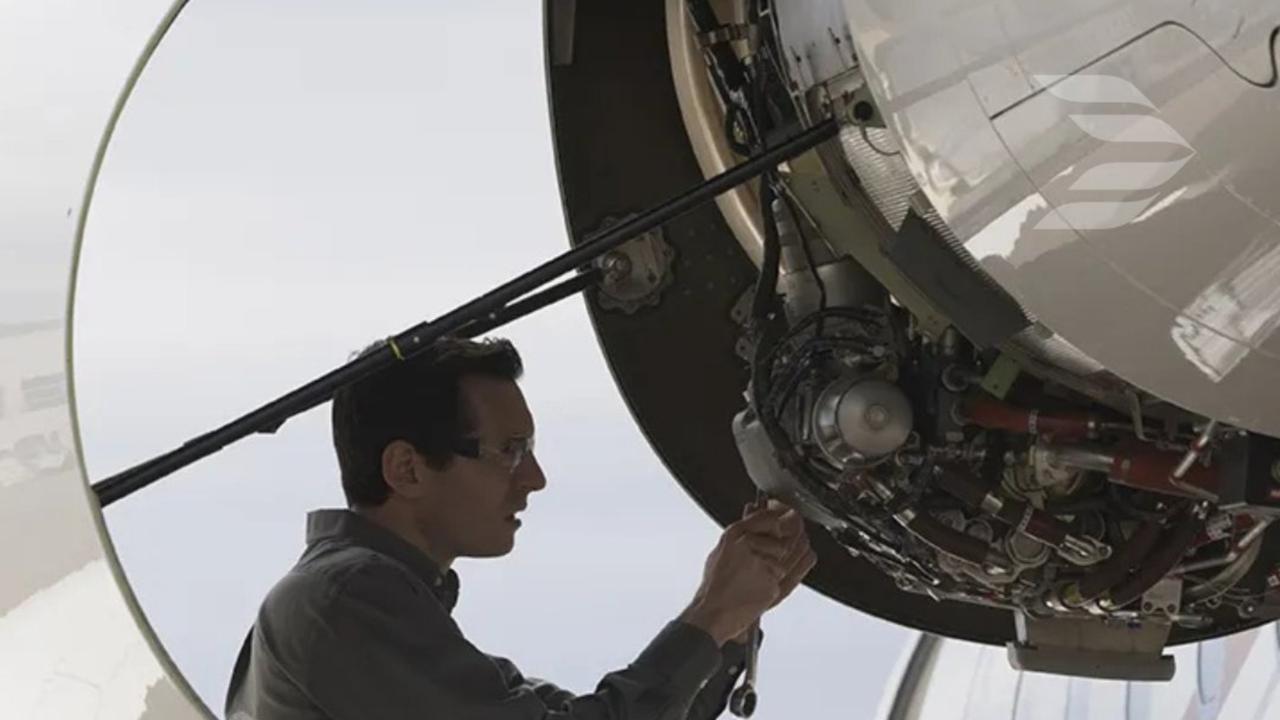
Photo : X / Bombardier
A Bold Multi-Year Commitment to U.S. MRO Growth
Bombardier, a global leader in business aviation, is strengthening its footprint in the United States with a multi-year plan to expand its service center network. The move signals a strong push to meet the growing demand for maintenance, repair, and overhaul (MRO) capabilities as the business jet market continues its post-pandemic surge. With more aircraft in the skies and a renewed emphasis on operational reliability, Bombardier’s investment aims to reduce downtime, improve service access, and enhance the ownership experience for its expanding customer base.
The initiative is more than just bricks and mortar; it is a strategic bet on the long-term growth of business aviation, especially in the world’s largest market for corporate jets. The U.S. accounts for a significant share of Bombardier’s global fleet, and expanding local MRO capacity ensures faster turnaround times and deeper technical support for operators who cannot afford long maintenance delays.
Why the Expansion Matters Now
The decision comes at a time when the business aviation sector is grappling with several converging trends. Aircraft utilization rates remain high, charter demand is strong, and corporate flight departments are pushing for maximum fleet availability. In such an environment, the capacity of MRO facilities can make or break operational schedules.
The pandemic triggered a wave of first-time business jet buyers, many of whom are now discovering the importance of reliable and timely maintenance. Coupled with the fact that many aircraft are entering mid-life cycles—requiring more intensive overhauls—the pressure on service centers has never been greater. Bombardier’s expansion is designed to relieve that bottleneck.
Where and How Bombardier Will Expand
Bombardier’s plan includes upgrading existing facilities and adding new capacity across multiple U.S. states. While specific locations have not yet been fully disclosed, industry insiders expect the company to focus on high-traffic business aviation hubs, including the Southeast, Texas, and the West Coast—areas that already host significant Bombardier customer clusters.
The expansion will involve both physical growth—larger hangars, more work bays—and technical upgrades, such as advanced tooling, specialized diagnostic equipment, and expanded avionics testing capabilities. Digital integration will also play a major role, allowing maintenance teams to track work in real time and collaborate seamlessly across locations.
The Digital Transformation of MRO Services
Bombardier is leveraging digital tools to redefine the MRO experience. Remote diagnostics, predictive maintenance algorithms, and connected aircraft data streams will allow technicians to anticipate issues before they become operational problems. By analyzing real-time aircraft performance data, Bombardier can schedule service appointments with precision, minimizing unexpected groundings.
The company is also investing in customer portals where operators can track the status of their aircraft, receive cost estimates, approve work orders, and even schedule follow-up services—all from a secure online platform. This transparency not only improves trust but also accelerates decision-making.
A Win for the U.S. Business Aviation Ecosystem
This multi-year investment will have ripple effects far beyond Bombardier’s immediate customer base. Expanding service centers will create hundreds of skilled jobs for aircraft technicians, avionics specialists, and support staff. Training programs, often developed in partnership with local technical colleges, will ensure a steady supply of qualified workers in a sector that has been struggling with talent shortages.
Local economies near these expanded facilities will benefit as well. Aviation MRO centers attract business jet traffic, which in turn drives fuel sales, hospitality bookings, and ancillary service spending at airports.
Bombardier’s U.S. Strategy in Context
Bombardier has been methodically building its U.S. service network over the last decade, with major milestones including the opening of its Miami-Opa Locka facility and the expansion of its Dallas center. This new multi-year plan represents the next phase of that strategy, scaling operations to match the brand’s growing presence in the large-cabin business jet market.
The company’s flagship models—the Global 7500, Global 8000, and Challenger series—are increasingly favored by Fortune 500 corporations, charter operators, and high-net-worth individuals. These customers demand a high level of support, and Bombardier’s expanded U.S. footprint is designed to deliver exactly that.
Competitive Pressures in the MRO Space
Bombardier’s announcement also comes amid heightened competition in the U.S. MRO sector. Gulfstream, Dassault, and Textron Aviation have all announced expansions or upgrades to their own service networks, recognizing that post-sale support is now a critical differentiator in winning customer loyalty.
With aircraft purchase decisions often influenced by the perceived quality of after-sales service, Bombardier’s proactive expansion helps secure its position in a market where brand loyalty is increasingly tied to operational uptime.
Sustainability in Maintenance Operations
An important feature of Bombardier’s expansion is its commitment to sustainability. The company is incorporating eco-friendly technologies in its upgraded facilities, including energy-efficient lighting, advanced waste management systems, and the use of sustainable aviation fuel (SAF) for testing and repositioning flights.
Reducing the environmental impact of maintenance operations aligns with the growing sustainability commitments of corporate flight departments, many of which are under shareholder and regulatory pressure to minimize their carbon footprint.
Industry Reactions and Expert Insights
Aviation analysts view Bombardier’s move as a calculated response to both market demand and competitive realities. Richard Aboulafia, a noted aerospace industry consultant, has pointed out that “The MRO market for business aviation is entering a golden age, driven by higher fleet utilization and the increasing complexity of modern jets. Whoever can provide the fastest, most reliable, and most transparent service will win the loyalty of the high-value customers.”
Industry trade associations also welcome the news, noting that increased MRO capacity will benefit the entire sector by easing maintenance bottlenecks and raising overall service standards.
The Customer Perspective
For operators, Bombardier’s expansion means less time waiting for maintenance slots and more predictable service schedules. This is especially important for charter operators, whose profitability depends on maximizing aircraft availability. Corporate flight departments also stand to benefit, as reduced downtime directly translates into greater operational flexibility for executives.
Many customers are also looking for one-stop solutions, where scheduled inspections, unscheduled repairs, cabin refurbishments, and avionics upgrades can all be performed under one roof. Bombardier’s expanded centers are expected to offer exactly this level of comprehensive service.
Financial Outlook and Long-Term Gains
While Bombardier has not disclosed the exact investment figures for this multi-year plan, industry observers expect the total spend to run into the hundreds of millions over the coming decade. Given that MRO services generate steady revenue streams and high-margin returns, the expansion is likely to pay for itself quickly—especially as Bombardier’s installed base of aircraft grows.
The move also reinforces the company’s strategic pivot toward a stronger focus on aftermarket services, a segment that offers resilience against cyclical dips in new aircraft sales.
What’s Next for Bombardier in the U.S.?
As Bombardier builds out its U.S. MRO capabilities, there is speculation that the company may explore partnerships with regional airports and FBOs (Fixed Base Operators) to further streamline the service experience. Integrating MRO services with premium customer lounges, concierge offerings, and expedited ground handling could redefine what operators expect from an aircraft service visit.
Additionally, the integration of artificial intelligence into maintenance planning—something Bombardier has already been testing—could further optimize operations, enabling predictive scheduling not just for individual aircraft but across entire customer fleets.
A Timely Investment for a Growing Market
Bombardier’s multi-year U.S. service center expansion is a forward-looking move that underscores the company’s commitment to its customers, its workforce, and the broader aviation industry. By combining physical growth with digital innovation, sustainability, and workforce development, Bombardier is positioning itself to meet the evolving needs of business aviation for years to come.
For business jet operators, the message is clear: faster service, better support, and an MRO network designed to keep their aircraft flying. In an industry where time is literally money, that could be the most valuable promise of all.
Bombardier U.S. service centers, business jet maintenance



Advances in Aerospace Technology and Commercial Aviation Recovery
Insights into breakthrough aerospace technologies and commercial aviation’s recovery amid 2025 chall

Defense Modernization and Strategic Spending Trends
Explore key trends in global defense modernization and strategic military spending shaping 2025 secu

Tens of Thousands Protest in Serbia on Anniversary of Deadly Roof Collapse
Tens of thousands in Novi Sad mark a year since a deadly station roof collapse that killed 16, prote

Canada PM Carney Apologizes to Trump Over Controversial Reagan Anti-Tariff Ad
Canadian PM Mark Carney apologized to President Trump over an Ontario anti-tariff ad quoting Reagan,

The ad that stirred a hornets nest, and made Canadian PM Carney say sorry to Trump
Canadian PM Mark Carney apologizes to US President Trump after a tariff-related ad causes diplomatic

Bengaluru-Mumbai Superfast Train Approved After 30-Year Wait
Railways approves new superfast train connecting Bengaluru and Mumbai, ending a 30-year demand, easi




