Post by : Amit
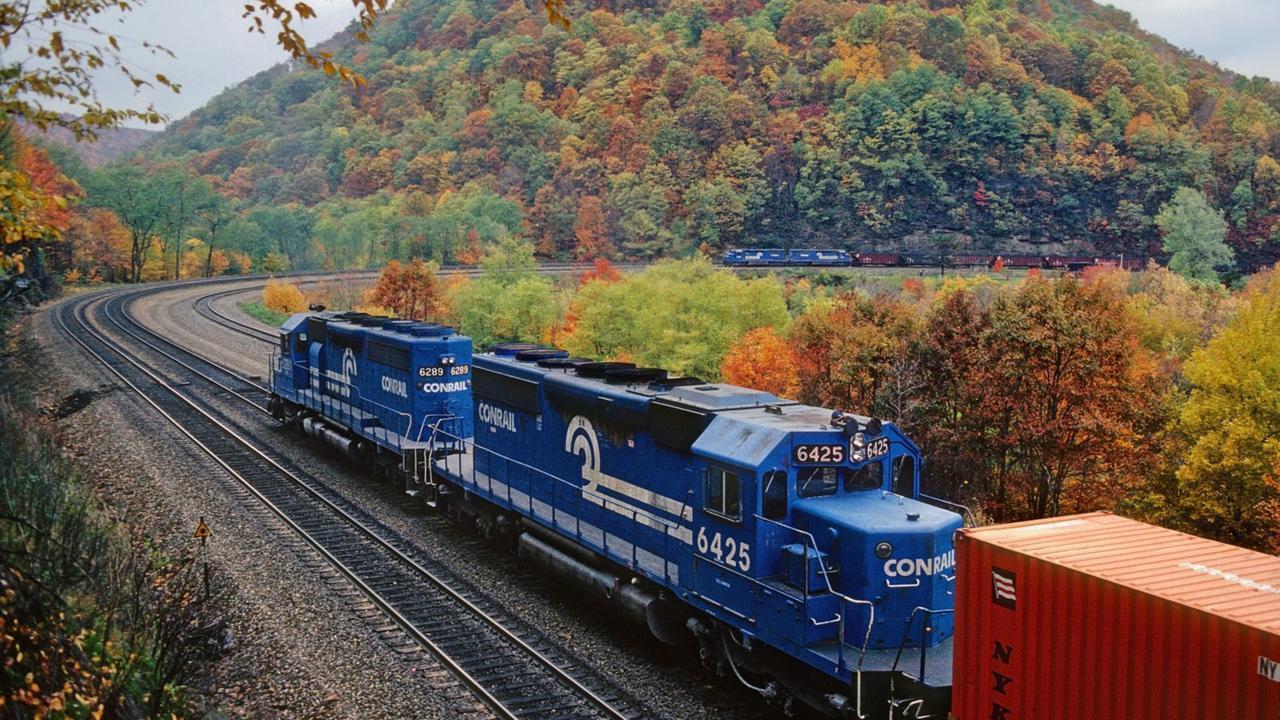
Photo : X / RAIL Magazine
Confidence in a Freight Giant
Canadian National Railway (CNR), one of North America’s most strategically important freight carriers, has been awarded an average recommendation of “Moderate Buy” by a group of leading brokerages, according to a new analysis published by MarketBeat. The updated outlook on the Toronto Stock Exchange-listed (TSE:CNR) company reflects growing investor optimism, fueled by operational resilience, strategic infrastructure investments, and a long-term vision that aligns with both economic recovery and the transformation of the logistics industry.
As the global freight and transportation sector continues to recover from post-pandemic disruptions, tightening regulations, and labor challenges, CNR's sustained performance across Canadian and U.S. corridors has become a key area of focus for institutional investors. This new consensus rating carries weight, not just in stock movement terms, but also in how stakeholders interpret the trajectory of one of Canada’s most historic and influential rail operators.
What a “Moderate Buy” Rating Means
A “Moderate Buy” rating, in financial markets, is a positive signal. It typically indicates that analysts believe the stock has upside potential, albeit with measured risk, and is expected to outperform broader market averages over the medium term. In CNR’s case, this rating is based on a combination of:
The MarketBeat update revealed that eight out of twelve brokerages currently covering the stock have issued either a “Buy” or “Strong Buy” recommendation, while the remaining four have opted for a “Hold.” No firms assigned a “Sell” rating, underlining a broad base of confidence in the stock.
The stock’s average twelve-month price target among analysts now stands at C$182.25, reflecting a projected upside of approximately 11% from its current price.
Recent Performance Fuels Analyst Optimism
One major factor driving bullish sentiment around CNR is its solid Q2 2025 earnings report, released in July. Despite a backdrop of macroeconomic uncertainty and fluctuating commodity volumes, the company posted strong operational numbers that beat analyst expectations on both earnings per share (EPS) and revenue.
CEO Tracy Robinson, who took the reins in 2022, emphasized that the company’s continued investments in digital automation, fleet modernization, and cross-border service expansion are starting to pay dividends. “We are committed to providing end-to-end supply chain fluidity, and this quarter’s numbers show our strategy is working,” Robinson said during the earnings call.
Market Dynamics Favoring Rail Freight Recovery
The broader North American freight sector is showing signs of recalibration following a turbulent period marked by high fuel costs, labor strikes, port backlogs, and inventory corrections. Rail carriers like Canadian National are uniquely positioned to capture market share as shippers look for more predictable and cost-efficient logistics solutions.
With trucking rates remaining volatile and driver shortages persisting in the road freight sector, analysts believe the time is ripe for railway companies to reassert dominance, particularly on long-haul and intermodal routes.
CNR’s geographic footprint—stretching from the Pacific to the Atlantic and deep into the U.S. Midwest and Gulf Coast—makes it a linchpin for trade, especially as global shipping patterns shift amid tensions in the Red Sea and disruptions at major container ports.
Brokerages Breakdown: Who’s Saying What?
Several top-tier financial institutions have published updated views on Canadian National Railway following the Q2 earnings:
Overall, the consensus points to broad market alignment around CNR’s long-term fundamentals, despite short-term headwinds like fuel price variability and policy uncertainty.
Investing in the Future: Green Rail, Smart Rail
What distinguishes Canadian National Railway in 2025 is not just its scale, but its forward-looking transformation strategy. The company has been aggressively investing in greener technologies, data-driven logistics, and automation, positioning itself at the intersection of sustainability and digitalization.
In May, CNR announced a C$500 million investment in hybrid locomotives, hydrogen fuel testing, and battery-electric pilot programs, aiming to reduce Scope 1 emissions by 43% by 2030, in alignment with Canada’s national climate goals.
Meanwhile, the company’s rollout of AI-powered network planning systems is helping reduce bottlenecks, improve schedule adherence, and predict equipment failures before they happen—critical factors for ensuring reliability in the freight ecosystem.
These initiatives haven’t gone unnoticed. ESG analysts have ranked Canadian National Railway among the top 5% of global transport firms in terms of climate disclosure and governance.
Cross-Border Trade and the U.S. Angle
Canadian National’s unique selling proposition lies in its ability to connect three coasts—the Atlantic, Pacific, and Gulf of Mexico—making it the only railway in North America with such a tri-coastal reach.
This has proven especially lucrative in the current geopolitical context, as both Canada and the U.S. seek to shore up domestic supply chains, reduce dependence on Asia-Pacific ports, and prioritize North American trade corridors.
The USMCA trade pact continues to benefit CNR, especially in automotive, agriculture, and energy sectors. With U.S. regulators showing renewed interest in rail infrastructure upgrades through the Bipartisan Infrastructure Law, cross-border carriers like CNR are expected to gain from improved terminal connectivity and customs clearance digitization.
Headwinds Remain, But Risks Are Managed
While the outlook is positive, analysts also caution that CNR is not without its risks. Among the top challenges highlighted in brokerage reports:
However, analysts emphasize that Canadian National has consistently demonstrated risk resilience, aided by its diversified portfolio and strong balance sheet. The firm reported C$1.2 billion in free cash flow for the first half of 2025 and maintains a low debt-to-equity ratio, providing room for future capital spending and dividend growth.
Dividend Stability Adds to Investor Appeal
In addition to capital appreciation, CNR remains a favorite among income-oriented investors due to its consistent dividend performance. The company currently offers an annual dividend yield of 2.0%, supported by a 45% payout ratio, well within sustainable thresholds.
CNR has increased its dividend for 28 consecutive years, earning it a reputation as a reliable dividend aristocrat in the Canadian stock market. Several brokerages have suggested that future hikes are likely, given the healthy cash flow outlook.
A Symbol of Canadian Industrial Strength
Founded in 1919, Canadian National Railway is more than a freight carrier—it’s a symbol of Canadian industrial evolution. From transporting wheat and crude to handling chemicals, consumer goods, and automotive parts, CNR moves more than 300 million tons of cargo annually, touching nearly every sector of the economy.
In 2025, the company represents a blend of tradition and transformation. While its tracks span over 33,000 kilometers, its mindset is modern and ambitious. With supply chain disruptions reshaping global trade, and climate concerns influencing logistics decisions, CNR’s adaptability will be critical.
Is CNR a Buy?
With the latest “Moderate Buy” rating and price targets indicating an upside of around 10–12%, Canadian National Railway is emerging as a strong defensive and growth stock in 2025. It combines operational stability, clear strategic planning, and forward-thinking sustainability measures—all crucial for long-term success in the evolving transport sector.
For investors looking for exposure to infrastructure, North American trade, or green industrial plays, CNR presents a well-rounded case. And with no analysts currently suggesting a sell-off, market sentiment remains decisively in its favor.
Canadian National Railway



Advances in Aerospace Technology and Commercial Aviation Recovery
Insights into breakthrough aerospace technologies and commercial aviation’s recovery amid 2025 chall

Defense Modernization and Strategic Spending Trends
Explore key trends in global defense modernization and strategic military spending shaping 2025 secu

Tens of Thousands Protest in Serbia on Anniversary of Deadly Roof Collapse
Tens of thousands in Novi Sad mark a year since a deadly station roof collapse that killed 16, prote

Canada PM Carney Apologizes to Trump Over Controversial Reagan Anti-Tariff Ad
Canadian PM Mark Carney apologized to President Trump over an Ontario anti-tariff ad quoting Reagan,

The ad that stirred a hornets nest, and made Canadian PM Carney say sorry to Trump
Canadian PM Mark Carney apologizes to US President Trump after a tariff-related ad causes diplomatic

Bengaluru-Mumbai Superfast Train Approved After 30-Year Wait
Railways approves new superfast train connecting Bengaluru and Mumbai, ending a 30-year demand, easi




