Post by : Amit
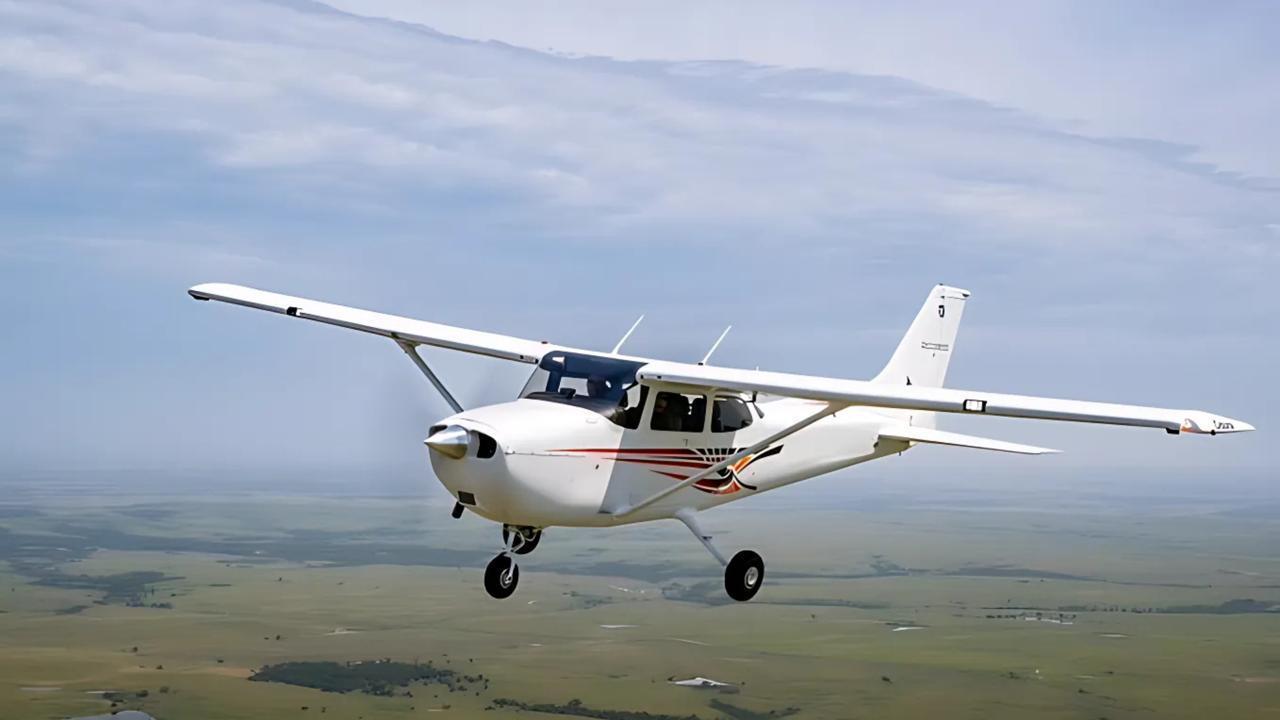
Photo : X / Textron Aviation
A Timeless Aircraft Meets 21st Century Avionics
The legendary Cessna 172 Skyhawk, the world’s most produced aircraft, is undergoing a meaningful technology evolution. Textron Aviation, the aircraft’s manufacturer, has announced the addition of a dual electronic ignition system as standard on all newly manufactured Skyhawks. The change may seem subtle to casual observers, but within the aviation community, it's a landmark shift—one that could redefine the reliability and safety profile of this staple of flight schools and utility missions worldwide.
This modern ignition upgrade replaces the traditional magneto-based system that has powered general aviation piston aircraft for decades. As the Skyhawk turns the page on legacy engine technology, it opens the door to greater fuel efficiency, lower maintenance costs, and increased operational reliability—all without changing the aircraft’s flight characteristics or certification category.
The new system is integrated into the Lycoming IO-360-L2A engine, a workhorse of general aviation propulsion, and represents a collaborative effort between Lycoming and Textron to modernize internal combustion flight while maintaining the rugged simplicity that defines the Skyhawk.
A Shift in Piston Power Philosophy
For most of its life since entering production in 1956, the Cessna 172 has relied on magneto ignition—mechanical systems that generate the high-voltage spark required to ignite the air-fuel mixture in each engine cylinder. While magnetos are time-tested and FAA-certified, they are prone to wear and tear, require frequent inspections, and provide relatively imprecise timing.
With the introduction of dual electronic ignition systems (EIS), the Skyhawk gains a leap in engine management precision. The dual EIS replaces both magnetos with electronically controlled spark systems that optimize ignition timing based on engine performance data, altitude, and ambient conditions. The result? More consistent combustion, cleaner operation, and improved fuel efficiency.
Textron Aviation has emphasized that this upgrade is not simply about performance—it’s about future-proofing the aircraft for a new era of pilot expectations.
“Customers expect modern technology even in legacy aircraft,” said Chris Crow, VP of Piston Sales at Textron. “This dual EIS offers smoother engine operation, reduced maintenance burden, and enhanced safety, especially during critical phases of flight like takeoff and climb.”
Inside the Tech: How Dual Electronic Ignition Works
Electronic ignition systems in aviation borrow from innovations long proven in the automotive world. Unlike magnetos, which are powered mechanically via the aircraft’s engine crankshaft, electronic ignition relies on an independent electrical source—typically from the aircraft battery or an engine-driven alternator—and uses solid-state electronics to deliver precise spark timing.
The “dual” in dual EIS refers to the installation of two independent electronic ignition units—each capable of powering all cylinders. This redundancy is crucial in aviation, where safety regulations demand backup systems for all critical flight operations.
Lycoming’s dual EIS in the IO-360-L2A includes:
These improvements collectively lead to more complete combustion, reducing unburnt hydrocarbons and offering minor but measurable gains in range and endurance.
A Quiet Revolution in General Aviation
While turbine aircraft and jets have evolved dramatically with glass cockpits, fly-by-wire, and integrated digital avionics, piston aircraft like the Cessna 172 have remained conservative in their engineering—largely due to the high cost and complexity of FAA certification.
This makes the dual EIS upgrade especially notable. Textron and Lycoming managed to implement the system within the existing type certification, meaning the aircraft does not need re-certification under new performance metrics. Instead, the upgrade is treated as an enhancement to the powerplant, streamlining its introduction to the market.
It’s a strategy that other manufacturers may follow as the general aviation community pushes for cleaner, safer, and more modern piston-powered flight without incurring the cost of a clean-sheet design.
“This is about bridging the gap between where we are and where we need to go,” said one FAA consultant familiar with the upgrade. “The general aviation fleet is old—on average over 40 years—and solutions like this give new life to trusted platforms.”
Implications for Flight Training
The Skyhawk is the backbone of flight training fleets worldwide, from the United States to India, Europe, and the Middle East. With thousands of these aircraft operated by flight schools like Embry-Riddle, CAE, and L3Harris, improvements in fuel savings, engine health monitoring, and operational reliability have an outsized impact.
Students learning to fly often experience minor engine irregularities caused by plug fouling or misfiring—issues that are dramatically reduced with the cleaner combustion provided by dual EIS. Instructors, too, benefit from smoother throttle response and more reliable cold starts, especially in colder climates where magneto systems can struggle.
The system’s simplified maintenance profile also eases the workload for maintenance departments, reducing the frequency of inspections and the time needed to troubleshoot ignition-related issues.
This translates to fewer training delays, lower operational costs, and a better training experience for both student and school.
Emissions and Efficiency in Focus
Though not a full alternative power solution like electric or hybrid propulsion, the dual EIS marks a step toward cleaner internal combustion operations. More precise spark timing enables leaner fuel-air mixtures, particularly at cruise settings, reducing fuel burn and emissions.
While detailed emissions figures are still being finalized, early testing from Lycoming suggests up to 10% improvement in specific fuel consumption, depending on operating conditions. This means lower CO₂ output per nautical mile—an important consideration as general aviation comes under increasing pressure to improve its environmental profile.
Additionally, the EIS provides a platform for future engine health monitoring, where spark timing, engine knock, and cylinder performance could be logged and transmitted digitally for diagnostics or fleet optimization.
Cost, Availability, and Retrofit Potential
The dual electronic ignition system will be standard on all new Skyhawks moving forward, with deliveries expected to begin later this year. While Textron has not disclosed whether existing aircraft will be eligible for retrofit, there is speculation that a supplemental type certificate (STC) may be developed for existing Skyhawks with compatible Lycoming engines.
For fleet operators, the move toward standardization also means easier pilot transition, commonality in maintenance procedures, and better long-term support.
Industry observers suggest the EIS will likely become a baseline expectation for new piston aircraft, especially as parts and service for legacy magneto systems become more expensive and harder to source.
Looking Beyond the Skyhawk
Textron’s introduction of the dual EIS in the Cessna 172 may be the first of several steps to modernize its piston product line. The company also manufactures the Cessna 182 Skylane, Cessna 206 Stationair HD, and Beechcraft Bonanza—all of which use similar Lycoming or Continental engines that could benefit from the same upgrade.
Furthermore, as Textron works on next-generation concepts, including hybrid-electric demonstrators and autonomous platforms, retaining combustion engines that are smarter and cleaner allows for more flexible development timelines.
“It’s part of a broader digital strategy,” noted one aerospace analyst. “Ignition systems that talk to the pilot, adjust to conditions, and improve safety are essential—even as the propulsion architecture changes.”
A Quiet Leap Forward
In an industry where change is often evolutionary rather than revolutionary, the addition of a dual electronic ignition system to the venerable Cessna Skyhawk stands out as a significant milestone. By modernizing the most fundamental aspect of flight—engine ignition—Textron Aviation has equipped one of history’s most trusted aircraft with the tools to meet the demands of 21st-century flying.
Smoother operations, better reliability, cleaner emissions, and easier maintenance—these aren’t just technical wins. They translate into real-world benefits for flight schools, private owners, and fleet operators alike.
And for student pilots taking their very first flight in a Skyhawk, this upgrade means a safer, more efficient, and more confidence-inspiring experience from the start.
Electronic Ignition System, Aviation, Cessna, Skyhawk



Advances in Aerospace Technology and Commercial Aviation Recovery
Insights into breakthrough aerospace technologies and commercial aviation’s recovery amid 2025 chall

Defense Modernization and Strategic Spending Trends
Explore key trends in global defense modernization and strategic military spending shaping 2025 secu

Tens of Thousands Protest in Serbia on Anniversary of Deadly Roof Collapse
Tens of thousands in Novi Sad mark a year since a deadly station roof collapse that killed 16, prote

Canada PM Carney Apologizes to Trump Over Controversial Reagan Anti-Tariff Ad
Canadian PM Mark Carney apologized to President Trump over an Ontario anti-tariff ad quoting Reagan,

The ad that stirred a hornets nest, and made Canadian PM Carney say sorry to Trump
Canadian PM Mark Carney apologizes to US President Trump after a tariff-related ad causes diplomatic

Bengaluru-Mumbai Superfast Train Approved After 30-Year Wait
Railways approves new superfast train connecting Bengaluru and Mumbai, ending a 30-year demand, easi




