Post by : Avinab Raana
Photo : X / The Kathmandu Post
Tragedy at Utah Valley University
Conservative activist Charlie Kirk was fatally shot during a speaking event at Utah Valley University, sending shockwaves through the political world. It happened on September 10, 2025, at an outdoor gathering where Kirk was engaging with students and supporters. The nature of the event made the violence all the more stark: nearly 3,000 people had gathered, and the shooting is widely being called a political assassination. The suspect remains at large, with law enforcement mounting a manhunt.
Moment of the Attack
Kirk was onstage addressing the crowd when a single gunshot rang out. Eyewitness accounts describe him clutching his neck and then falling from his seat. The shot reportedly came from a rooftop across campus. There were six officers at the event, plus his private security detail. Chaos followed instantly—panic, a scramble, and attempts to help him. He was rushed to medical care, but his injuries proved fatal.
Kirk’s Role and Influence
Charlie Kirk was co-founder of Turning Point USA, a conservative youth movement that played a crucial role in recent political campaigns. He was just 31 years old, known for his energetic speaking style, his media presence, and his strong support among young conservative voters. He often appeared in debates, podcasts, and live events across campuses, promoting conservative values, free speech, and activism. His death marks the loss of a polarizing yet effective figure in U.S. political activism.
Reactions and National Outcry
Immediately after the shooting, leaders from both parties expressed condemnation. Utah’s Governor called it a “political assassination” and vowed that those responsible would be found. President Trump, from whose political sphere Kirk drew much of his influence, condemned the violence and demanded accountability. At federal buildings, flags were ordered flown at half-staff in his honor. Across social media and media outlets, voices lamented this as yet another political tragedy in an era of sharply rising political violence.
Searching for the Shooter
Law enforcement officials are treating this as a targeted attack. Investigators say that they believe the gunman fired from a distant rooftop. Two people were detained, but neither has been connected to the shooting. Authorities continue to canvass the campus, seek video footage, and appeal to the public for help. The suspect remains unidentified, and investigators are exploring whether this act was premeditated. Campus police, state agencies, and federal investigators are all involved in piecing together what they can.
Amplifying Conversation: Political Violence in America
This killing is not isolated. It comes amid growing concern over political violence in the United States. Over the past few years, incidents involving threats, assault, and attacks on public figures have increased. For many, Kirk’s death is a painful reminder of the risk faced by those who are active in the political arena. The idea that disagreement could turn to outright violence weighs heavily for many citizens, no matter their political persuasion.
The Impact on Turning Point USA and His Legacy
Turning Point USA, the movement Kirk co-founded when very young, has been central to conservative outreach especially on college campuses. His leadership helped shape its visibility, influence, and ability to rally young people around conservative causes. His death leaves a gap in a network built on youth engagement, activism, and strong online voice. For many supporters, Kirk represented both the promise and perils of politically driven public speaking in an era of sharp polarization.
The Context of Campus Events
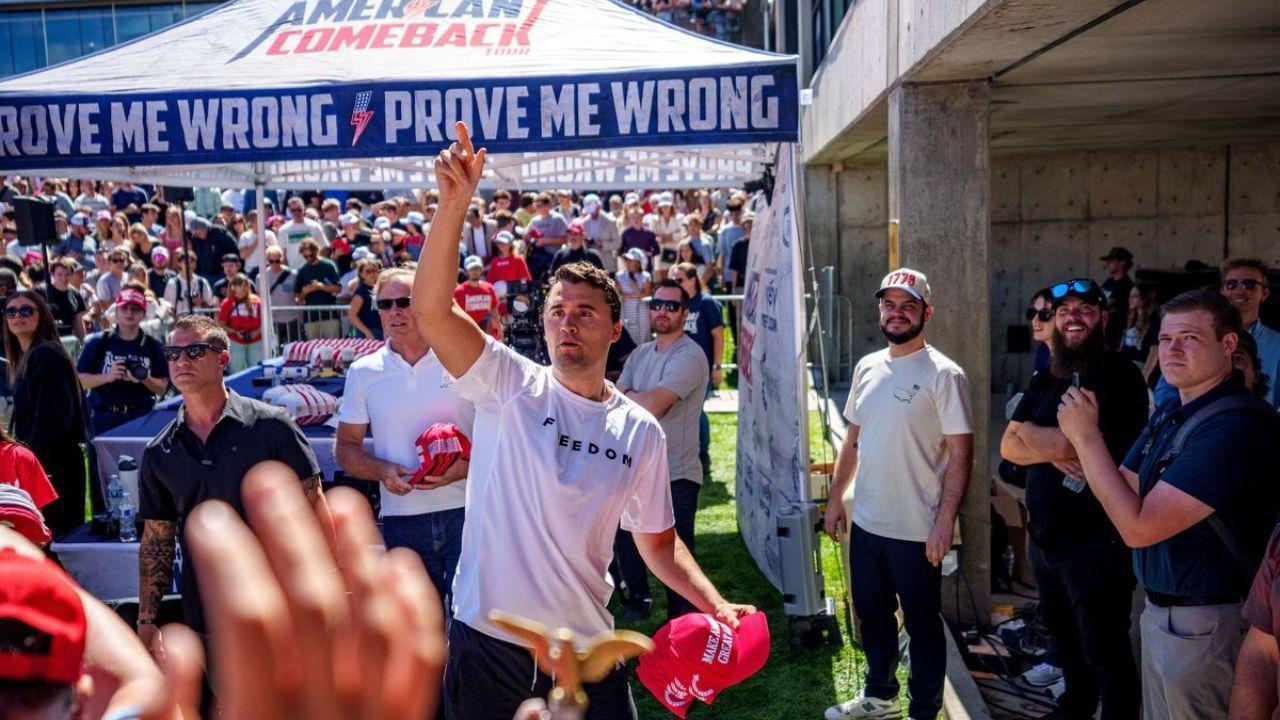
The event was part of what Kirk called the “American Comeback Tour,” a series of live appearances at college campuses. He often took part in these events with his signature “Prove Me Wrong” debate tables—where he engaged directly with students and audience members on controversial topics. That style made him both admired and criticized. On that day, just before being shot, he had been asked about gun violence—a tragically ironic prelude to what occurred.
Broader Effects: Fear, Free Speech, and Safety
In the wake of his death, many institutions are questioning how to make public events safe. Universities, political groups, and law enforcement are facing pressure to review security protocols. The fear is not only for famous activists or speakers—regular people worry about being caught in political tensions turned deadly. Opinions differ about where to draw the line between free expression and safety, but many agree something must change.
Mourning and Memorials
Across the country, there has been an outpouring of grief. Supporters, classmates, critics—even some who disagreed with him—are expressing shock and sorrow. Tributes have flooded in on social media, public statements have been issued by politicians from both sides, and communities are gathering to remember him as a father, as a public speaker, and as someone who stirred strong feelings among Americans. Flags are lowered. Vigils are being organized. His family, including his wife and children, are in the hearts and minds of many.
Rhetoric, Radicalization, and Political Climate
One issue that many are examining is the role of political rhetoric. Characterizations of the other side as dangerous, radical, or evil have become common in recent years. Critics say that when speech becomes demeaning or inciteful, it can ripple into violence. Supporters of Kirk point to his role in mobilizing youth voices and say that violent acts are never justified, no matter who is speaking. The debate over how words contribute to action is once again front and center.
The Demand for Justice and Meaningful Action
Underneath the grief is a strong demand: find the shooter and hold them accountable. But there are also calls for deeper changes—to reduce political violence, to ensure public safety at events, and to examine how communities and media handle dissent. Some advocate new security measures for public political events. Others call for unity in condemning violence regardless of political identity. Many demand that political leaders tone down aggressive rhetoric.
What Comes Next
The investigation will likely be long and complex. Officials are analyzing video, interviewing witnesses, and reviewing security footage. The public is being asked to help with any leads. Meanwhile, Turning Point USA has canceled upcoming events out of respect. Universities across the country are reassessing their event safety policies. Public discussion is intensifying, and many experts say this moment could mark a turning point in how political speech, activism, and security intersect in America.
Reflection: Loss, Division, and the Hope for Change
Charlie Kirk’s death is both deeply personal and deeply political. It represents loss—of a life, of a father, of someone who stirred both admiration and anger. It reflects division—an America at odds, where politics is no longer just debate but a heated, sometimes dangerous battleground. Yet even in grief, there is hope: hope that this tragedy will bring more care in how we speak, how we protect, how we listen. Hope that moments like this wake up society to the price of hardened division.
A Nation at a Crossroads
The fatal shooting of Charlie Kirk is more than an attack on an individual—it is a warning. Political violence, once rare in public political events, now threatens to become a tragic norm unless addressed. The questions cast by this act are urgent: how safe is free speech when public figures are under threat? When does disagreement turn into danger? As the nation watches, respects, and mourns, it must also act—on safety, on rhetoric, on unity. Because without change, this dark day risks becoming part of a larger pattern. But perhaps from this grief, something better can emerge: an America where politics is fierce but never fatal.
Political violence, Charlie Kirk, Turning Point USA



Advances in Aerospace Technology and Commercial Aviation Recovery
Insights into breakthrough aerospace technologies and commercial aviation’s recovery amid 2025 chall

Defense Modernization and Strategic Spending Trends
Explore key trends in global defense modernization and strategic military spending shaping 2025 secu

Tens of Thousands Protest in Serbia on Anniversary of Deadly Roof Collapse
Tens of thousands in Novi Sad mark a year since a deadly station roof collapse that killed 16, prote

Canada PM Carney Apologizes to Trump Over Controversial Reagan Anti-Tariff Ad
Canadian PM Mark Carney apologized to President Trump over an Ontario anti-tariff ad quoting Reagan,

The ad that stirred a hornets nest, and made Canadian PM Carney say sorry to Trump
Canadian PM Mark Carney apologizes to US President Trump after a tariff-related ad causes diplomatic

Bengaluru-Mumbai Superfast Train Approved After 30-Year Wait
Railways approves new superfast train connecting Bengaluru and Mumbai, ending a 30-year demand, easi




