Post by : Amit
A Defining Moment for Chennai's Urban Transit Future
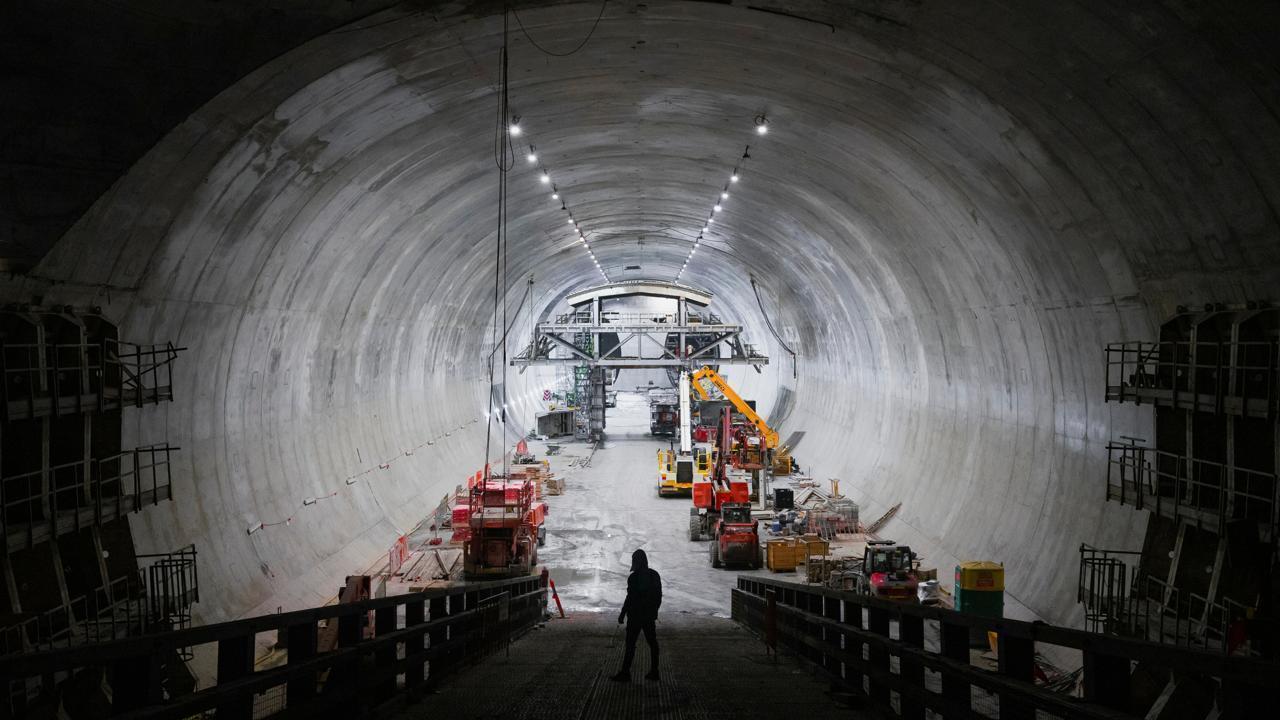
The Chennai Metro Rail Limited (CMRL) celebrated a major tunnel breakthrough in its ambitious Phase 2 expansion project. On July 23, 2025, Tunnel Boring Machine (TBM) Avni completed a critical stretch between Madhavaram Milk Colony and Kellys, achieving what engineers call a 'breakthrough'—an event that marks the completion of one end of an underground tunnel. With this successful milestone, Chennai's Phase 2 project has moved significantly closer to transforming the city's public transport landscape.
This feat is not just another milestone; it is part of the bigger narrative of how Chennai is steadily constructing the second-largest metro rail network in India after Delhi, aimed at tackling urban congestion and improving last-mile connectivity in one of the country's fastest-growing metropolises.
Understanding the Breakthrough: What Happened and Why It Matters
The breakthrough occurred in the 9-kilometer underground corridor that stretches from Madhavaram to Kellys as part of Corridor 3 of the Phase 2 expansion. TBM Avni, manufactured by Herrenknecht (a German firm renowned for tunnel technology), has now completed its 1,885-meter drive, boring through dense subsoil and mixed geology to carve a path for future metro tracks.
This is not just a technical milestone but a deeply strategic one. The section is critical for connecting North Chennai to the central parts of the city—areas that have long suffered from inadequate public transport access. When completed, Corridor 3 will stretch from Madhavaram Milk Colony to Sholinganallur, passing through major intersections such as Perambur, Egmore, Mylapore, and Adyar.
Each completed TBM run saves time, reduces surface disruption, and adds one more puzzle piece to the city’s future-proof transport grid.
TBM Avni: A Technological Marvel Below the Surface
TBM Avni is part of a fleet of specialized tunnel boring machines employed by the CMRL to build underground stretches with minimal disruption to the surface world. Weighing over 700 tons and stretching approximately 100 meters in length, these machines operate like underground factories. They bore, extract, reinforce, and move forward—almost like a living organism chewing through the Earth’s crust with precision and safety.
Avni’s journey began at Madhavaram in 2023 and took 18 months to reach Kellys. The machine worked through 24/7 shifts, managed by teams of engineers, operators, and safety experts. It encountered varying geological conditions such as clayey silt, hard rock, and loose sand—all of which required adaptive boring speeds and pressure calibration.
The name ‘Avni’ is not just symbolic but functional—it means ‘Earth’ in Sanskrit, echoing the machine’s monumental task of moving through earth layers to lay down the future foundations of urban mobility.
Chennai Metro Phase 2: India’s Second Largest Urban Transit Project
The Phase 2 expansion covers a total of 118.9 kilometers, divided into three corridors:
With a budget of over ₹61,843 crore (~USD 7.5 billion), the project aims to serve over 2 million commuters daily upon full completion by 2028.
So far, 23 TBMs have been deployed under Phase 2, with more expected as underground tunneling expands across the city’s congested zones. Out of these, TBM Avni’s success is the fourth breakthrough of 2025, following earlier achievements in corridors 3 and 4.
In total, the underground section alone accounts for nearly 42 kilometers—making tunneling milestones like this one crucial to maintaining the construction schedule.
Execution and Partnerships: A Multinational Effort
CMRL has roped in multiple public-private partnerships to accelerate tunneling and station development. The TBM Avni stretch was handled by Tata Projects Limited, one of India’s leading infrastructure EPC companies, under a contract awarded in 2021.
Herrenknecht, the German manufacturer, supplied the TBMs, while Larsen & Toubro (L&T), Afcons Infrastructure, and Dineshchandra R. Agrawal Infracon also play key roles across other sections. From mechanical tunnel boring to advanced signaling, the project represents a global collaboration of civil, electrical, structural, and IT experts.
This synergy of public policy, private innovation, and international engineering expertise is what allows Chennai to move toward becoming a 21st-century metro city.
Connectivity Gains: Linking Urban Nodes, Reducing Road Chaos
Currently, North Chennai suffers from inadequate rail-based transit. With narrow roads and high population density, buses and autorickshaws dominate daily commute options, leading to congestion, delays, and high pollution levels.
Corridor 3—where the Avni breakthrough occurred—will act as a north-south transit spine. Upon completion, travel from Madhavaram to Sholinganallur will take just 45 minutes instead of the current 1.5–2 hours by road. The corridor also connects to key hubs:
Such integration is essential not just for mobility but for equal access to economic opportunities and urban amenities.
Urban Impact: Cleaner Air, More Jobs, and Inclusive Growth
Beyond transportation, metro infrastructure catalyzes a range of secondary benefits:
Thus, the success of one TBM breakthrough reflects not just civil engineering progress, but socio-economic transformation.
What’s Next: Milestones to Watch
With TBM Avni's breakthrough complete, the segment from Madhavaram to Kellys enters the station construction and track-laying phase. In parallel, other TBMs (such as Urvi and Vindhya) are working on connecting sequences toward Chetpet, Sterling Road, and Teynampet.
CMRL plans to complete tunneling on Corridor 3 by late 2026 and aims for phased commissioning of stations beginning mid-2027. By 2028, Chennai will likely have the most comprehensive metro network in South India.
Moreover, authorities are accelerating depot construction at Madhavaram and SIPCOT, which will house rakes, repair facilities, and control rooms with AI-driven signaling and automation.
A Vision for Tomorrow’s Chennai
As India urbanizes rapidly, cities like Chennai are at a crossroads: either expand chaotically or build systems that offer structured, clean, and efficient transit. The TBM Avni breakthrough is a literal and metaphorical tunnel toward the latter—a symbol that smart city infrastructure can rise not just above but also beneath our feet.
With unwavering engineering, strong governance, and public support, Chennai Metro Phase 2 is not just laying down tunnels—it's laying down the tracks for a smarter, more mobile future.
Chennai's Urban Transit, TBM Avni



Advances in Aerospace Technology and Commercial Aviation Recovery
Insights into breakthrough aerospace technologies and commercial aviation’s recovery amid 2025 chall

Defense Modernization and Strategic Spending Trends
Explore key trends in global defense modernization and strategic military spending shaping 2025 secu

Tens of Thousands Protest in Serbia on Anniversary of Deadly Roof Collapse
Tens of thousands in Novi Sad mark a year since a deadly station roof collapse that killed 16, prote

Canada PM Carney Apologizes to Trump Over Controversial Reagan Anti-Tariff Ad
Canadian PM Mark Carney apologized to President Trump over an Ontario anti-tariff ad quoting Reagan,

The ad that stirred a hornets nest, and made Canadian PM Carney say sorry to Trump
Canadian PM Mark Carney apologizes to US President Trump after a tariff-related ad causes diplomatic

Bengaluru-Mumbai Superfast Train Approved After 30-Year Wait
Railways approves new superfast train connecting Bengaluru and Mumbai, ending a 30-year demand, easi




