Post by : Avinab Raana
Photo : X / JacksonT
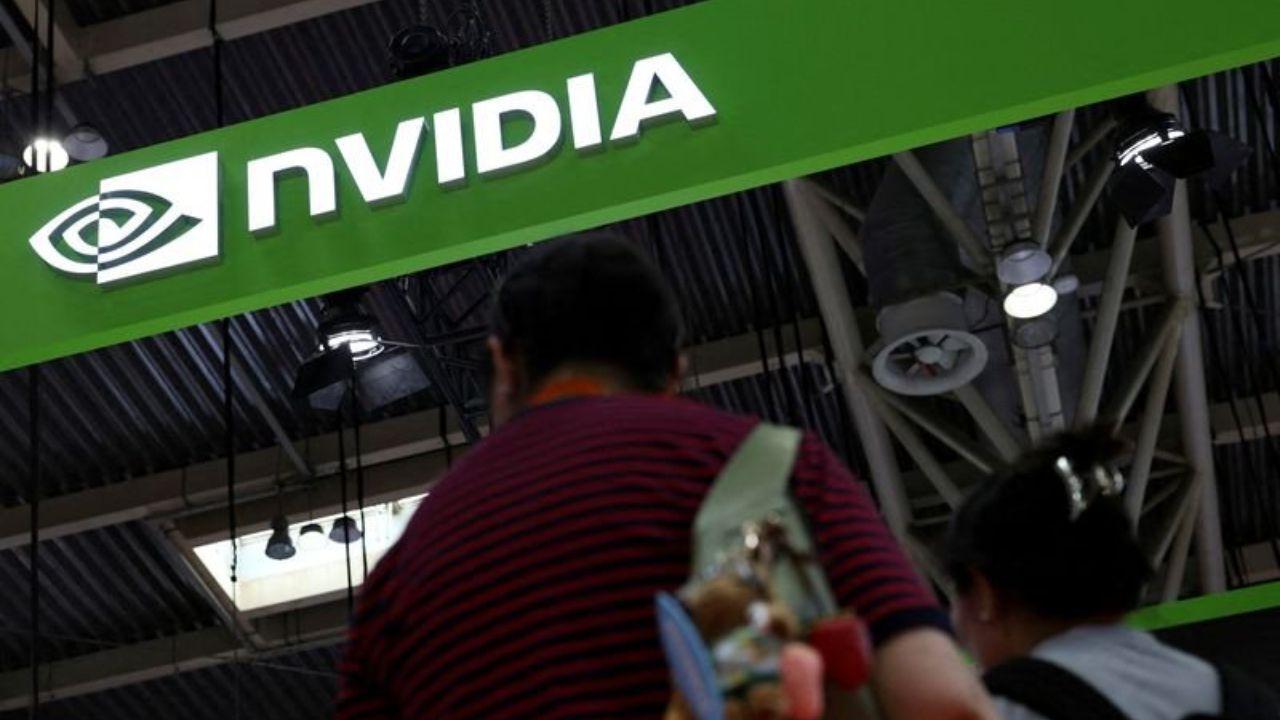
Nvidia, the U.S. chip giant famed for powering artificial intelligence, gaming, and data centres, is now under serious scrutiny in China. Beijing’s State Administration for Market Regulation (SAMR) has announced that a preliminary investigation found Nvidia likely violated China’s anti-monopoly law. The probe, which started late last year, centers on Nvidia’s acquisition of Mellanox and whether the company stuck to promises made during that deal. Though details are thin and no conclusive ruling has yet been delivered, the case is quickly becoming another front in the wider tech rivalry between the U.S. and China.
SAMR says Nvidia may have breached conditions tied to its acquisition of Mellanox Technologies, based in Israel. Those conditions were part of the regulatory approval for the deal in 2020. While China’s regulator has not specified exactly how Nvidia is alleged to have broken those conditions, the implication is that the company may have failed to honour commitments around competition and fair access. The broader probe also leaves open possibilities that Nvidia’s pricing, product bundling, or control over downstream markets are under examination.
China launched its formal investigation in December 2024, citing suspected violations of competition law. Investors and observers immediately interpreted the inquiry as part of a growing pattern: regulators using antitrust tools as leverage amid larger trade and tech tensions. Over the months that followed, questions have been asked about Nvidia’s sale and support of advanced chips to Chinese firms, its market power in AI chip segments, and whether its practices such as software, firmware updates, licensing, or product restrictions may be unfair under China’s stricter enforcement regime.
Under Chinese anti-monopoly legislation, violators can face fines between 1 percent and 10 percent of their prior year’s sales in China. For Nvidia, China accounted for roughly $17 billion in revenue in its most recent fiscal year, which represented about 13 percent of its global sales. If Samsung’s findings hold and the maximum fine is levied, penalties could reach well over a billion dollars. Such fines would not only hit the company’s financials but could also affect its willingness to engage in business in China.
News of the probe led to an immediate market reaction: Nvidia’s shares slipped about two percent in pre-market trading after China’s preliminary finding was made public. Traders, analysts, and investors are now watching closely for how serious China becomes in its demands, whether further behaviour modifications will be required, and whether ongoing chip export restrictions or U.S. policy changes will further complicate Nvidia’s China strategy.
Nvidia has not yet officially countered China’s accusations in detail, stating that it is reviewing the probe. Company spokespeople may argue that the Mellanox acquisition fulfilled all required commitments or that any illustrative deviation is non-material or unintentional. Given China’s regulatory environment and the sensitivity around technology sovereignty, Nvidia’s defense may focus not only on legal compliance but also on how important its chips are to local Chinese AI and data infrastructure.
This probe does not occur in isolation. It overlaps with U.S. export controls on semiconductor technology, restrictions on chip supply to China, and China’s own push for domestic chip self-sufficiency. Nvidia is caught between these converging pressures. While U.S. policy seeks to limit China’s access to certain high-end chips, China’s regulators are signaling that market dominance or non-compliance with antitrust promises will carry consequences. Nvidia must navigate both sets of rules, often conflicting or opaque.
Chinese firms that rely on Nvidia chips for AI, cloud computing, gaming, data centres may be monitoring the outcome with concern. If China imposes restrictions, mandates changes in licensing, or demands local production or open access, these firms could face higher costs, delays, or reduced access to updated firmware or features. For end users, the probe could affect pricing, availability, or the speed with which new chip models arrive locally.
Beyond Nvidia, this probe may send signals across the semiconductor ecosystem. Other firms operating globally, especially those selling into China, will pay attention to regulatory promises made in past acquisitions or joint ventures. Companies may find themselves more constrained by overlapping jurisdictions, U.S. export rules, Chinese antitrust law, and local regulatory requirements. This could increase legal risk, compliance costs, and influence decisions about where to locate research, manufacturing, or sales operations.
China’s anti-monopoly enforcement has ramped up in recent years, especially in tech, consumer platforms, and chip policies. Regulators appear to be using investigations not just to enforce competition law, but also to assert control over technology flows, enforce domestic performance and cooperation, and signal to foreign tech companies that access to China comes with regulatory expectations. At the same time, this probe enters trade negotiation space: in Madrid trade talks, chips are among key issues. How China handles Nvidia could influence reciprocity or demands in U.S.-China dialogues.
Several scenarios lie ahead. China could impose a fine along with corrective measures, like mandating fairer access to technology or changes in licensing and distribution within China. Alternatively, negotiations might lead to a settlement: Nvidia could offer structural compliance, agree to third-party audits, or revise terms of Mellanox commitments. Another possibility is that the probe escalates, affecting U.S. export licensing or cold war-style decoupling of tech supply chains. Compliance, transparency, and strategic adaptation will be essential for Nvidia.
If China imposes heavy fines or imposes restrictive corrective orders, Nvidia risks operational, reputational, and commercial costs. Loss of favour in the Chinese market means reduced sales, potential exclusion from certain contracts, and possible pressure from Chinese users to shift toward domestic or alternate chip providers. Regulatory unpredictability could dampen investment in China or in chip design tailored for that market. Furthermore, higher compliance costs and legal expenses could weigh on profit margins globally.
Enforcement of antitrust law in major emerging markets like China has a direct influence on innovation. Clear rules and trustworthy regulatory frameworks can reward companies that invest in fair competition, open standards, interoperability, and collaborative design. On the other hand, if foreign firms are perceived to be at risk of arbitrary enforcement or politically motivated probes, investment decisions may shift east toward domestic firms or other jurisdictions viewed as more stable. This could fragment the global chip industry or slow adoption of newer architectures.
China’s preliminary finding that Nvidia violated anti-monopoly law marks a possible turning point in the global tech regulatory environment. For Nvidia, the Mellanox deal is not just historical. It may become a precedent for how foreign acquisitions are scrutinized, how regulatory promises are held, and how compliance is enforced across borders.
In the bigger picture, the probe illustrates how deeply tech competition is intertwining with law, trade, and sovereignty. Nvidia now faces regulatory pressure in both Washington and Beijing, each with different philosophies and stakes. How it responds will help shape not just its own roadmap, but also the regulatory shape of the AI-accelerated chip industry for years to come.
Anti-monopoly, Nvidia probe, Chip regulation



Advances in Aerospace Technology and Commercial Aviation Recovery
Insights into breakthrough aerospace technologies and commercial aviation’s recovery amid 2025 chall

Defense Modernization and Strategic Spending Trends
Explore key trends in global defense modernization and strategic military spending shaping 2025 secu

Tens of Thousands Protest in Serbia on Anniversary of Deadly Roof Collapse
Tens of thousands in Novi Sad mark a year since a deadly station roof collapse that killed 16, prote

Canada PM Carney Apologizes to Trump Over Controversial Reagan Anti-Tariff Ad
Canadian PM Mark Carney apologized to President Trump over an Ontario anti-tariff ad quoting Reagan,

The ad that stirred a hornets nest, and made Canadian PM Carney say sorry to Trump
Canadian PM Mark Carney apologizes to US President Trump after a tariff-related ad causes diplomatic

Bengaluru-Mumbai Superfast Train Approved After 30-Year Wait
Railways approves new superfast train connecting Bengaluru and Mumbai, ending a 30-year demand, easi




