Post by : Avinab Raana
Photo : X / Clash Report
China’s Naval Laser Enters the Spotlight
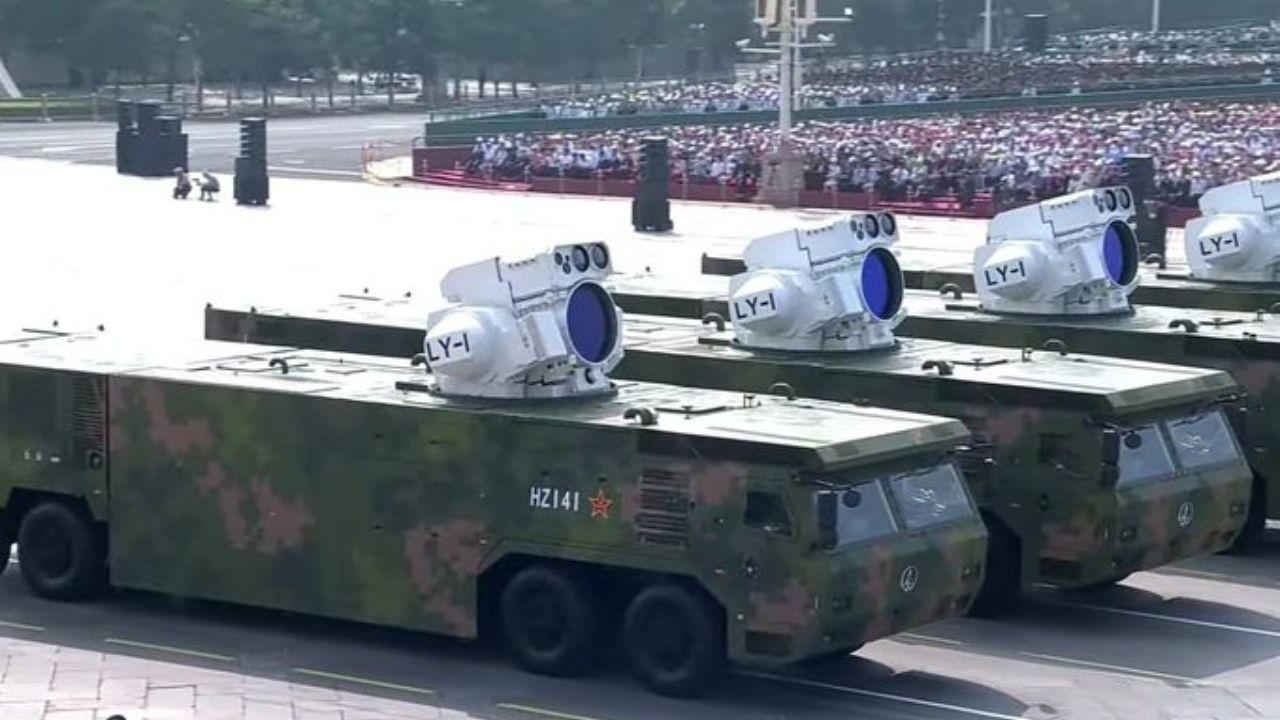
China has rolled out its latest leap in naval weaponry with the debut of the LY-1 shipboard laser—a high-energy system officially labeled capable of maritime attack. Unveiled in Beijing’s grand military parade, the LY-1 was presented in a mobile, truck-mounted version, but it is intended to operate aboard naval vessels. The emergence of this system marks a shift from defensive countermeasure talk to aggressive intent in the optics of naval warfare.
From Parade to Naval Future
Though displayed on land, the LY-1 was introduced as a shipboard weapon. Its appearance at a strategic military event signals intent—China is not merely testing this laser, it plans to integrate it into its naval fleet. The device joins a growing suite of directed-energy arms, underscoring China’s commitment to advanced maritime systems that can redefine rules at sea.
Laser Warfare Gets a New Purposeful Edge
Much of the discussion around directed-energy weapons focuses on defensive roles—countering drones or missiles. China, however, casts the LY-1 as an offensive tool. Chinese state media and commentary emphasize its power to disrupt sensors, jam optics, or even neutralize anti-ship missiles at a lower cost than conventional ammunition—suggesting China sees lasers as operational game changers.
Capital Advantage at Sea
By making the LY-1 ship-based, China gains the advantage of greater power and endurance than land systems. Naval vessels can support large power units and cooling, integral for sustained high-energy laser operation. This capability positions the LY-1 as potentially more robust than land systems, extending strike endurance and reliability at sea.
Precision in the Lasersphere
Ly-1’s proponents claim “aim equals hit”—a claim grounded in laser mechanics. Unlike missiles that arc or require predictive targeting, lasers travel light-speed and can deliver pinpoint energy. For China, a beam that disables sensors or damages underbelly of a missile emphasizes precision over explosive force—an economical and stealthy approach to engagements.
A Deeper Defense Network Emerges
The LY-1 is part of a layered air defense offering. In parallel with established missile systems—like HHQ-9C and HQ-16C—it fills a strategic niche where lasers offer silent, immediate, and reusable strike capability against incoming threats. This diversification signals a far more complex, multi-domain naval defense philosophy.
Testing Ground Evolution: Ground to Deck
The LY-1’s parade display follows earlier trials of similar laser systems on Type-071 landing ships in 2024. There, early tests focused on target tracking and power output. The transition from experimental platforms to formal unveiling suggests the object has matured into a deployable tool, ready for integration and mission execution at sea.
A Precedent in Global Naval Arms Competition
With LY-1, China joins other powers that are moving toward energy weapons on naval platforms. While the U.S. and allies experiment with laser CIWS systems and dazzling tools, China's emphasis on offensive abilities raises the technological bar—and may reshape naval competitive dynamics in the Indo-Pacific.
Strategy, Politics, and Messaging Together
The timing and optics of the laser reveal are symbolic. A grand parade, accompanied by messages of national strength, reinforce political signaling to global rivals. The weapon’s portrayal as a disruptive, precision-based "maritime attack" asset aligns well with China’s strategic narrative of emerging dominance and technological self-reliance.
Accountability in the High Seas
China’s laser stance carries ramifications. With surveillance and reconnaissance flights prowling naval domains, the demonstration of sensor-looking weapons raises concerns among maritime partners. Indeed, past reports of surveillance aircraft targeted by naval lasers in contested regions highlight escalatory risks attached to energy-based armaments.
The Weather Factor Remains Real
It’s important to remember that lasers rely heavily on atmospheric clarity. Tactical challenges remain: fog, spray, and rough seas can degrade performance, limiting utility. As sophisticated as the LY-1 may appear, its deployment will require careful calibration and not blanket reliance in all environments.
Cost Versus Cruising Combat
From a logistics view, directed-energy weapons are more cost-efficient for multiple engagements compared to missile expenditure. A well-powered laser can offer 'free shots' beyond initial investment, making it attractive when facing swarms of low-cost drones or decoys—a growing trend in naval threat environments.
Operational Integration Ahead
While revealed not yet deployed, operational testing looms—likely aboard platforms with the power profile for sustained laser use. Future rollouts will determine the system’s speed, accuracy, reliability, and true battlefield value. Success here could change how fleets protect themselves—and project force.
A Clear Shift in Naval Warfare Dawn
The LY-1's debut is not just a page in military pageantry; it’s a step toward weapons where light becomes lethal. As naval theaters globalize and threats proliferate, lasers offer a new paradigm—one where optics, energy, and precision may one day define rules of engagement in contested waters.
China laser, Maritime attack, Shipboard laser



Advances in Aerospace Technology and Commercial Aviation Recovery
Insights into breakthrough aerospace technologies and commercial aviation’s recovery amid 2025 chall

Defense Modernization and Strategic Spending Trends
Explore key trends in global defense modernization and strategic military spending shaping 2025 secu

Tens of Thousands Protest in Serbia on Anniversary of Deadly Roof Collapse
Tens of thousands in Novi Sad mark a year since a deadly station roof collapse that killed 16, prote

Canada PM Carney Apologizes to Trump Over Controversial Reagan Anti-Tariff Ad
Canadian PM Mark Carney apologized to President Trump over an Ontario anti-tariff ad quoting Reagan,

The ad that stirred a hornets nest, and made Canadian PM Carney say sorry to Trump
Canadian PM Mark Carney apologizes to US President Trump after a tariff-related ad causes diplomatic

Bengaluru-Mumbai Superfast Train Approved After 30-Year Wait
Railways approves new superfast train connecting Bengaluru and Mumbai, ending a 30-year demand, easi




