Post by : Amit
Photo : X / SPESA_org
A Critical Slowdown with Global Implications
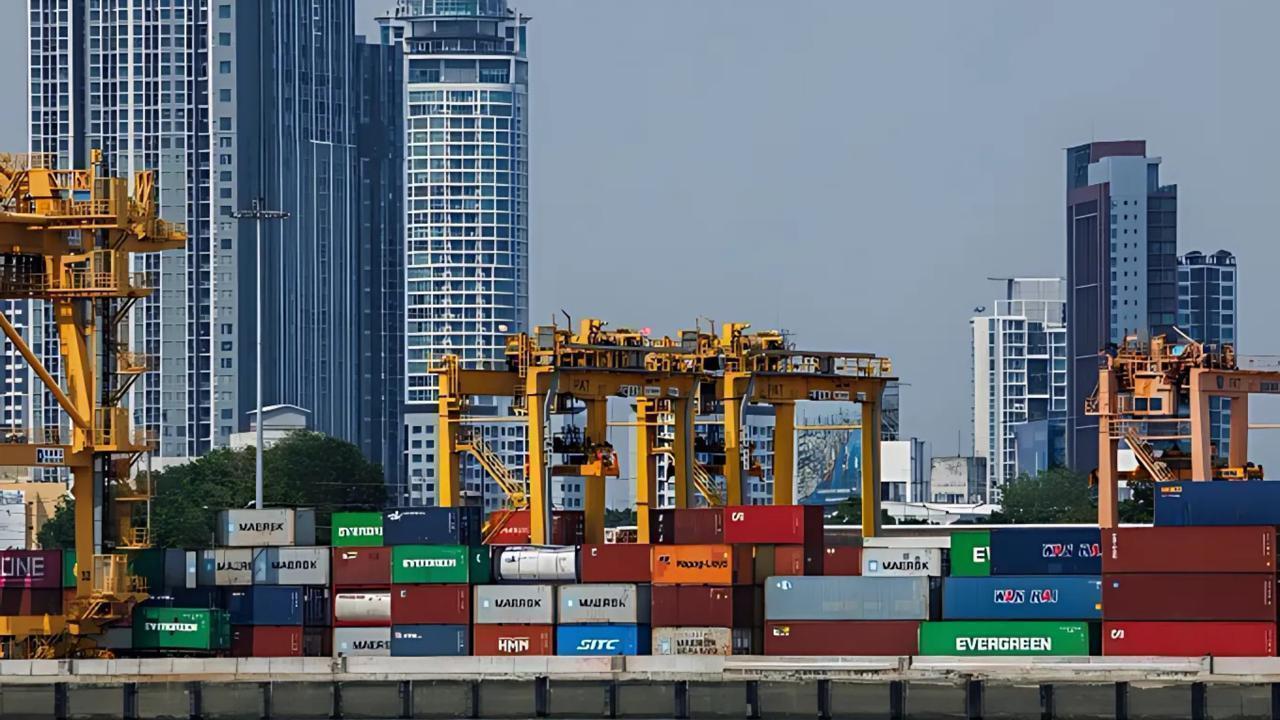
China, long considered the factory floor of the world, is showing unmistakable signs of slowing down in its export engine. Recent data from the General Administration of Customs shows a pronounced deceleration in outbound shipments, particularly in key sectors such as electronics, machinery, and textiles. June 2025 marked the sixth consecutive month of export decline, with a year-on-year drop of 9.8%. That number, though seemingly technical, represents something far deeper — a shift in the global trade architecture that has relied heavily on Chinese manufacturing muscle for over two decades.
While this may initially sound like just another chapter in the post-pandemic economic adjustment, a closer look reveals fundamental changes in how and where global production happens — and the countries now quietly stepping into roles China once dominated. At the heart of it is a story of geopolitics, rising labor costs, shifting trade alliances, and the relentless pursuit of supply chain resilience.
Rising Costs, Shrinking Margins
The most immediate trigger behind China’s export woes is cost. Over the past decade, wages in China’s manufacturing sector have risen significantly, outpacing inflation. While this has lifted living standards for millions, it has simultaneously made the country less competitive in labor-intensive industries.
Many Western companies, already under pressure to cut costs amid inflationary trends, are re-evaluating their sourcing strategies. They are finding cheaper labor markets in Vietnam, Bangladesh, India, and Mexico. Apple, for example, has ramped up iPhone assembly in India, while major textile brands like H&M and Zara are increasingly sourcing garments from Southeast Asia rather than China.
China, no doubt, still retains a dominant position in high-end manufacturing — from semiconductors to electric vehicle components. But in the low and mid-tier manufacturing categories, the shift is undeniable. Export data shows a notable contraction in categories like apparel (-15.4%), furniture (-13.2%), and basic electronics (-10.7%) over the past year.
Geopolitical Shocks and Trade Tensions
But cost isn't the only factor. Geopolitical tensions, particularly with the United States and the European Union, have significantly dampened the demand for Chinese goods. The ongoing tech war between Washington and Beijing, restrictions on chip exports, and tariffs imposed on various categories of goods have added layers of uncertainty for multinational firms.
These companies now see heavy reliance on China as a risk — not just a logistical one, but a political one. Trade relationships once taken for granted are being re-examined, with many executives now prioritizing geopolitical neutrality in their sourcing decisions. This explains the growing interest in countries like Malaysia, Indonesia, and Mexico, which offer political stability, preferential trade agreements, and — crucially — distance from US-China tensions.
The European Union, too, has started implementing stricter ESG and supply chain traceability regulations, putting additional scrutiny on goods manufactured in China. Suppliers now need to meet higher environmental and labor standards, which in some cases have added compliance costs or forced companies to switch to less scrutinized sourcing regions.
The ‘China Plus One’ Strategy Accelerates
One of the clearest outcomes of this shift is the acceleration of the "China Plus One" strategy. For years, global manufacturers talked about diversifying their production to mitigate over-reliance on China. Now, they're acting on it.
Japanese and South Korean firms are leading the pack. Sony and Panasonic have moved major production lines to Thailand and Vietnam. Samsung has expanded smartphone manufacturing in India and is investing in semiconductor packaging in the United States. American companies like Dell, HP, and Nike are increasingly relying on a mix of suppliers across Latin America and South Asia.
Even Chinese companies themselves are setting up shop abroad. Textile producers are opening new plants in Ethiopia and Egypt to gain easier access to European markets, while tech hardware suppliers are shifting assembly lines to Vietnam and Malaysia to remain competitive on price and proximity.
This isn’t an exodus — China still offers unmatched advantages in infrastructure, skilled labor, and supplier networks. But it’s clear that the world is no longer putting all its manufacturing eggs in the Chinese basket.
Logistics Reconfiguration: Ports, Pipelines, and Partnerships
With manufacturing on the move, global logistics networks are being redrawn. Vietnam’s Hai Phong Port is now one of the fastest-growing container hubs in Southeast Asia. India’s port modernization program is accelerating to meet the influx of cargo demand. Meanwhile, Mexico, already benefiting from nearshoring trends, is seeing record investments in logistics and warehousing, especially along its northern border with the U.S.
China, too, is adapting. The Belt and Road Initiative has quietly shifted its emphasis from massive infrastructure projects to trade corridor efficiency. China’s partnerships in Africa and the Middle East are helping it retain global market relevance — not by exporting goods, but by exporting capital, expertise, and turnkey infrastructure solutions.
Still, shipping companies, freight forwarders, and port operators are recalibrating routes and fleet allocations to align with the new production geographies. Supply chain agility — once a buzzword — is now a survival strategy.
Impacts on Raw Materials and Component Supply
The export slowdown also affects upstream industries. China's demand for raw materials like copper, aluminum, and oil has plateaued. This is reverberating across global commodity markets. Chilean copper exports and Brazilian iron ore shipments, which once rose in tandem with Chinese factory output, are now facing declining demand.
Conversely, suppliers in resource-rich countries are seeking to move up the value chain — adding processing and refining capacities to export more finished or semi-finished goods instead of raw materials. Indonesia’s nickel strategy, for instance, is a textbook example. The country has banned raw nickel exports and is instead focusing on local battery-grade material production, targeting the global EV supply chain.
For component manufacturers — especially in electronics and automotive — the shift is complex. While many still depend on Chinese factories for specialized parts, there’s growing investment in duplicating capabilities in India, Eastern Europe, and Mexico. Supply chain resilience now means redundancy — having multiple suppliers in different countries, even if it's costlier.
What This Means for the Global Supply Chain
The slow erosion of China’s export dominance doesn’t mean a collapse — but rather a rebalance. Global supply chains are evolving from a hub-and-spoke model centered on China to a more distributed and resilient network.
This has profound implications for how companies plan their production, logistics, and risk management strategies. Instead of the lowest-cost option, companies are now optimizing for geopolitical safety, ESG compliance, and delivery certainty. These are no longer trade-offs — they are central parameters in the new global supply chain playbook.
China will remain vital, particularly in capital-intensive and high-tech sectors. But its role is changing from "indispensable manufacturer" to "strategic partner" in a more diversified landscape. This will force Chinese policymakers to double down on innovation, automation, and value-added exports to stay competitive.
Opportunity or Warning?
For countries like India, Vietnam, and Mexico, this shift is a moment of opportunity. Investment is pouring in, new jobs are being created, and infrastructure is being built at record pace. Governments in these regions are racing to seize the moment by offering incentives, fast-tracking permits, and modernizing ports and roads.
But these nations will also face challenges — scaling up manufacturing sustainably, maintaining labor standards, and upgrading workforce skills fast enough to meet rising demand.
For global companies, the key will be adaptability. The age of static, long-haul supply chains is giving way to dynamic, responsive, multi-node networks. Those who embrace the change, invest in redundancy, and remain agile will likely thrive.
And for China, the message is mixed. The export slowdown may be temporary, but the underlying trend is structural. The country’s future lies not just in making things, but in designing, engineering, and powering the next generation of global products.
The New Shape of Global Trade
China’s export slowdown is more than a cyclical downturn — it’s a reflection of a world in transition. The unipolar manufacturing model that defined the past 30 years is giving way to a multipolar system built on resilience, geopolitical diversification, and shared capabilities. As global trade routes and production centers shift, companies and countries alike must rethink their roles. The age of China-only sourcing is fading, and with it comes a new era of interconnected, but distributed, global supply chains.
China, Geopolitical



Advances in Aerospace Technology and Commercial Aviation Recovery
Insights into breakthrough aerospace technologies and commercial aviation’s recovery amid 2025 chall

Defense Modernization and Strategic Spending Trends
Explore key trends in global defense modernization and strategic military spending shaping 2025 secu

Tens of Thousands Protest in Serbia on Anniversary of Deadly Roof Collapse
Tens of thousands in Novi Sad mark a year since a deadly station roof collapse that killed 16, prote

Canada PM Carney Apologizes to Trump Over Controversial Reagan Anti-Tariff Ad
Canadian PM Mark Carney apologized to President Trump over an Ontario anti-tariff ad quoting Reagan,

The ad that stirred a hornets nest, and made Canadian PM Carney say sorry to Trump
Canadian PM Mark Carney apologizes to US President Trump after a tariff-related ad causes diplomatic

Bengaluru-Mumbai Superfast Train Approved After 30-Year Wait
Railways approves new superfast train connecting Bengaluru and Mumbai, ending a 30-year demand, easi




