Post by : Avinab Raana
Photo : X / Reuters Business
Global Auto Design Gets a Chinese Boost
Automotive design is changing fast. Traditional global automakers are increasingly turning to Chinese EV technology to power up their electric vehicle (EV) lineups. Instead of building everything in house, they are licensing platforms, software, powertrains, and components from Chinese firms. This shift accelerates development, cuts costs, and brings new EVs to market faster than before. The trend call it “China Inside” may well reshape the future of car design worldwide.
The Audi E5 Signal: When Audacity Meets Efficiency
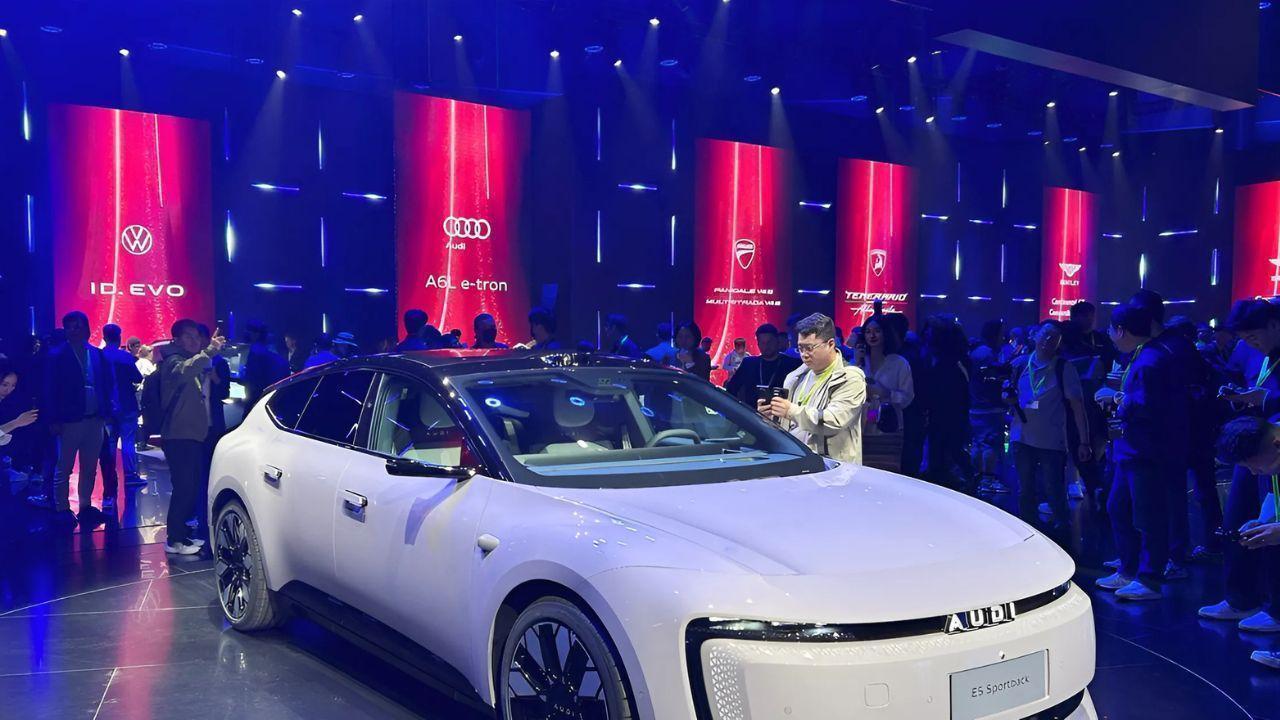
One of the clearest examples is Audi’s new E5 Sportback. Under the hood, it rests on technology from a Chinese partner, including its electric powertrain, battery systems, and advanced driving features. What used to take years was achieved in just 18 months, setting a new standard in speed. The approach shows that when legacy brands tap into platform licensing, they can leapfrog traditional R&D timelines. For automakers, that means responding more quickly to shifting consumer demand and regulatory pressure.
What “Platform Licensing” Means in Practice
Platform licensing allows global auto firms to buy or rent ready-made vehicle architectures or modules from EV chassis to battery systems. Using designs from Chinese firms like SAIC, Xpeng, or GAC, these brands integrate cost-efficient, proven systems rather than reinvent them. Features such as infotainment software, advanced driver assistance, and electric propulsion pods move from experimental to standard. This reuse of proven parts drives down both design risk and manufacturing cost.
Who’s Already Doing It
Toyota, Volkswagen, Renault, and Ford are among those embracing this new model. These automakers are partnering with Chinese firms to build EVs quickly and at lower cost. By licensing technology rather than developing everything themselves, they can introduce models faster. The strategy helps them stay competitive against home-grown Chinese brands that already benefit from integrated supply chains and large scale. It also helps global brands that face rising input costs and tighter regulations.
Chinese Firms Cashing In
Chinese EV firms aren’t just being copied, they are growing richer. Those that build powertrains, batteries, software, and vehicle platforms now sell their innovations to global automakers. They gain revenue, scale their technologies, and improve their export profile in the process. Domestic market pressures and international trade tensions have pushed these companies to diversify, seeking both licensing deals and export partners. Their rise reshapes the value chain in automotive components and systems.
Cost, Speed, and AI inside the Cockpit
Automakers licensing Chinese EV tech gain more than just hardware. Sophisticated software for infotainment, connectivity, and driver assistance comes bundled in many agreements. Customers expect features like over-the-air updates, connected voice assistants, and seamless smartphone integration. These were once premium additions; now they are expected. Using proven Chinese systems cuts software development time because many pieces are already designed for mass production in China’s huge EV market.
Design Identity vs Shared DNA
One challenge of leaning on Chinese tech is maintaining brand identity. When multiple automakers use similar EV platforms, some designs risk looking alike. Trim, lighting signatures, interior layouts, and brand DNA become crucial to avoid dilution. Some companies worry that over-reliance blurs what makes a brand unique. To balance this, many firms license core systems but insist on designing panels, lighting, materials, and user experience themselves. That way, the car feels both modern and recognizably theirs.
The Speed Advantage in a Competitive Market
Time to market has become a race. Governments are mandating zero emission goals, and consumers want high tech and affordable EVs. Global automakers using Chinese EV technology can shorten cycles of design, prototyping, testing, and launch. What might once have taken three or four years can now happen in eighteen to twenty four months. That speed can make or break competitiveness, especially for mass-market models or entry-level EVs.
Regulatory and Strategic Risks
Using Chinese technology carries risks. Intellectual property must be protected. Quality control must meet safety and environmental standards across different markets. Automakers must navigate export regulations, trade restrictions, and political pressures. For some buyers, knowing a vehicle is built using parts from Chinese suppliers triggers concerns over supply chain transparency, component traceability, and regulatory compliance. Balancing these risks is part of the decision to license rather than produce in house.
Global Automakers Lean In
In response to these dynamics, global brands are making moves. Joint development deals, technology licensing, and component sourcing from Chinese firms are growing. Some automakers are even designing models specifically for certain markets using Chinese “core tech” variants and then customizing design details for regional preferences. The goal: retain premium brand status while improving cost structure and speed to market. Many believe this hybrid approach will define the next decade of EV design.
China’s Domestic Market Pressure Drives Innovation
China’s own EV market is intensely competitive. Consumer demands are high for performance, range, design, and smart features. Price sensitivity is strong. To win, Chinese firms invest heavily in R&D, scale, and software integration. That pressure pushes innovation forward a virtuous cycle. Those innovations become improved components and platforms that Chinese firms can export or license. The global effect is that free-riding on domestic innovation has become viable.
Consumer Experience Improves Too
Customers benefit from this trend. They get EVs with better tech, shorter wait times, and lower prices. As global automakers adopt Chinese EV technology, features like larger battery range, faster charging, smarter user interfaces become more common. Buyers in diverse markets can access advanced EVs without paying the premium once associated with cutting-edge models. This helps accelerate EV adoption globally.
Strategic Balance: Brands in Control
Smart automakers don’t discard internal design and engineering entirely. They keep chassis tuning, aesthetic design, user interface customization, and safety standards within their control. Branding decisions how an EV looks, feels, and sounds remain in hands of the manufacturer. Licensing becomes a tool, not a crutch. The most successful players seem those who combine Chinese EV technology for efficiency with strong brand differentiation for perception.
Long-Term Implications and Outlook
Over the long run, this strategy of using Chinese tech may push global automakers to rethink their supply chains. Full EV platforms, software stacks, and components may become modular trade items much like CPUs or GPUs are in computers. Companies that adapt quickly are likely to thrive. Those who cling strictly to in-house legacy systems risk falling behind. Meanwhile, Chinese firms who build trusted, high-quality systems benefit not just from domestic scale but revenue from the world’s leading automakers.
Challenges to Watch
Three major challenges lie ahead. First, regulatory scrutiny: safety, emissions, data privacy standards vary globally. Chinese tech must adapt or risk being blocked. Second, supply chain stability: global logistics, geopolitical risk, component sourcing must be reliable. Third, perception: consumers often equate “made with Chinese parts” with lower quality or cheaper brand but that is changing fast. Automakers and Chinese partners will need to deliver consistent quality to gain trust across markets.
A New Design Paradigm in Motion
The “China Inside” movement is no longer theory, it is transforming global auto design strategies now. Legacy automakers leaning on Chinese EV technology are moving faster, reducing costs, and stretching innovation. As platform licensing becomes more common, global automakers may become hybrid designers part creator, part collaborator. For consumers, it means better EVs sooner. For automakers, it means choices about identity, risk, and where innovation will come from. The shift promises to redraw lines of design, development, and competitive advantage accelerating the future of mobility.
Chinese EV technology, Global automakers, Platform licensing



Advances in Aerospace Technology and Commercial Aviation Recovery
Insights into breakthrough aerospace technologies and commercial aviation’s recovery amid 2025 chall

Defense Modernization and Strategic Spending Trends
Explore key trends in global defense modernization and strategic military spending shaping 2025 secu

Tens of Thousands Protest in Serbia on Anniversary of Deadly Roof Collapse
Tens of thousands in Novi Sad mark a year since a deadly station roof collapse that killed 16, prote

Canada PM Carney Apologizes to Trump Over Controversial Reagan Anti-Tariff Ad
Canadian PM Mark Carney apologized to President Trump over an Ontario anti-tariff ad quoting Reagan,

The ad that stirred a hornets nest, and made Canadian PM Carney say sorry to Trump
Canadian PM Mark Carney apologizes to US President Trump after a tariff-related ad causes diplomatic

Bengaluru-Mumbai Superfast Train Approved After 30-Year Wait
Railways approves new superfast train connecting Bengaluru and Mumbai, ending a 30-year demand, easi




