Post by : Amit
Copenhagen Metro Deploys Smart Doors to Contain Smoke During Fires
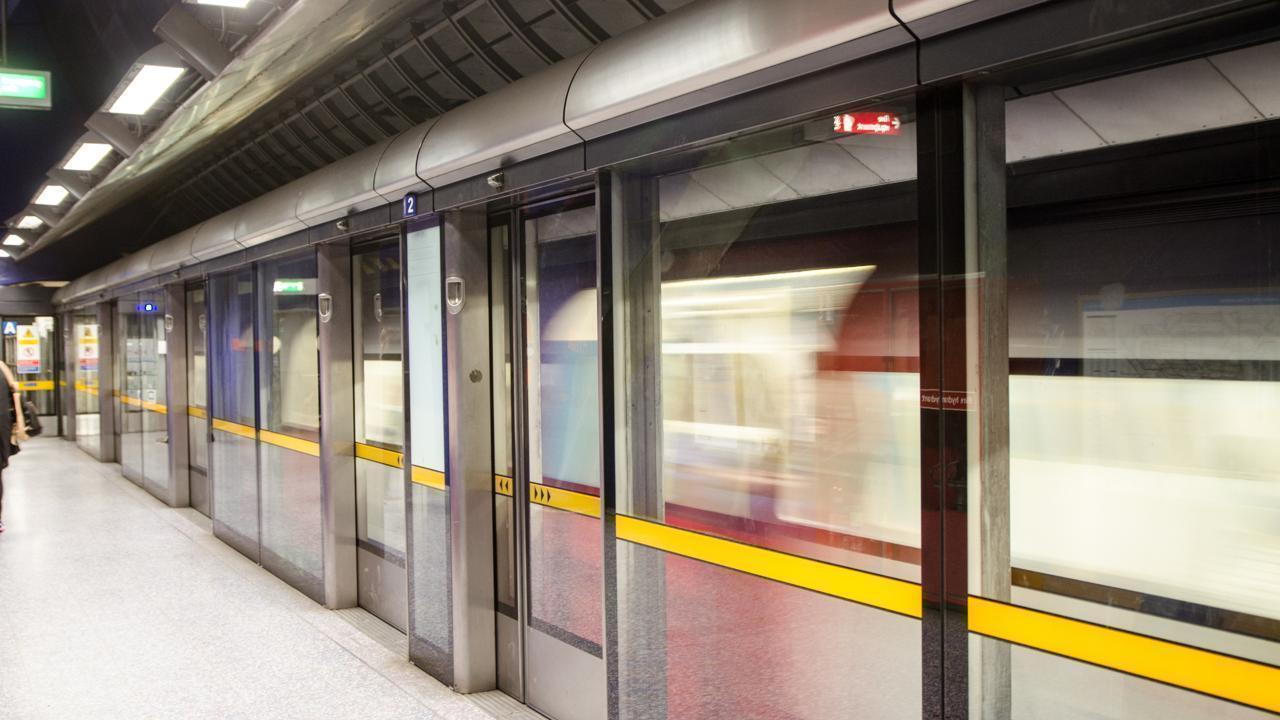
The Copenhagen Metro has introduced a cutting-edge safety upgrade to its underground infrastructure: smart smoke isolation doors designed to prevent the spread of fire and smoke during emergencies. This strategic rollout, initiated in collaboration with Danish safety engineering firms, aims to enhance passenger safety and emergency response in one of Europe’s busiest automated metro networks.
The new doors are now operational across key transfer and interchange stations on the M1 and M2 lines and will soon expand to sections of the newer M3 and M4 lines. According to Metroselskabet, the authority operating Copenhagen’s metro, these systems are engineered to activate automatically in the event of fire or heavy smoke detection, isolating tunnel sections and platforms to enable safer evacuations.
A Leap Forward in Underground Fire Safety
Fire in underground transport systems poses a unique challenge. Smoke can quickly travel through uninterrupted tunnels, ventilation ducts, and escalator shafts—often faster than people can escape. While Copenhagen’s metro has maintained a stellar safety record since its 2002 debut, recent risk simulations prompted a re-evaluation of tunnel containment measures.
In a 2024 scenario test simulating a fire in a tunnel between Nørreport and Kongens Nytorv, results showed that smoke could spread across three stations in under 5 minutes without sufficient isolation. These findings catalyzed Metroselskabet’s investment in intelligent doors that work in tandem with fire sensors, air quality monitors, and evacuation systems.
AI-Integrated Control and Passive Safety Engineering
Unlike traditional fire doors, Copenhagen’s smart isolation system combines passive fire protection principles with active digital control. The smoke doors are constructed using multi-layer steel-clad composites with intumescent seals, capable of withstanding fire for up to 120 minutes while expanding to close gaps in case of heat.
The system architecture integrates:
The smart doors can be triggered automatically or remotely via the Central Operations Command. Doors are also equipped with panic-safe escape levers, ensuring that people never get locked in during an emergency.
From Concept to Deployment: Danish Engineering Leads the Charge
The doors were developed in collaboration with COWI, a Danish infrastructure consultancy, and Odense-based fire systems integrator ProtectioTech. Installation began quietly in late 2023 after a six-month prototyping phase, and the full retrofit across priority stations was completed by mid-July 2025.
Lars Knudsen, senior safety engineer at COWI, said:
"Our goal was to create a containment strategy that works with, not against, the flow of evacuation. These doors channel people away from danger while halting the spread of smoke—two critical factors in saving lives."
The project also benefited from a partial grant by the EU’s Horizon RailTech Innovation Fund, highlighting Europe’s growing focus on fire resilience in public transit.
What’s at Stake: Climate, Materials, and Human Behavior
Designing safety for modern metro systems goes beyond technology. Smoke and fire behavior in enclosed transit spaces depends on air pressure, material combustion profiles, and even passenger density. The new doors are part of a larger overhaul that includes:
The smoke doors also respond to behavior modeling data. Using machine learning, Metroselskabet’s AI control system predicts how crowds will move under stress, adapting door closure sequences to avoid bottlenecks or panic situations.
Reactions: Confidence from Safety Experts, Praise from the Public
The initiative has drawn strong approval from European fire safety professionals and metro passengers alike. Experts see it as a scalable model for other metro systems, especially as climate change increases the risk of infrastructure overheating, electrical faults, and spontaneous fires in dry seasons.
Signe Olesen, head of Denmark’s Fire Safety Research Institute, praised the move:
"This is an intelligent use of active infrastructure to address real-world emergency dynamics. Copenhagen is ahead of the curve."
For daily commuters, the doors are barely noticeable—seamlessly integrated into station walls and tunnels. But the knowledge that the system is watching out for them has boosted public confidence.
Maria Nissen, a passenger who travels daily between Forum and Ørestad, said:
"I didn’t even notice the doors at first. Knowing they’re smart and automatic makes me feel safer, especially when traveling during busy hours."
A Model for the Future: Exporting the Tech Beyond Denmark
Metroselskabet and its partners have already received inquiries from metro operators in Brussels, Helsinki, and Warsaw interested in adapting the system for their networks. A white paper on smart smoke containment in urban rail will be published by the Danish Transport Ministry later this year.
The Copenhagen deployment could become a blueprint for future metro safety upgrades, especially in dense urban environments where evacuation timelines are tight, and tunnel designs are complex.
Safety by Design, Not Afterthought
Copenhagen’s new smoke isolation doors represent a broader paradigm shift—where fire safety is no longer just about alarms and sprinklers, but about automated architecture that reacts in real time. In an age where metro systems are increasingly autonomous and data-driven, this move reinforces that passenger safety must evolve at the same pace.
With these innovations, the city is making a bold statement: resilience, not just speed, defines a world-class metro system.
Copenhagen Metro, Urban Metro Sysytem



Advances in Aerospace Technology and Commercial Aviation Recovery
Insights into breakthrough aerospace technologies and commercial aviation’s recovery amid 2025 chall

Defense Modernization and Strategic Spending Trends
Explore key trends in global defense modernization and strategic military spending shaping 2025 secu

Tens of Thousands Protest in Serbia on Anniversary of Deadly Roof Collapse
Tens of thousands in Novi Sad mark a year since a deadly station roof collapse that killed 16, prote

Canada PM Carney Apologizes to Trump Over Controversial Reagan Anti-Tariff Ad
Canadian PM Mark Carney apologized to President Trump over an Ontario anti-tariff ad quoting Reagan,

The ad that stirred a hornets nest, and made Canadian PM Carney say sorry to Trump
Canadian PM Mark Carney apologizes to US President Trump after a tariff-related ad causes diplomatic

Bengaluru-Mumbai Superfast Train Approved After 30-Year Wait
Railways approves new superfast train connecting Bengaluru and Mumbai, ending a 30-year demand, easi




