Post by : Amit
New Delhi, June 2025 — The global semiconductor industry, the silent yet indispensable backbone of modern technology, is once again under severe scrutiny as new warnings emerge over the vulnerability of its supply chains. At the heart of this crisis lies an escalating dependence on a narrow and geopolitically sensitive group of countries for the supply of critical raw materials—minerals without which the world's insatiable demand for advanced electronics, electric vehicles, artificial intelligence, and defense technologies would grind to a halt.
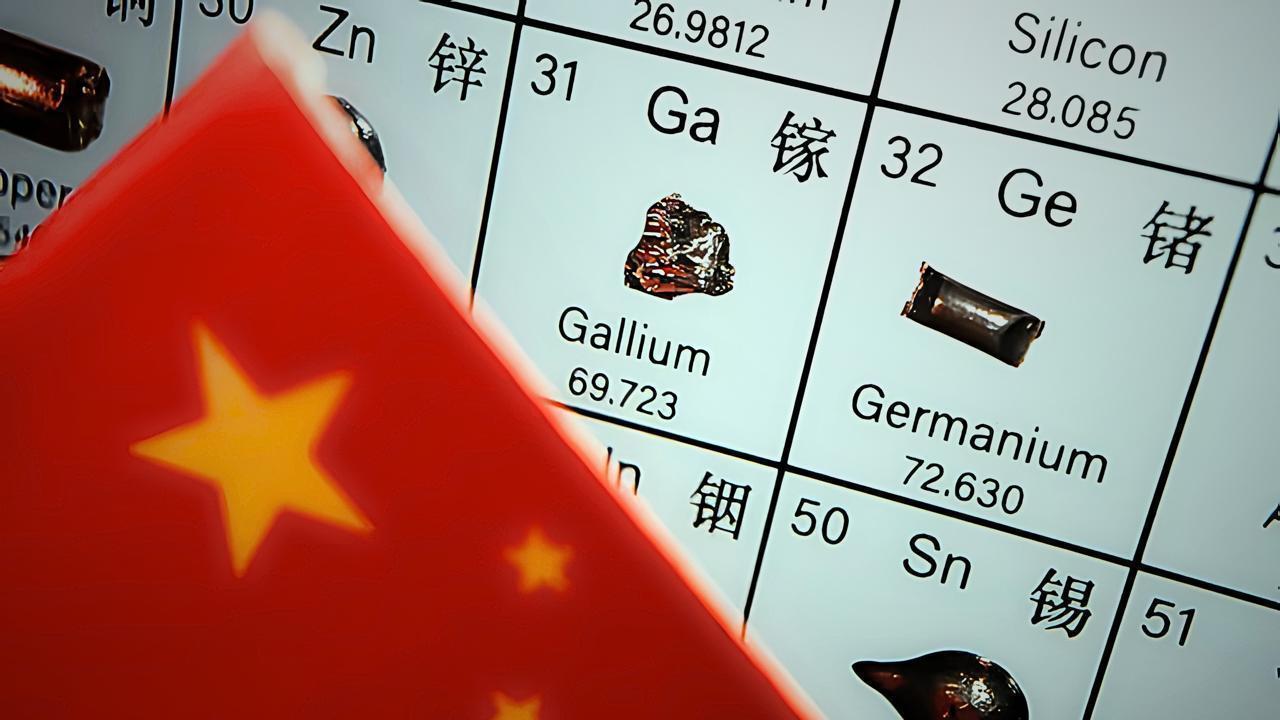
The latest alert comes from SEMI, the leading global association representing the electronics manufacturing and design supply chain. In its recent advisory, SEMI highlights the precarious state of the global chip manufacturing ecosystem, which is dangerously reliant on a limited number of suppliers for essential minerals such as gallium, germanium, palladium, and silicon. These minerals, though rarely discussed outside technical circles, form the very core of semiconductor manufacturing processes, playing crucial roles in devices that power everyday life—from smartphones and laptops to data centers, autonomous vehicles, and even national security systems.
The current structure of the global supply chain paints a sobering picture. Gallium and germanium, for instance, are overwhelmingly sourced from China, which has established itself as the dominant producer of these rare and strategically vital materials. Palladium, another critical element, is largely supplied by Russia and South Africa, while high-purity silicon wafers, the bedrock of integrated circuits, come from select global producers including China, Japan, and the United States. This geographical concentration exposes the entire semiconductor industry to disproportionate risks from geopolitical tensions, export restrictions, and localized supply disruptions, all of which have the potential to trigger ripple effects across the global economy.
This fragility is not merely theoretical. In recent years, trade disputes, sanctions, and environmental crackdowns have already demonstrated how swiftly semiconductor supply chains can be upended. The memory of the global chip shortage between 2020 and 2023 still lingers in the minds of industry leaders and governments alike—a period when the smallest disruption in supply led to massive delays in the automotive, consumer electronics, and telecommunications sectors. Prices skyrocketed, production lines were stalled, and the world was starkly reminded of the semiconductor industry's centrality to the digital era.
The significance of minerals like gallium and germanium goes far beyond their raw material status. Gallium is critical for the manufacture of high-speed semiconductors and advanced defense systems, enabling technologies such as radar and satellite communications. Germanium is essential for fiber-optic networks, infrared optics, and the production of highly efficient solar cells—technologies that lie at the heart of both civilian infrastructure and national defense. Palladium, meanwhile, is crucial for memory storage devices, sensors, and catalytic converters, while silicon remains the irreplaceable foundation for integrated circuits used in nearly every electronic device.
The stakes are incredibly high because the semiconductor industry's health directly influences the pace of global technological advancement. From artificial intelligence and machine learning to autonomous vehicles and quantum computing, virtually every emerging frontier of innovation is powered by microchips. A supply chain breakdown could therefore have cascading effects on global competitiveness, economic stability, and even national security.
Recognizing the gravity of this threat, SEMI has called on governments, manufacturers, and the entire electronics ecosystem to act swiftly and decisively. Industry experts are emphasizing the need for comprehensive diversification strategies to reduce over-reliance on any single nation for critical materials. This involves expanding mining operations in geopolitically stable regions, accelerating research into alternative materials, and investing heavily in recycling and circular economy approaches to recover valuable minerals from end-of-life electronics.
Moreover, ethical and sustainable sourcing has become an equally important priority. Many of these minerals originate from regions plagued by environmental degradation, labor violations, and political instability. Ensuring that materials are sourced responsibly—without fueling conflict or causing irreparable harm to communities and ecosystems—has emerged as a key concern for both corporations and regulators.
Several countries have already started taking steps in this direction. The United States, through the CHIPS and Science Act, has pledged billions of dollars toward strengthening domestic semiconductor manufacturing and reducing foreign dependence. The European Union, similarly, has rolled out its own strategic plans to bolster chip production capabilities within the continent. Japan and South Korea, two semiconductor powerhouses, are also ramping up efforts to secure diversified sources of critical materials. However, experts caution that these efforts, while commendable, are still in their infancy and may not yield tangible results quickly enough to avert near-term risks.
Adding to the complexity of the situation is the rapid acceleration of demand for chips, driven by the global digital transformation. The rise of electric vehicles alone is set to multiply semiconductor consumption many times over, as each EV relies on hundreds of microchips for everything from battery management to autonomous driving features. Simultaneously, the expansion of 5G networks, cloud computing, and artificial intelligence is putting unprecedented pressure on supply chains already stretched to their limits.
The potential consequences of inaction are stark. A major disruption in the availability of these critical minerals could lead to product shortages, increased costs for consumers, delayed technological rollouts, and even economic stagnation in sectors that rely on innovation to drive growth. More ominously, a scenario where geopolitical rivalries weaponize the control of essential materials could trigger new global tensions, reminiscent of past energy crises but with far-reaching implications in the digital domain.
Industry insiders are urging a more collaborative international approach to address these challenges. Just as global cooperation proved essential in tackling the COVID-19 pandemic, a similar model of shared responsibility, information exchange, and investment in joint ventures could help secure the semiconductor supply chain. Building regional alliances, sharing technological know-how, and creating financial incentives for responsible mining and material innovation are among the strategies being actively explored.
Yet time is running short. The semiconductor industry’s dependence on these critical minerals is only set to deepen as more sectors digitize, electrify, and automate. Governments and corporations must move beyond reactive strategies and instead adopt a proactive stance—one that anticipates future disruptions rather than merely responds to them.
The SEMI alert concludes with a stark warning: safeguarding the semiconductor supply chain is no longer an optional priority but a foundational necessity for economic resilience, technological leadership, and national security in the 21st century. Without urgent action to secure reliable, ethical, and sustainable access to these essential raw materials, the digital future the world is racing towards could find itself on perilously unstable ground.
#trending#latest#Semiconductor #China #india



Advances in Aerospace Technology and Commercial Aviation Recovery
Insights into breakthrough aerospace technologies and commercial aviation’s recovery amid 2025 chall

Defense Modernization and Strategic Spending Trends
Explore key trends in global defense modernization and strategic military spending shaping 2025 secu

Tens of Thousands Protest in Serbia on Anniversary of Deadly Roof Collapse
Tens of thousands in Novi Sad mark a year since a deadly station roof collapse that killed 16, prote

Canada PM Carney Apologizes to Trump Over Controversial Reagan Anti-Tariff Ad
Canadian PM Mark Carney apologized to President Trump over an Ontario anti-tariff ad quoting Reagan,

The ad that stirred a hornets nest, and made Canadian PM Carney say sorry to Trump
Canadian PM Mark Carney apologizes to US President Trump after a tariff-related ad causes diplomatic

Bengaluru-Mumbai Superfast Train Approved After 30-Year Wait
Railways approves new superfast train connecting Bengaluru and Mumbai, ending a 30-year demand, easi




