Post by : Amit
Photo : X / Vince Dago
A New Chapter in Business Aviation
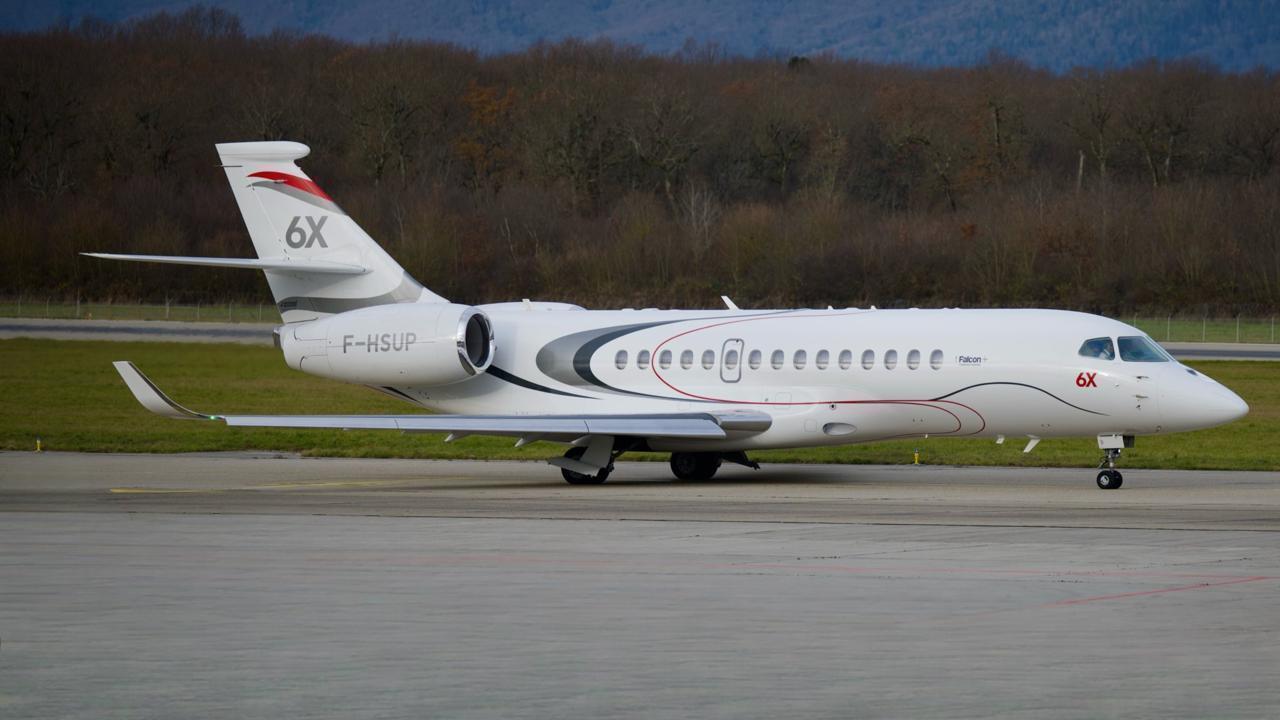
In the fast-evolving world of business aviation, aircraft manufacturers are under constant pressure to deliver not just speed and range, but also a luxurious, safe, and efficient flying experience. French aerospace giant Dassault Aviation, known for blending military-grade engineering with refined corporate aviation design, has stepped into the spotlight once again with the Falcon 6X. Marketed as the world’s first “ultra-widebody” business jet, the Falcon 6X is more than just a new aircraft—it represents a bold statement about where the future of private aviation is heading.
Unveiled as the successor to the ill-fated Falcon 5X program, the 6X embodies resilience, innovation, and forward-looking design. It is positioned to challenge dominant players like Gulfstream and Bombardier in the long-range luxury jet segment, while also setting new benchmarks for comfort, performance, and technology.
Dassault’s Legacy of Excellence
Dassault Aviation has long been a household name in aerospace, straddling two very different worlds: cutting-edge military aircraft and high-end business jets. The Falcon family, launched in the 1960s, has consistently reflected this dual DNA—offering precision engineering and unmatched reliability. Aircraft like the Falcon 7X and 8X have carved a strong reputation among corporate operators and private owners.
The Falcon 6X, however, marks a turning point. It represents Dassault’s recognition that business jet buyers today are no longer content with performance alone; they demand a flying environment that feels like a five-star hotel suite, coupled with sustainability, efficiency, and advanced safety features. The jet, therefore, positions Dassault not just as a competitor in the segment, but as a pioneer of new standards.
From Setback to Comeback: The 6X Story
The origins of the Falcon 6X trace back to Dassault’s abandoned Falcon 5X project, which was scrapped due to repeated delays with its Snecma Silvercrest engines. Rather than retreating, Dassault pivoted quickly. In 2018, the company announced the Falcon 6X, powered instead by Pratt & Whitney Canada’s PW812D engines, known for their reliability and fuel efficiency.
This turnaround reflected Dassault’s agility and determination to maintain its reputation. Customers who had been eagerly awaiting the 5X found reassurance in Dassault’s swift re-entry with the 6X, which not only replaced the cancelled program but also improved upon it with a wider cabin and enhanced systems.
A Cabin Like No Other
The cabin is where the Falcon 6X truly sets itself apart. Marketed as the industry’s first “ultra-widebody” business jet, it boasts a cross-section height of 6 feet 6 inches and a width of 8 feet 6 inches—making it the largest cabin in its class.
Passengers experience a living space that is both practical and indulgent. The cabin offers multiple floor plan configurations, allowing for lounges, private suites, conference areas, or even entertainment zones. Large windows flood the interior with natural light, while Dassault’s advanced soundproofing ensures that even at high speeds, conversations remain whisper-quiet.
One of the most striking features is the skylight—the first ever in a business jet—positioned above the galley. It not only brightens the space but enhances the sense of openness, reinforcing the aircraft’s “widebody” branding.
Performance and Range
Behind the luxury lies serious engineering muscle. The Falcon 6X can fly 5,500 nautical miles at Mach 0.85, connecting city pairs such as London–Los Angeles or Paris–Tokyo non-stop. Its Pratt & Whitney PW812D engines are optimized for fuel efficiency, reduced emissions, and lower operating costs.
The aircraft also benefits from Dassault’s renowned wing design, which draws heavily from its military heritage. The wing is engineered for both high-speed cruise and low-speed stability, enabling shorter runway operations and greater flexibility in accessing airports worldwide.
For passengers, this means fewer stops, more destination options, and smoother ride quality—a critical advantage for business travelers who value both efficiency and comfort.
Safety at the Core
Dassault has integrated some of its most advanced safety technologies into the Falcon 6X. A standout feature is the FalconEye Combined Vision System, which merges synthetic vision with enhanced vision capabilities. This gives pilots clear situational awareness, even in poor weather or low-visibility conditions, significantly improving safety margins.
The cockpit also includes Dassault’s digital flight control system, adapted from its fighter jets, offering precision handling and reducing pilot workload. Combined with redundant systems and intelligent monitoring, the Falcon 6X is built with the kind of resilience one expects from a manufacturer with military DNA.
Competing in a Crowded Market
The ultra-long-range business jet market is highly competitive, dominated by Gulfstream’s G500/G600 series and Bombardier’s Global 6500/7500. These rivals offer comparable performance and luxury, making differentiation difficult. Dassault’s answer lies in a blend of cabin innovation, safety, and operational flexibility.
The Falcon 6X’s ultra-wide cabin is a unique selling point. While Gulfstream emphasizes speed and Bombardier highlights range, Dassault is pitching comfort and versatility as the core differentiators. By delivering a cabin experience unmatched in size and design, Dassault is targeting not just corporate operators but also high-net-worth individuals seeking the ultimate in airborne lifestyle.
Operator Interest and Market Momentum
Since its launch, the Falcon 6X has attracted strong interest from charter operators, corporations, and private owners. The jet’s ability to combine long range with airport flexibility makes it appealing for operators in regions with diverse infrastructure, such as Asia-Pacific and the Middle East.
Charter providers see the aircraft as a flagship option for clients who demand exclusivity and comfort. Meanwhile, corporations value its efficiency and versatility, allowing executives to connect international hubs without sacrificing productivity or rest.
Deliveries are expected to gain momentum through 2025 and beyond, as Dassault ramps up production to meet growing demand.
Sustainability in Focus
While business jets are often criticized for their carbon footprint, Dassault has made strides to address sustainability. The PW812D engines are compatible with sustainable aviation fuel (SAF), reducing lifecycle emissions by up to 80% when used at scale. Dassault has also optimized aerodynamics and weight distribution to ensure greater fuel efficiency.
These efforts resonate with a new generation of customers who are increasingly conscious of environmental responsibility—even in the luxury travel segment. Dassault’s sustainability positioning strengthens the Falcon 6X’s long-term market appeal, particularly in Europe where regulators are tightening emissions requirements.
Future
The Falcon 6X is not just another addition to Dassault’s lineup—it is a strategic move to reinforce the company’s role as an innovator in business aviation. With its widebody cabin, advanced safety systems, and robust performance, it is well-placed to challenge Gulfstream and Bombardier for dominance in the ultra-long-range market.
Looking ahead, industry analysts believe the 6X will serve as a foundation for Dassault’s future programs. Rumors suggest that the lessons learned in the 6X program could inform even larger, longer-range jets, positioning Dassault as a key player in the next generation of business aviation.
A Game-Changer in the Sky
The Dassault Falcon 6X is more than an aircraft—it is a symbol of innovation, resilience, and ambition. Born out of the setbacks of the 5X, it has emerged as one of the most exciting new entrants in business aviation. With its ultra-wide cabin, impressive performance, and state-of-the-art safety features, it offers a compelling alternative in a market crowded with strong competitors.
For Dassault, the 6X cements its reputation as a manufacturer that listens to customers, adapts to challenges, and continues to push boundaries. For the industry, it sets a new bar for what a luxury business jet can deliver. And for passengers, it promises an experience that redefines the very meaning of private aviation.
Aviation



Advances in Aerospace Technology and Commercial Aviation Recovery
Insights into breakthrough aerospace technologies and commercial aviation’s recovery amid 2025 chall

Defense Modernization and Strategic Spending Trends
Explore key trends in global defense modernization and strategic military spending shaping 2025 secu

Tens of Thousands Protest in Serbia on Anniversary of Deadly Roof Collapse
Tens of thousands in Novi Sad mark a year since a deadly station roof collapse that killed 16, prote

Canada PM Carney Apologizes to Trump Over Controversial Reagan Anti-Tariff Ad
Canadian PM Mark Carney apologized to President Trump over an Ontario anti-tariff ad quoting Reagan,

The ad that stirred a hornets nest, and made Canadian PM Carney say sorry to Trump
Canadian PM Mark Carney apologizes to US President Trump after a tariff-related ad causes diplomatic

Bengaluru-Mumbai Superfast Train Approved After 30-Year Wait
Railways approves new superfast train connecting Bengaluru and Mumbai, ending a 30-year demand, easi




