Post by : Saif
Delhi continues to struggle with serious air pollution, especially during winter months when dust, smoke, and vehicle emissions hang heavily in the air. In response to this ongoing challenge, the Delhi Metro Rail Corporation (DMRC) has stepped up its anti-pollution drive by expanding the use of mist spray systems across several metro stations and facilities.
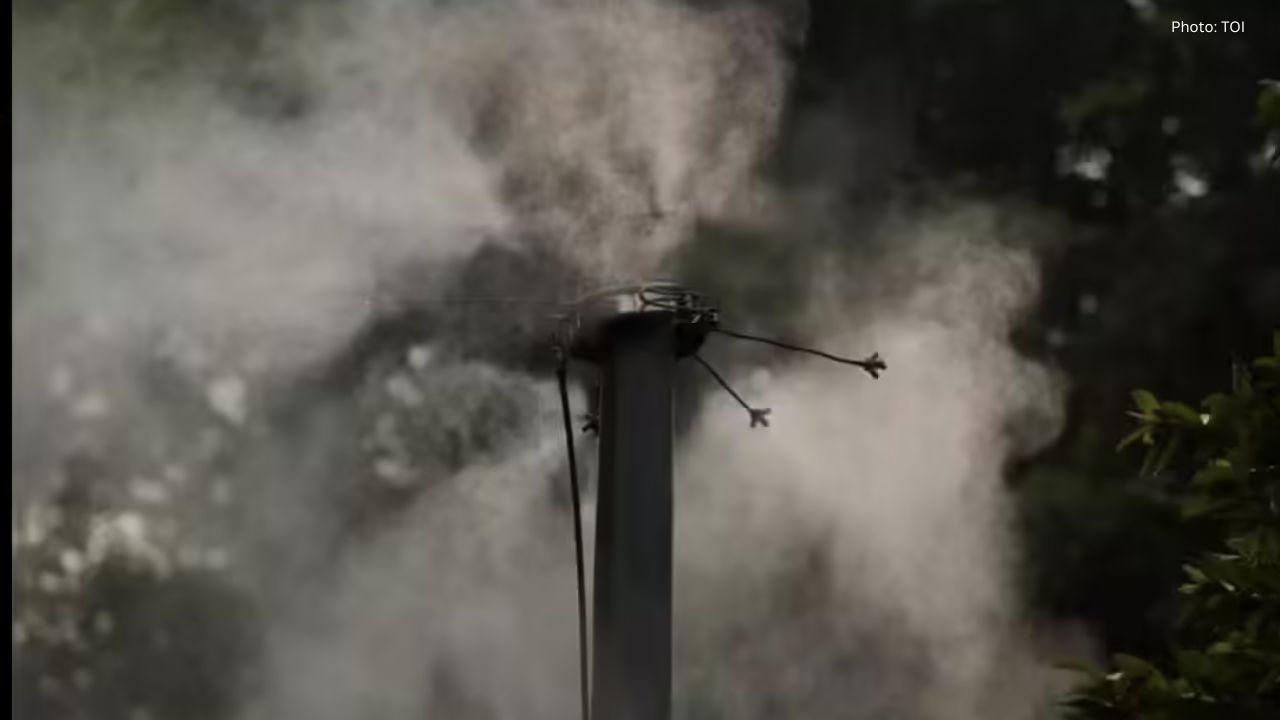
The move is part of a wider effort to reduce dust particles in and around metro premises. Mist sprays work by releasing fine water droplets into the air. These droplets help settle dust and other small particles, preventing them from floating and being inhaled by commuters. While it is not a complete solution to pollution, it is seen as a helpful step in reducing local dust levels.
According to officials, mist spray systems are being used at construction sites, entry and exit points, station surroundings, and metro depots. These areas often produce dust due to heavy foot traffic, vehicle movement, and maintenance work. By controlling dust at the source, the metro aims to create a cleaner and safer environment for daily passengers.
Delhi Metro carries millions of people every day. Many commuters spend long hours traveling through stations, platforms, and corridors. Even small improvements in air quality can make a difference to public health, especially for children, elderly people, and those with breathing problems.
The metro authority has said that this drive is part of its responsibility toward the city. Public transport systems not only reduce traffic and vehicle emissions but also need to manage pollution within their own spaces. Officials believe that clean stations send a strong message about shared responsibility in fighting air pollution.
Apart from mist sprays, Delhi Metro has also taken other steps to reduce its environmental impact. These include regular cleaning of tracks and platforms, planting trees near stations, using electric vehicles for internal work, and promoting solar energy at metro facilities. Together, these measures aim to make the metro system more environment-friendly.
Experts say mist spraying is a useful short-term tool, especially during dry and dusty conditions. However, they also stress that long-term solutions are needed. Reducing construction dust citywide, controlling vehicle emissions, and improving green cover are essential for lasting improvement in Delhi’s air quality.
Commuters have welcomed the metro’s effort, though many say more needs to be done. Some passengers have suggested similar systems be used near busy roads, bus terminals, and markets. Others believe better coordination between city agencies is necessary to fight pollution on a larger scale.
Delhi Metro’s action shows that public institutions can play an active role in addressing environmental problems. While mist sprays alone cannot clean Delhi’s air, they can help reduce daily exposure to dust for thousands of people.
As pollution remains one of the city’s biggest health risks, every small step counts. The metro’s initiative may encourage other public spaces and transport systems to adopt similar measures, helping Delhi breathe a little easier.
#trending #latest #DelhiMetro #AirPollution #CleanAir #PublicTransport #Environment #UrbanHealth #armustnews



Advances in Aerospace Technology and Commercial Aviation Recovery
Insights into breakthrough aerospace technologies and commercial aviation’s recovery amid 2025 chall

Defense Modernization and Strategic Spending Trends
Explore key trends in global defense modernization and strategic military spending shaping 2025 secu

Tens of Thousands Protest in Serbia on Anniversary of Deadly Roof Collapse
Tens of thousands in Novi Sad mark a year since a deadly station roof collapse that killed 16, prote

Canada PM Carney Apologizes to Trump Over Controversial Reagan Anti-Tariff Ad
Canadian PM Mark Carney apologized to President Trump over an Ontario anti-tariff ad quoting Reagan,

The ad that stirred a hornets nest, and made Canadian PM Carney say sorry to Trump
Canadian PM Mark Carney apologizes to US President Trump after a tariff-related ad causes diplomatic

Bengaluru-Mumbai Superfast Train Approved After 30-Year Wait
Railways approves new superfast train connecting Bengaluru and Mumbai, ending a 30-year demand, easi




