Post by : Amit
Photo : X / Airline Hub
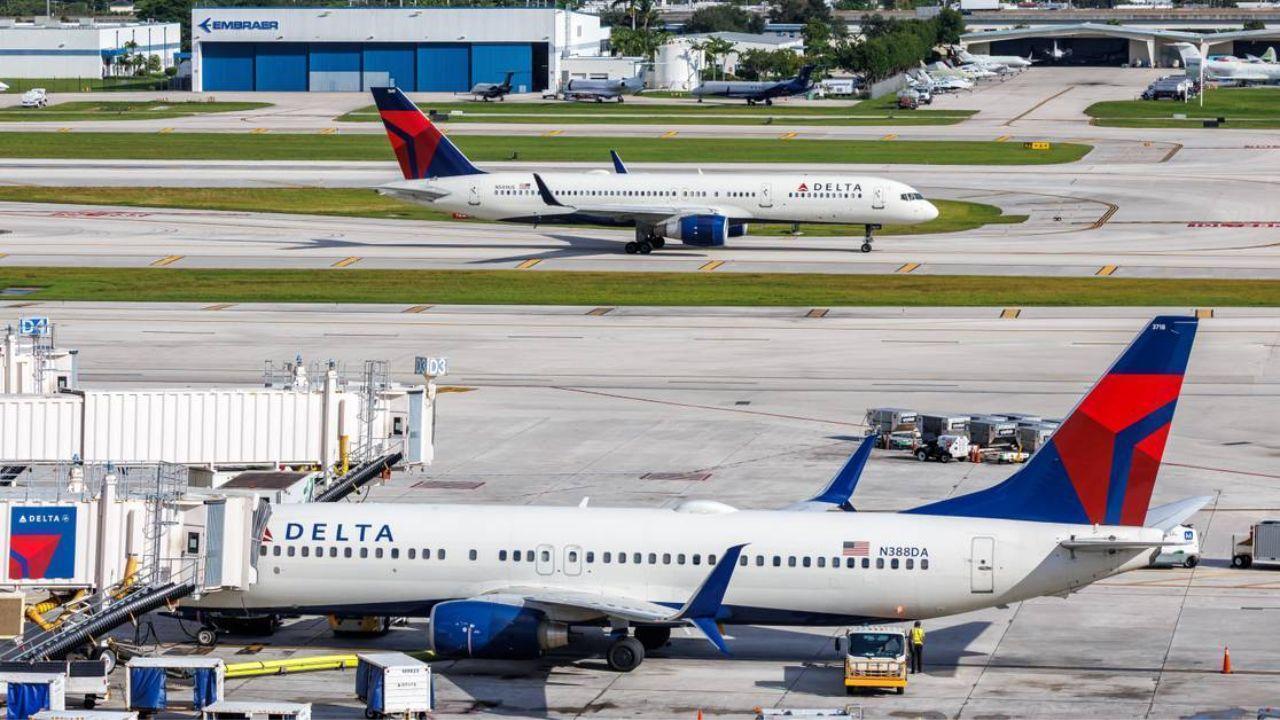
Delta Pilot Grounds 757, Gut Feeling Overrules Logs
It was supposed to be an ordinary departure for Delta Air Lines, but the Boeing 757-200 never left the gate. Despite maintenance logs declaring the aircraft ready, the captain refused to proceed. His reasoning was not written in any checklist or technical document. Instead, it was instinct. Having just flown the same aircraft on a previous leg, he felt something wasn’t right. He told his crew, “Trust my gut,” and the flight was grounded. That moment, seemingly simple, reflected the enduring weight of human judgment in modern aviation.
When Paperwork Meets Human Instinct
Maintenance engineers had logged the aircraft as clear, with “no issue found” attached to its records. On the surface, everything was fine. But aviation is not only a system of machines—it is also a discipline that values perception, judgment, and responsibility. The captain’s choice not to accept the plane, even at the cost of delay and disruption, ignited industry-wide reflection. Pilots across forums, flight crews, and industry observers discussed the rare moment when instinct overruled machinery. For passengers, it was an invisible decision—many may never know how close they came to flying on an aircraft a captain did not trust.
Technology Has Limits
The aviation industry has become increasingly reliant on technology. Today, every aircraft is monitored through diagnostic systems, digital sensors, and predictive maintenance software. These systems have made flying more efficient and safer than ever. Yet, the Delta 757 case demonstrates an important limitation: no matter how advanced, technology cannot fully capture the nuances of human perception. Pilots are trained to notice irregularities, whether in the sound of an engine, the response of a control, or even a subtle shift in how the aircraft behaves. In this case, technology gave the green light. Human experience said otherwise.
Authority of the Captain
Delta Air Lines, like most major carriers, empowers its captains with the final authority to accept or reject an aircraft. Federal Aviation Administration regulations and union agreements reinforce this principle: if a pilot believes an aircraft is unsafe, their decision stands, no questions asked. This legal and cultural framework ensures that safety is not compromised in the name of schedules. When the Delta captain refused the aircraft, he was exercising the very authority that aviation law grants him, and Delta’s system respected his choice.
A Culture of Safety Over Speed
Airlines operate under constant pressure—tight schedules, high passenger expectations, and limited margins for delay. But aviation culture still places safety first. The Delta captain’s decision exemplified that principle. For Delta, the decision meant cost: delayed schedules, reshuffled crews, and grounded passengers. Yet, it also represented an investment in trust. Every time a captain exercises judgment in this way, it reinforces the message that safety will never be sacrificed for efficiency.
Passenger Trust in Human Judgment
For passengers, such moments are often invisible. A grounded aircraft is frustrating, but most travelers assume maintenance issues, weather delays, or logistical problems. Rarely do they realize that a captain’s gut feeling was the deciding factor. Yet, this is precisely why aviation remains one of the safest forms of travel. Trust in the system is not only about technology and engineering—it is about the humans who oversee them. In a world where passengers often focus on on-time arrivals and low fares, this case reminds us that sometimes the best flight is the one that never takes off.
Beyond Checklists and Procedures
Aviation safety depends on rigorous checklists and standard operating procedures. But checklists cannot account for everything. They measure fuel, hydraulics, electrics, and structural systems. What they cannot measure is the sense of “something is wrong” that comes from thousands of hours in a cockpit. The Delta 757 captain’s decision highlighted the value of human factors in aviation. Instinct, shaped by years of experience, became the most reliable safety system onboard that day.
Industry Reflection and Policy Lessons
When incidents like this occur, they are reviewed internally—not as failures, but as lessons. Airlines and regulators often analyze such moments to strengthen their policies. The Delta case reinforces the importance of empowering pilots, maintaining strong communication between flight crews and maintenance staff, and embracing caution when uncertainty arises. Instead of undermining operational efficiency, such policies preserve aviation’s long-term credibility. A few hours of delay pale compared to the risks of ignoring a captain’s concern.
The Psychology of Pilot Intuition
Pilots often describe intuition as a mix of subtle cues, experience, and awareness. Sometimes it is the sound of an engine spool-up, sometimes a minor vibration, or even a sense that the aircraft is not responding as it should. Aviation psychology recognizes this as a legitimate safety factor—human senses noticing what technology cannot detect. This episode is a textbook example of why intuition is not dismissed as superstition, but regarded as part of the pilot’s toolkit.
Ripple Effects Across the Industry
The story spread quickly across pilot networks and aviation forums. Many pilots applauded the Delta captain, emphasizing the courage it takes to ground a flight in the face of operational pressure. Others reflected on their own experiences—moments when fatigue, minor anomalies, or gut feelings prompted them to delay or reject flights. The consensus was clear: the captain did the right thing, and his decision reinforced the broader principle that safety is not negotiable.
Balancing Technology and Human Factors
Aviation continues to integrate artificial intelligence, predictive maintenance, and advanced sensors. These technologies are essential, but the Delta incident underscores that they cannot replace human oversight. The future of aviation depends not on choosing between technology and people, but on combining them. A machine may declare an aircraft fit. A human may notice what the machine cannot. Together, they create a safety net stronger than either one alone.
Public Perception and Communication
For airlines, transparency around such events is delicate. Too much detail may alarm passengers. Too little may erode trust. Delta, like many carriers, chose not to release specifics, but emphasized its support for the captain’s decision. Passengers may never know the exact reason their flight was grounded, but they can trust the principle behind it: when in doubt, safety wins. In aviation, silence often speaks volumes—it reflects discretion, professionalism, and a focus on protecting passengers without unnecessary drama.
A Case Study for Training
This event will likely become part of training scenarios for new pilots. Flight schools and airlines often use real-world examples to teach decision-making. The Delta captain’s call demonstrates not only authority, but also responsibility. It teaches future pilots that intuition is not reckless—it is part of the art of flying. Case studies like this remind them that one decisive action can protect hundreds of lives.
Final Reflections on Safety and Judgment
The grounded Delta 757 never became a headline disaster because it never left the ground. And that is precisely the point. Aviation safety is not measured by flights completed, but by risks avoided. The decision of one captain, guided by instinct rather than data, reflected the enduring truth of aviation: safety is built not just by machines, but by the humans who guide them. In the end, the safest destination for that flight was not another city, but the decision to remain exactly where it was.
Delta Airlines, Boeing 757, Aviation safety



Advances in Aerospace Technology and Commercial Aviation Recovery
Insights into breakthrough aerospace technologies and commercial aviation’s recovery amid 2025 chall

Defense Modernization and Strategic Spending Trends
Explore key trends in global defense modernization and strategic military spending shaping 2025 secu

Tens of Thousands Protest in Serbia on Anniversary of Deadly Roof Collapse
Tens of thousands in Novi Sad mark a year since a deadly station roof collapse that killed 16, prote

Canada PM Carney Apologizes to Trump Over Controversial Reagan Anti-Tariff Ad
Canadian PM Mark Carney apologized to President Trump over an Ontario anti-tariff ad quoting Reagan,

The ad that stirred a hornets nest, and made Canadian PM Carney say sorry to Trump
Canadian PM Mark Carney apologizes to US President Trump after a tariff-related ad causes diplomatic

Bengaluru-Mumbai Superfast Train Approved After 30-Year Wait
Railways approves new superfast train connecting Bengaluru and Mumbai, ending a 30-year demand, easi




