Post by : Amit
Denso Unveils Modular Climate Control Units for EV Platforms
Japanese automotive giant Denso Corporation has introduced a new line of Modular Climate Control Units (MCCUs) specifically designed for next-generation EV platforms. This innovation marks a strategic response to the growing demand for compact, efficient, and scalable thermal management systems in battery-powered vehicles, as the global automotive industry continues its rapid pivot to electrification.
Denso’s announcement, made earlier this week, represents more than just another product release. It underscores a broader trend in automotive engineering where modularity, weight optimization, and thermal efficiency are no longer optional—they’re vital. With automakers under pressure to extend range, minimize energy losses, and create smarter cabin environments, the MCCU platform has emerged as a cornerstone technology that blends performance, sustainability, and design flexibility.
A Game-Changer in EV HVAC Technology
Traditional internal combustion engine (ICE) vehicles benefit from waste engine heat to warm the cabin or defog windows. EVs, however, must generate cabin heat using battery power, which can significantly reduce driving range—especially in colder climates. Denso’s Modular Climate Control Units tackle this issue head-on by delivering energy-efficient thermal management with minimal power draw from the main traction battery.
The newly launched MCCUs incorporate a heat pump system, high-efficiency compressors, and integrated electronics for precise temperature regulation. The result is a compact HVAC module that adapts across vehicle segments—from compact urban EVs to larger electric SUVs and vans—without compromising on comfort or performance.
Moreover, the MCCUs are designed to be platform-agnostic, allowing OEMs to incorporate them into multiple vehicle architectures with little modification. This gives automakers flexibility, reduces engineering overhead, and accelerates time-to-market for new EV models.
Technical Features: Smarter, Smaller, Stronger
According to official technical documentation released by Denso, the Modular Climate Control Units feature:
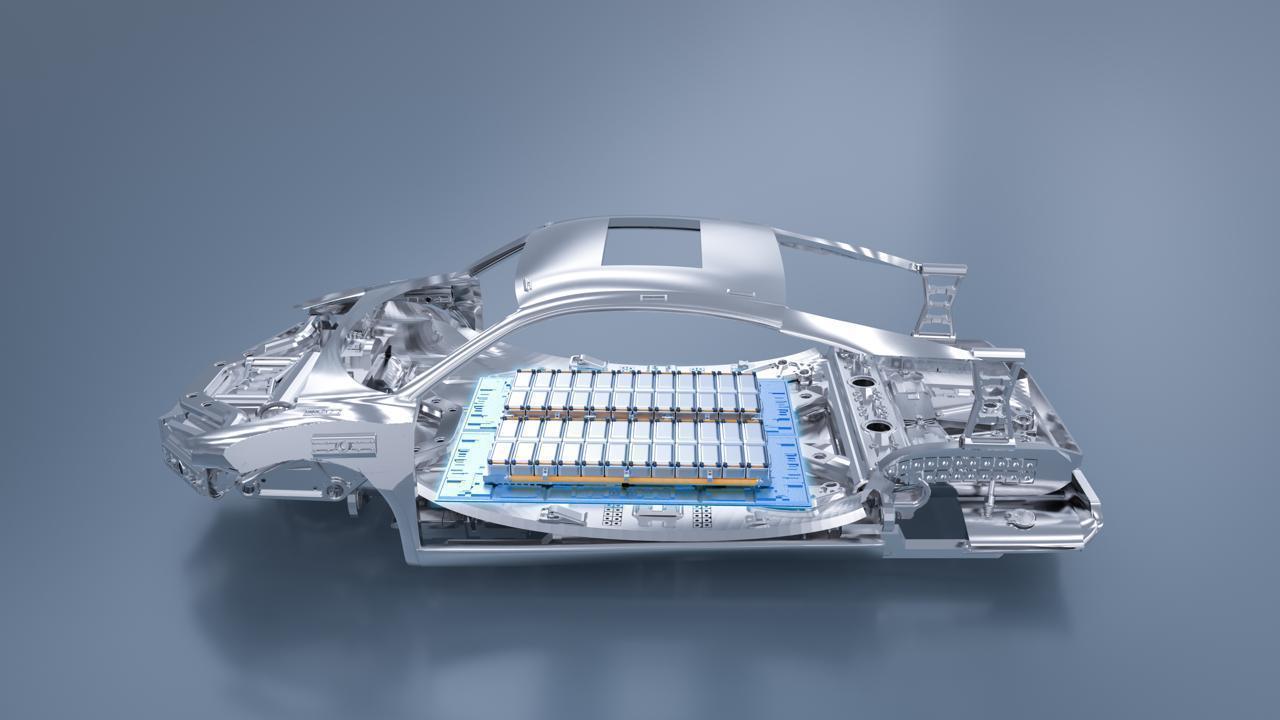
The MCCUs have been engineered with a low profile, allowing installation under the dashboard or within the engine bay of a skate-platform EV. This compact design frees up critical space for battery modules, luggage compartments, or front trunk (frunk) storage—areas that are often compromised in current EV designs due to bulky HVAC units.
Modularity: The Secret Weapon in EV Architecture
One of the most pressing challenges facing EV manufacturers today is the need to serve diverse markets using common vehicle platforms. Modularity—both in terms of chassis and component integration—is the answer. Denso’s MCCU line is a masterclass in this philosophy.
The climate control units are delivered in modular block assemblies, meaning OEMs can choose the exact size, performance level, and features they need without ordering entirely different systems for each vehicle model. For example, a premium EV sedan may require dual-zone heating and cooling with noise-cancellation ventilation, while a basic urban EV may only need single-zone airflow with manual controls. Denso’s platform accommodates both by allowing mix-and-match configurations within the same MCCU architecture.
This modularity also pays dividends on the production side. By standardizing installation procedures and reducing part variations, automakers benefit from lower inventory costs, faster assembly times, and simplified quality control—critical in an era where production flexibility and speed can make or break a launch schedule.
Energy Efficiency as a Design Ethos
At the heart of the MCCU’s design is energy efficiency. Climate control systems are among the most energy-hungry components in an electric vehicle. When not optimized, HVAC usage can reduce driving range by up to 30%, especially in winter conditions.
Denso’s MCCUs mitigate this impact through a heat pump loop that recycles waste heat from other vehicle systems. Unlike resistance heaters, which consume large amounts of electricity, the MCCU heat pump operates like a mini reverse-cycle air conditioner—drawing ambient air and compressing refrigerant to generate heat at far lower energy consumption.
Additionally, the system is integrated with occupant detection sensors that limit airflow to unoccupied zones. If only the driver is seated, for instance, the MCCU will reduce airflow to the passenger side, conserving energy while maintaining personalized comfort. This occupant-aware climate delivery is managed by Denso’s proprietary control algorithm, developed using real-world usage data and AI-based simulations.
AI and Connectivity: Climate Control Gets Smart
While traditional HVAC systems operate on fixed parameters, Denso’s MCCUs are intelligent, self-learning systems that respond to both environmental and behavioral cues. These units are connected to the vehicle's onboard telematics and can interface with cloud-based services for over-the-air updates, climate scheduling, and remote pre-conditioning.
Through a mobile app or vehicle infotainment system, drivers can preheat or precool the cabin before boarding—especially useful in extreme weather conditions. The system also learns from past behavior, remembering preferred temperature settings and airflow directions. In the future, Denso hints at voice-activated commands and facial recognition tie-ins, allowing the vehicle to automatically adjust climate settings based on the occupant’s identity and profile.
These AI features are not just gimmicks; they serve real utility in reducing cognitive load for drivers and improving safety by reducing the need to manually adjust controls while on the road.
Collaborations with EV Manufacturers Already Underway
While Denso has not publicly disclosed its initial OEM partners for the MCCU platform, sources close to the company indicate that multiple Japanese and European EV manufacturers are already conducting trials. Given Denso’s deep-rooted partnerships with Toyota, Honda, and several European marques, it’s likely that these climate control units will make their debut in mass-market EVs as early as 2026.
Analysts also speculate that emerging EV startups could greatly benefit from the MCCU’s modular architecture. Without the deep engineering bench of legacy automakers, startups can save time and resources by adopting plug-and-play HVAC systems like Denso’s.
Sustainability and Recyclability in Focus
Denso’s new climate units are not only efficient—they’re sustainable. The company has adopted low-global-warming-potential refrigerants, complying with upcoming environmental regulations in Europe and Asia. The modular design also makes disassembly easier, improving recyclability and compliance with circular economy goals.
Key components such as compressors, condensers, and evaporators are built using lightweight, durable alloys and can be refurbished or upgraded over time. Denso is also exploring closed-loop supply chains to collect and repurpose used units at end-of-life, thereby reducing landfill waste and material sourcing risks.
Strong Approval from Analysts
Industry analysts have welcomed Denso’s MCCU launch as a timely and strategic move. “This is a textbook example of where EV component innovation needs to go,” said Rishi Khurana, a senior analyst at EVTech Research. “Thermal management is one of the least glamorous but most impactful areas in EV efficiency. Denso has made it modular, scalable, and smart—all in one go.”
Other experts have praised Denso’s forward-looking integration of software with hardware. “The real power of this product lies in its data-driven adaptability,” added Claire Matsuda, a vehicle systems engineer based in Tokyo. “In an era where passenger comfort and battery optimization must coexist, MCCUs are a brilliant enabler.”
HVAC as a Service Layer
As EVs evolve into software-defined vehicles, HVAC systems like Denso’s MCCU are poised to become more than comfort utilities—they will be part of the vehicle’s broader digital ecosystem. Integration with health monitoring, voice assistants, and environmental quality apps could turn the humble HVAC into a platform for wellness and safety.
For instance, cabin air purification based on external pollution data or allergen detection systems that adapt airflow in real time could become standard in premium variants. In the long run, the lines between traditional vehicle subsystems are blurring, and Denso’s MCCU shows that HVAC can be a smart service layer, not just a functional necessity.
Thermal Innovation
With its Modular Climate Control Units, Denso has delivered more than an HVAC component—it has launched a scalable solution tailored for the future of mobility. In a market where range anxiety, passenger comfort, and component integration are central to success, the MCCU platform checks every box.
This innovation confirms Denso’s role as a thermal systems leader and positions the company at the forefront of EV component development. As the automotive world charges toward an electrified future, smart climate control is no longer an afterthought—it’s a strategic enabler of efficiency, comfort, and user satisfaction. And with Denso’s new MCCUs, that future just got a lot cooler—and smarter.
Denso, Climate Change



Advances in Aerospace Technology and Commercial Aviation Recovery
Insights into breakthrough aerospace technologies and commercial aviation’s recovery amid 2025 chall

Defense Modernization and Strategic Spending Trends
Explore key trends in global defense modernization and strategic military spending shaping 2025 secu

Tens of Thousands Protest in Serbia on Anniversary of Deadly Roof Collapse
Tens of thousands in Novi Sad mark a year since a deadly station roof collapse that killed 16, prote

Canada PM Carney Apologizes to Trump Over Controversial Reagan Anti-Tariff Ad
Canadian PM Mark Carney apologized to President Trump over an Ontario anti-tariff ad quoting Reagan,

The ad that stirred a hornets nest, and made Canadian PM Carney say sorry to Trump
Canadian PM Mark Carney apologizes to US President Trump after a tariff-related ad causes diplomatic

Bengaluru-Mumbai Superfast Train Approved After 30-Year Wait
Railways approves new superfast train connecting Bengaluru and Mumbai, ending a 30-year demand, easi




