Post by : Amit
Photo : X / Peaky Blinder.
From Steam Gauges to Smart Screens: A Quiet Revolution
The fighter cockpit — once a forest of analog dials, knobs, and blinking mechanical indicators — has undergone a stunning metamorphosis. What began as a utilitarian control space is now a digitally enhanced, sensor-fused combat workstation. Fighter jets in 2025 are no longer just feats of raw aeronautical engineering — they’re data-driven war machines built around a cockpit that increasingly looks like the command center of a spaceship.
From the MiG-21 to the F-35, cockpit design has mirrored the evolution of technology, tactics, and threats. Today, the cockpit is not just where the pilot flies — it’s where war is managed, missions are interpreted, and decisions are made in milliseconds. And the shift from analog to digital has completely changed the game.
The Era of Analog: Simplicity Amid Chaos
In the early days of air combat, cockpits were spartan. Think World War II or Cold War-era fighters like the MiG-15 or the F-86 Sabre. Pilots relied on mechanical instruments — altimeters, airspeed indicators, attitude balls — all independently powered and independently failing. These cockpits were readable, but only with intense training and mental processing.
By the 1960s and 70s, jets like the MiG-21, F-4 Phantom, and Mirage III introduced more complex instrumentation, reflecting the growing speed and altitude of air combat. But even then, information was fragmented. A pilot had to scan, cross-check, memorize, and interpret — often under the G-forces of a turning dogfight or while avoiding radar locks.
The human brain was the ultimate sensor fusion engine. The cockpit simply displayed raw data.
The Glass Cockpit Revolution
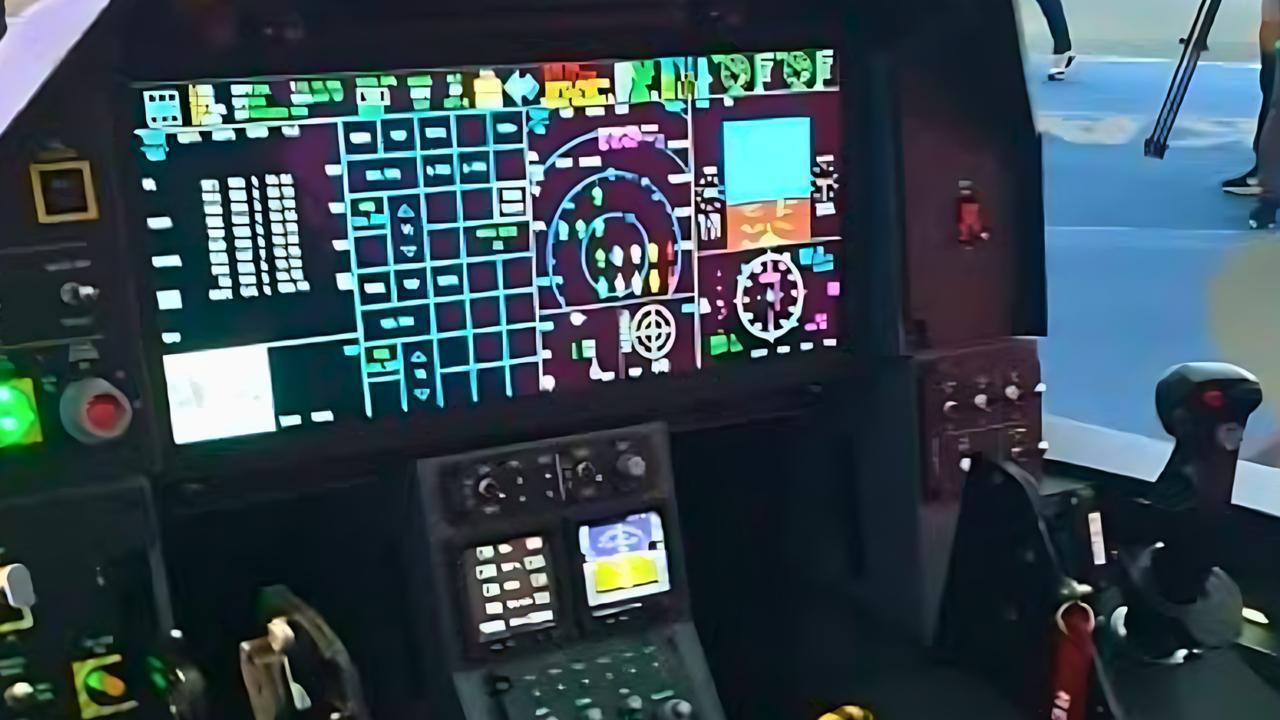
The revolution began in earnest in the 1980s with the emergence of "glass cockpits" — digital displays that could present multiple streams of information on a single screen. This wasn't just an aesthetic upgrade. It was a leap in how data was organized, layered, and interacted with.
Fighters like the F/A-18 Hornet, Eurofighter Typhoon, and the upgraded Mirage 2000 variants featured Multi-Function Displays (MFDs) — color screens that showed radar returns, maps, weapons status, and threat warnings in a single glance.
By eliminating the need to scan a dozen gauges, pilots could focus on the mission. MFDs were often programmable, adapting to different phases of flight or threat scenarios. Some aircraft even allowed pilots to customize screen layouts, optimizing data flow for different combat styles.
The cockpit was becoming an extension of the pilot’s mind — with software doing the heavy lifting.
Sensor Fusion and the Rise of the Combat UI
As aircraft systems became more complex, the next breakthrough came not in the screen, but in the integration behind it. Enter sensor fusion — the ability to combine inputs from radar, IRST, EW sensors, datalinks, and flight computers into a single, coherent picture.
The F-35 Lightning II is the poster child of this philosophy. Its cockpit is dominated by a massive panoramic touchscreen, supported by a helmet-mounted display (HMD) that lets pilots “see through” the aircraft using external cameras. There’s no traditional Head-Up Display (HUD). Instead, everything the pilot needs — altitude, targeting cues, radar warnings, weapons locks — is overlaid on the helmet visor.
This radically simplifies decision-making in combat. Instead of figuring out what’s happening, the pilot immediately sees what needs to be done.
For example, if multiple threats emerge, the system prioritizes targets, recommends maneuvers, and auto-loads weapons for pilot confirmation. In a battlefield flooded with jamming, drones, and hypersonic weapons, this kind of decision aid is no longer luxury — it’s survival.
From Button-Pushing to Touchscreen Swiping
Modern cockpits have also redefined how pilots interact with the aircraft. Old-school pilots memorized dozens of switches and hardwired controls. Today, the shift is towards gesture-based interaction, touch interfaces, and even voice command integration.
The Indian Air Force’s upgraded Tejas Mk-1A and future Mk-2 variants feature Israeli and indigenous digital cockpit systems that blend touchscreen MFDs with fly-by-wire control laws. The upcoming AMCA stealth jet will likely integrate an AI-assisted combat management system — further reducing pilot workload.
Pilots can zoom in on terrain maps, select targets, and manage communication channels with a swipe or tap — all while remaining heads-up. While skeptics worry about touchscreens failing under G-forces or turbulence, manufacturers now use tactile feedback and failover logic to maintain reliability.
AI Joins the Cockpit
The next wave of cockpit evolution is being driven by Artificial Intelligence (AI) and machine learning algorithms. These systems don’t just present information — they interpret patterns, suggest actions, and even filter noise.
DARPA’s ACE (Air Combat Evolution) program is testing AI systems that can conduct autonomous dogfights against manned jets. While these systems aren't yet in frontline deployment, they're being used to develop pilot-AI teaming paradigms where the cockpit becomes a shared workspace between human and machine.
India's ADA (Aeronautical Development Agency) is also exploring AI-powered mission planning aids and failure prediction models in the cockpit for its 6th-generation concepts.
In essence, the cockpit is becoming a collaborative space — where pilots manage rather than manually execute, assisted by predictive logic and machine insight.
Combat Beyond the Cockpit: Networking and Datalinks
Modern digital cockpits are increasingly interconnected. Through tactical datalinks like Link 16, India's AFNet, or NATO’s MADL, pilots can receive live intelligence feeds, identify friend-or-foe statuses, and coordinate strikes without radio chatter.
This has given rise to the “combat cloud” — a virtual network in which aircraft, drones, satellites, and ground assets share information in real time. The cockpit becomes the interface to this cloud — a command node as much as a flight station.
As unmanned wingmen (like India's loyal wingman concept "CATS Warrior") become reality, cockpits are being redesigned to let one pilot command a swarm of drones while also flying a jet — all through integrated displays and AI-assisted controls.
Complexity, Cybersecurity, and Cognitive Load
Despite its advantages, digital cockpit evolution hasn’t been without its critics. Too much data, poorly visualized, can overwhelm pilots. Cognitive overload — the very problem digital systems aimed to solve — can creep back in through poor interface design or information overkill.
There’s also the threat of cyber vulnerability. A cockpit tied to external datalinks and AI systems is potentially susceptible to jamming, spoofing, or malware. Military avionics designers are investing heavily in hardened operating systems, quantum-resistant encryption, and air-gapped failover systems to address these risks.
Then there’s the training gap. Fighter pilots must now master not just flight and tactics but also interface logic, digital threat diagnostics, and system management — leading to longer and more complex training pipelines.
Global Trends: Who’s Leading the Digital Cockpit Race?
Digital cockpit innovation is not just about technology but about doctrine — how nations envision pilots, machines, and data working together in combat.
Brain Interfaces, XR, and Voice-First Combat
The future cockpit may have no cockpit at all. Concepts under development include brain-machine interfaces that detect pilot intent through neural signals. Others explore Extended Reality (XR) helmets — blending real-world visuals with mission overlays, thermal feeds, and simulated threats.
Voice-first command models — think Alexa for warplanes — are also being prototyped, allowing pilots to execute complex sequences through command chains like:
"Target that drone, designate it for drone 3, switch to missiles, and go evasive."
The fighter cockpit of the 2030s may be less about screens and more about perception environments — immersive, predictive, and dynamically adaptive.
Cockpits as Combat Command Centers
From knobs to knowledge graphs, the evolution of fighter jet cockpits is perhaps the clearest lens through which to view the modernization of air combat itself. As avionics move from passive displays to active decision systems, the pilot’s role evolves — from executor to mission manager.
Digital cockpits aren’t just about better flying. They’re about better fighting, faster reacting, and smarter surviving.
And in an era of hypersonic missiles, swarm drones, and algorithmic warfare, the cockpit — humble, confined, and always airborne — remains the most valuable square meter in the sky.
Digital Cockpits, Fighter Jet, India, Usa, China



Advances in Aerospace Technology and Commercial Aviation Recovery
Insights into breakthrough aerospace technologies and commercial aviation’s recovery amid 2025 chall

Defense Modernization and Strategic Spending Trends
Explore key trends in global defense modernization and strategic military spending shaping 2025 secu

Tens of Thousands Protest in Serbia on Anniversary of Deadly Roof Collapse
Tens of thousands in Novi Sad mark a year since a deadly station roof collapse that killed 16, prote

Canada PM Carney Apologizes to Trump Over Controversial Reagan Anti-Tariff Ad
Canadian PM Mark Carney apologized to President Trump over an Ontario anti-tariff ad quoting Reagan,

The ad that stirred a hornets nest, and made Canadian PM Carney say sorry to Trump
Canadian PM Mark Carney apologizes to US President Trump after a tariff-related ad causes diplomatic

Bengaluru-Mumbai Superfast Train Approved After 30-Year Wait
Railways approves new superfast train connecting Bengaluru and Mumbai, ending a 30-year demand, easi




