Post by : Amit
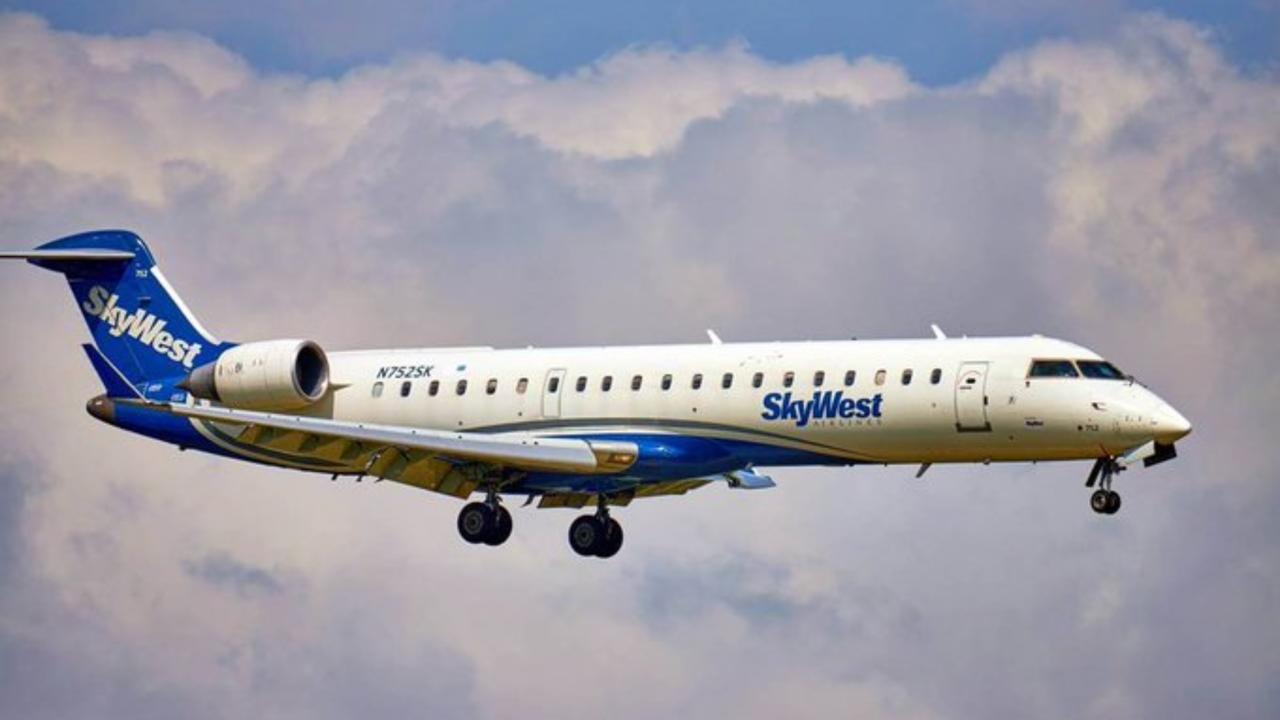
Photo : X / jerry22717✝️💙💜✈️
Tariff Crosswinds Threaten Embraer's U.S. Market Stronghold
In a troubling turn for Brazil's aerospace sector, Embraer, the country’s flagship aircraft manufacturer, is facing potential tariffs that could significantly disrupt its operations in the United States—its single largest export market. The new wave of trade tensions, fueled by a broader geopolitical standoff and ongoing disputes over aircraft subsidies, is placing the São José dos Campos-based company in an increasingly precarious position just as it attempts to scale production and expand its next-generation aircraft lineup.
For Embraer, which has long relied on the U.S. for a substantial share of its regional jet sales and defense contracts, the prospect of U.S. import tariffs could have severe implications—not only for revenues but also for its position in the global aerospace hierarchy. The challenge now lies in navigating an increasingly volatile international trade landscape, where diplomacy, protectionism, and industrial strategy intertwine.
A Fractured Trade Alliance with High Stakes
The potential tariffs come as part of a broader series of retaliatory measures in response to long-running disputes between the United States and the European Union over aircraft subsidies—most notably those involving Airbus and Boeing. While Embraer is not directly implicated in those cases, it has become collateral damage as trade tensions spill over into bilateral and multilateral frameworks.
At the heart of the issue is a new set of tariff measures being considered by the U.S. Trade Representative (USTR), which would target aircraft imported from specific regions that are seen as benefiting unfairly from state subsidies or indirect forms of financial support. Embraer, which has received various types of industrial support from the Brazilian government in the past—including low-interest loans and tax incentives—could find itself ensnared in a broader push to protect U.S. aerospace manufacturing jobs.
According to insiders familiar with the discussions, Embraer aircraft built in Brazil may soon face import duties of up to 25%, a move that would effectively price the company out of a highly competitive market. With more than 60% of its commercial aircraft deliveries in recent years bound for North America, such a decision would be nothing short of seismic.
Embraer’s Deep Footprint in the United States
Embraer’s presence in the United States is deep and multi-layered. From assembly plants in Florida to regional service centers spread across the country, the company has long cultivated a strong U.S. footprint. Its E-Jet series—particularly the E175—has become a mainstay for regional carriers such as SkyWest, Republic Airways, and Envoy Air. These aircraft are not only valued for their efficiency and comfort but also for their compatibility with U.S. pilot union scope clauses, which limit the size and capacity of aircraft flown by regional partners.
Beyond the commercial sector, Embraer has increasingly tapped into U.S. defense and government contracts. The A-29 Super Tucano light attack aircraft, for example, is used by the U.S. Air Force for training purposes and has been provided to allied nations under the U.S. Foreign Military Sales program. In 2023, the company also secured a significant contract with the U.S. Navy for advanced multi-mission aircraft prototypes.
Given this level of integration, any punitive tariff action risks upsetting not just trade flows but also long-established aerospace relationships. U.S. airlines and government stakeholders have privately warned that imposing tariffs on Embraer products would reduce competition, drive up fleet acquisition costs, and possibly delay fleet modernization plans.
Political Pressure Builds on Both Sides
The tariff threat has sparked alarm within Brazilian government circles, where policymakers see the move as politically motivated and potentially harmful to Brazil’s economic recovery. With Embraer being one of the country’s largest exporters and most visible technology champions, protecting its global competitiveness has become a matter of national interest.
Officials in Brasília are reportedly preparing to engage in diplomatic talks to prevent the imposition of tariffs. At the same time, Brazil’s foreign ministry has raised the issue at the World Trade Organization (WTO), warning that the U.S. action could violate established trade norms and set a dangerous precedent.
Domestically, the situation has fueled renewed calls within Brazil to enhance Embraer’s production independence, including greater investment in local supply chains and regional defense partnerships. There’s also talk of accelerating sales campaigns in Asia, the Middle East, and Africa to offset potential U.S. market losses.
In the United States, the tariff proposal has triggered debates over its impact on domestic aviation. Several regional carriers have filed comments with the USTR urging a reconsideration, emphasizing that Embraer aircraft are critical to serving smaller cities and underused routes that Boeing or Airbus jets are too large for. The Regional Airline Association (RAA) has warned that tariffs could exacerbate pilot shortages and route connectivity challenges already facing the U.S. aviation sector.
A History of Geopolitical Aerospace Clashes
The current tensions are part of a longer history of aerospace-related trade friction. The Boeing-Airbus rivalry has been at the center of multiple WTO cases spanning over two decades, with each side accusing the other of benefiting from illegal state support. While Embraer is not a direct player in that transatlantic feud, it has had its own share of trade battles—most notably with Canada’s Bombardier over the C Series (now Airbus A220), where Brazil alleged unfair subsidies through Canadian export financing mechanisms.
In 2020, Embraer suffered another blow when a proposed joint venture with Boeing—meant to strengthen its access to global markets and integrate more closely into the U.S. defense industrial base—was abruptly called off. That collapse left Embraer without a major Western partner and contributed to a strategic realignment that included a deeper focus on domestic defense contracts and regional air mobility innovations.
With the latest tariff threat, the company now faces another potential decoupling—from its most lucrative market—unless a diplomatic or economic compromise can be reached.
Strategic Shifts in the Works
Embraer is not standing still in the face of this uncertainty. The company is accelerating efforts to localize elements of its aircraft production and expand its presence in markets with fewer trade constraints. One such initiative includes exploring final assembly operations in third countries, such as Portugal or Mexico, which could allow it to sidestep direct tariff exposure while maintaining access to North American customers.
There is also growing interest in developing more robust aftermarket services and parts supply networks within the U.S., which could buffer some of the revenue shortfalls caused by reduced new aircraft orders. On the R&D front, Embraer is pushing ahead with its Energia program—an ambitious suite of hybrid-electric and hydrogen-powered aircraft concepts aimed at redefining sustainable regional air travel. These next-gen platforms may serve as a key differentiator in global markets less sensitive to legacy supply chain pressures.
The company is also pursuing aggressive marketing efforts in India, Southeast Asia, and Africa, where aging turboprop fleets and growing regional air travel demand present new opportunities. Embraer’s pitch—centered on lower operating costs, superior fuel efficiency, and flexible cabin configurations—has resonated particularly well in countries seeking to modernize air connectivity without relying on widebody infrastructure.
Clouded, Yet Resilient
The Embraer tariff dispute comes at a time when global aerospace supply chains are still recovering from the pandemic, and demand for smaller, efficient aircraft is rebounding. Airlines are eager to replace aging fleets with models that are right-sized for fluctuating passenger volumes and environmental regulations. In this context, Embraer’s E2 family is well-positioned—if it can retain market access.
Analysts say that even if the U.S. imposes tariffs, the long-term demand for Embraer aircraft is unlikely to disappear altogether. Instead, buyers may explore creative procurement routes or financing arrangements that mitigate tariff impacts. In parallel, geopolitical shifts—such as Brazil’s closer ties with China and the BRICS bloc—could open new corridors of trade and aerospace collaboration outside the Western sphere.
Still, the near-term risks remain serious. A sustained U.S. tariff regime would dent investor confidence, slow Embraer’s production ramp-up, and potentially force difficult restructuring decisions. It could also embolden domestic competitors or create openings for Chinese manufacturers like COMAC, which are eager to expand into the regional jet market.
A Critical Test for Global Aerospace Fairness
At its core, the Embraer tariff saga is about much more than taxes or trade policy—it’s a reflection of the shifting tectonic plates of global aerospace competition. As governments rethink supply chains, national security, and industrial self-reliance, companies like Embraer find themselves walking a tightrope between open-market ideals and realpolitik economics.
What happens next will not only shape the future of Embraer but also signal how the international community handles disputes involving emerging-market manufacturers with global ambitions. For now, Embraer’s strategy is clear: keep building, keep flying—and hope that diplomacy clears the air before protectionism lands a crushing blow.
Skywest, Embraer, Aviation



Advances in Aerospace Technology and Commercial Aviation Recovery
Insights into breakthrough aerospace technologies and commercial aviation’s recovery amid 2025 chall

Defense Modernization and Strategic Spending Trends
Explore key trends in global defense modernization and strategic military spending shaping 2025 secu

Tens of Thousands Protest in Serbia on Anniversary of Deadly Roof Collapse
Tens of thousands in Novi Sad mark a year since a deadly station roof collapse that killed 16, prote

Canada PM Carney Apologizes to Trump Over Controversial Reagan Anti-Tariff Ad
Canadian PM Mark Carney apologized to President Trump over an Ontario anti-tariff ad quoting Reagan,

The ad that stirred a hornets nest, and made Canadian PM Carney say sorry to Trump
Canadian PM Mark Carney apologizes to US President Trump after a tariff-related ad causes diplomatic

Bengaluru-Mumbai Superfast Train Approved After 30-Year Wait
Railways approves new superfast train connecting Bengaluru and Mumbai, ending a 30-year demand, easi




