Post by : Amit
In a landmark achievement for American aviation manufacturing, Epic Aircraft’s E1000 GX has officially received its FAA type certification, signaling a new era of competition and capability in the high-performance single-engine turboprop sector.
The announcement, made public on July 22, 2025, follows years of rigorous development, testing, and refinement of the E1000 GX platform—a sleek, carbon-fiber aircraft designed to deliver jet-class speed with turboprop efficiency. For Epic Aircraft, headquartered in Bend, Oregon, this milestone marks not only a technological accomplishment but a strategic business breakthrough that solidifies its presence in the premium general aviation market.
This FAA approval clears the path for full-scale production, customer deliveries, and global export, while positioning the GX variant as a direct competitor to industry stalwarts like the Daher TBM 960 and the Pilatus PC-12 NGX.
The Epic E1000 GX is the evolved, FAA-certified version of the original E1000 experimental model, itself an ambitious offshoot of the company’s earlier kit-built Epic LT. The GX incorporates a variety of enhancements, from avionics to aerodynamics, that align it more closely with commercial-grade production standards.
Built around the proven Pratt & Whitney PT6A-67A engine, the GX delivers an impressive maximum cruise speed of 333 knots, a range of over 1,385 nautical miles, and a service ceiling of 34,000 feet—figures that rival or surpass some light jets.
Its all-carbon-fiber airframe keeps the aircraft lightweight yet incredibly strong, allowing it to offer high-speed performance without compromising on payload or fuel efficiency.
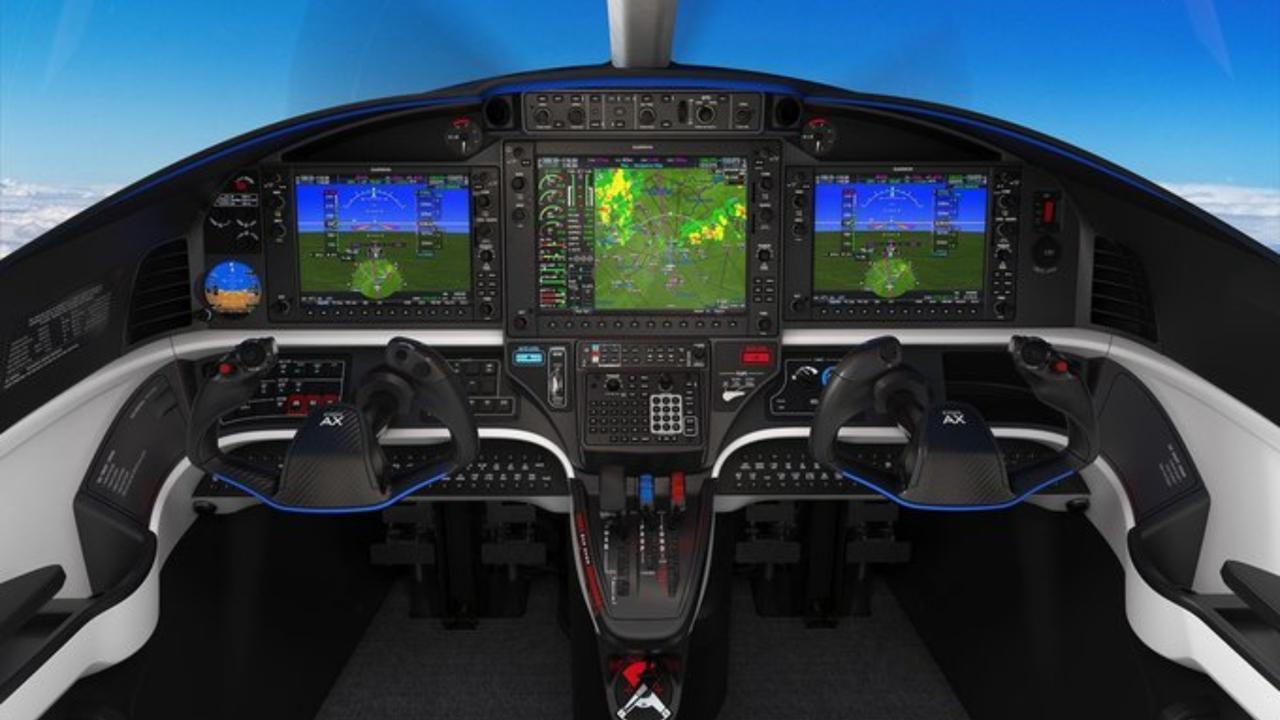
The GX also features Garmin’s G1000 NXi avionics suite, fully integrated with digital autopilot, synthetic vision, weather radar, and a touchscreen user interface, making it as intuitive as it is powerful for both pilot and passenger.
Epic Aircraft’s road to certification was anything but easy. The company began developing the certified version of the E1000 in the early 2010s, but was met with a series of regulatory, financial, and technical hurdles that delayed the process.
In 2019, the original E1000 received its initial FAA type certificate, allowing Epic to begin limited production and sales. However, customer feedback, along with internal innovation goals, led the team to push forward with a more advanced version—the GX.
This updated model required fresh rounds of compliance testing across airworthiness standards, including structural integrity, flight performance, and systems safety.
The certification campaign included extreme-weather testing, stall and spin validation, and extensive avionics integration work, all under the watchful supervision of the FAA’s Aircraft Certification Office in Seattle.
Now, with full certification in hand, Epic is poised to scale its manufacturing footprint at its purpose-built Bend, Oregon facility, which already includes over 300,000 square feet of production space and employs a skilled workforce of more than 300.
What makes the E1000 GX such a game-changer in the turboprop world is its unique balance of speed, performance, and cost-efficiency, all tailored for the owner-pilot demographic.
The aircraft’s jet-like performance allows it to fly coast-to-coast with only a single fuel stop, while still operating from short runways and smaller airports that are inaccessible to larger jets.
Its operating cost per nautical mile is dramatically lower than light jets, yet the cabin is pressurized, climate-controlled, and ergonomically designed for six occupants—including luxurious seating and business jet-style amenities.
Unlike some competitors, Epic’s design also emphasizes pilot-centric controls, ensuring that experienced owner-operators can fly it confidently without the need for a professional co-pilot.
This direct appeal to affluent entrepreneurs, business executives, and high-net-worth individuals has already garnered a loyal customer base even before the FAA certification was finalized.
With FAA certification now complete, Epic Aircraft can move forward with international certifications, such as EASA (Europe), CAAC (China), and TCCA (Canada), all of which are key to unlocking lucrative global markets.
In Europe, where fuel prices are higher and environmental regulations stricter, the GX’s fuel economy and lower emissions will be a strong selling point. In Asia-Pacific regions, including Australia and Indonesia, the aircraft’s ability to access remote airports with limited infrastructure makes it an attractive alternative to regional jets or rotorcraft.
Epic has already hinted at active discussions with overseas distributors and aviation leasing firms. Some early commitments have reportedly come from South America and Southeast Asia, regions known for private aviation growth amid sprawling geography and underserved air routes.
One of the standout features of the E1000 GX is its all-composite construction. Unlike traditional aluminum airframes, the GX’s carbon-fiber fuselage and wings offer significant environmental and operational advantages.
The lightweight design reduces overall fuel consumption, while also lowering wear-and-tear on landing gear and powertrain systems. This means lower maintenance costs, fewer emissions, and longer service intervals, all of which contribute to its sustainability credentials.
Epic Aircraft has also partnered with sustainable aviation fuel (SAF) providers to ensure compatibility with greener fuels—an increasingly important consideration as governments and aviation bodies intensify decarbonization mandates.
With the certification hurdle now behind it, Epic Aircraft plans to significantly scale its production over the next 12–24 months. The company estimates an initial output of 20–30 aircraft annually, with plans to ramp up to 50+ units per year as the supply chain stabilizes and workforce expansion continues.
Epic CEO Doug King remarked in a statement:
“This is more than a product launch—it’s the culmination of years of determination, innovation, and belief in what American aviation can accomplish. The E1000 GX is not just certified—it’s ready to change expectations.”
The company is also investing in automation and lean manufacturing systems to ensure consistent build quality and faster delivery timelines. Strategic suppliers, including composites specialists, avionics integrators, and engine vendors, have been brought into Epic’s supply ecosystem to support this scale-up.
Epic has reported that it currently holds over 80 confirmed orders for the E1000 GX, with the first batch of customer deliveries set to begin in Q4 2025.
Priority is being given to early deposit holders who participated in the initial E1000 program and opted to upgrade to the GX model. Many of these customers, including private pilots and corporate fleet buyers, have already completed factory training and demo flights.
The aircraft is also being offered with custom interior packages, advanced connectivity options, and full concierge-style ownership support, from maintenance planning to pilot recurrency programs.
The single-engine turboprop market is historically dominated by a few major players—most notably the Swiss-made Pilatus PC-12 NGX, and France-based Daher’s TBM 960. Both aircraft have carved out loyal followings thanks to proven reliability and strong OEM backing.
However, the Epic E1000 GX introduces an entirely fresh alternative, especially in the North American market. Its higher top speed, lower empty weight, and cutting-edge avionics give it a technological edge, while its carbon-fiber build offers long-term performance and maintenance advantages.
Analysts note that the GX could especially appeal to first-time turboprop buyers upgrading from piston twins or light jets, as well as charter operators seeking faster turnaround with lower operating costs.
Aviation consultant Rachel McLaren, speaking to AIN, summarized the certification’s broader impact:
“Epic has done something remarkable—they’ve brought to market an aircraft that challenges conventional thinking about what a turboprop should be. FAA certification gives them the credibility and momentum to reshape a premium corner of general aviation.”
Meanwhile, Epic test pilot Chris Barth, who logged hundreds of hours during the certification campaign, emphasized the GX’s flight characteristics:
“It handles like a dream. It’s responsive, balanced, and intuitive. Pilots are going to fall in love with it the moment they rotate off the runway.”
With a certified aircraft, growing customer interest, and an expanding production facility, Epic Aircraft is entering its most pivotal chapter yet. The E1000 GX isn’t just another plane on the market—it’s a signal that innovation is alive and thriving in U.S. general aviation.
By merging high-performance design with real-world efficiency, and doing so from an independent base in Bend, Oregon, Epic Aircraft is carving out a unique legacy—one of resilience, precision engineering, and future-ready ambition.
As deliveries begin and global certifications proceed, the E1000 GX promises to be not just a new product, but a new benchmark in turboprop aviation.
E1000 GX, FAA Certification,



Advances in Aerospace Technology and Commercial Aviation Recovery
Insights into breakthrough aerospace technologies and commercial aviation’s recovery amid 2025 chall

Defense Modernization and Strategic Spending Trends
Explore key trends in global defense modernization and strategic military spending shaping 2025 secu

Tens of Thousands Protest in Serbia on Anniversary of Deadly Roof Collapse
Tens of thousands in Novi Sad mark a year since a deadly station roof collapse that killed 16, prote

Canada PM Carney Apologizes to Trump Over Controversial Reagan Anti-Tariff Ad
Canadian PM Mark Carney apologized to President Trump over an Ontario anti-tariff ad quoting Reagan,

The ad that stirred a hornets nest, and made Canadian PM Carney say sorry to Trump
Canadian PM Mark Carney apologizes to US President Trump after a tariff-related ad causes diplomatic

Bengaluru-Mumbai Superfast Train Approved After 30-Year Wait
Railways approves new superfast train connecting Bengaluru and Mumbai, ending a 30-year demand, easi




