Post by : Saif
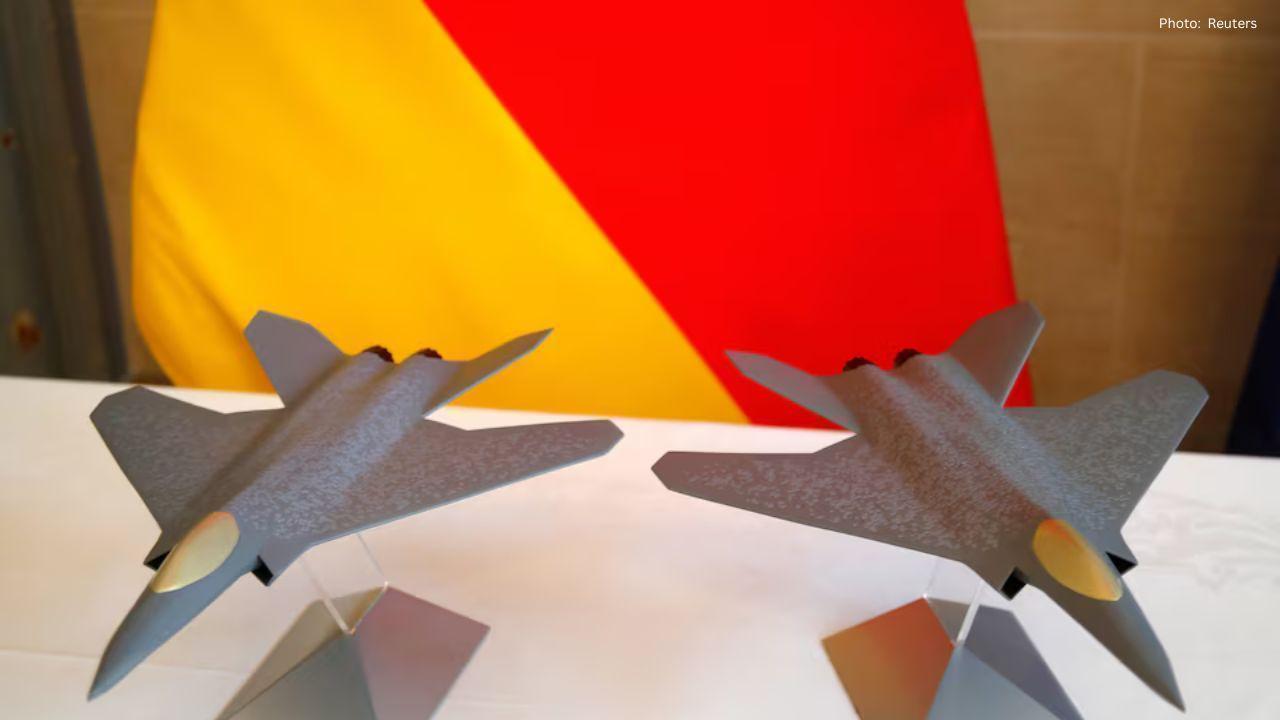
Europe’s plan to build a new next-generation fighter jet is facing fresh difficulties, and leaders from Germany, France, and Spain will meet on December 11 to discuss how to move forward. The project, called the Future Combat Air System (FCAS), is one of the most expensive defence programs in Europe with an estimated cost of around 100 billion euros. It aims to create a modern fighter jet that will work together with advanced drones by the year 2040. But constant disagreements between Airbus and Dassault Aviation, the two main companies involved, have brought the project to a standstill.
The FCAS project was announced more than eight years ago with the hope of giving Europe its own powerful fighter system. It was expected to strengthen Europe’s defence independence at a time when technology in warfare is changing quickly. However, even after years of discussions, the project is stuck because of strong disagreements over who will control which part of the project. Airbus represents Germany and Spain, while Dassault represents France, and both companies want a larger share of the work and the influence.
Sources involved in the talks say that there has been “no change” in the positions of either company, showing how deep the dispute has become. The situation grew so serious that French President Emmanuel Macron and German Chancellor Friedrich Merz had to personally intervene last month. They discussed the project at a high level and told their defence ministers to step in and find a solution. Their urgency shows how important this project is for Europe’s future military strength.
German officials argue that Dassault wants to control as much as 80% of the project, leaving too little for Airbus. Dassault strongly denies this claim. On the other hand, French sources accuse Airbus of using its presence in both Germany and Spain to gain too much influence. This back-and-forth blame has slowed progress and created distrust between the companies.
Airbus CEO Guillaume Faury, speaking to Reuters, said that no partner should dominate the project, and warned against a situation where one company decides everything for the others. He said Airbus supports keeping the same management structure used earlier. Dassault has not commented on the latest dispute, but its CEO Eric Trappier has previously said that Dassault must have the freedom to lead decisions on the fighter jet part of the project, since it is accountable for that area.
This disagreement is bigger than just a business competition. It affects Europe’s strategic independence and its ability to keep up with global defence developments. If FCAS continues to face delays, Europe may fall further behind countries like the United States, China, and the UK, which are already moving forward with advanced fighter programs. Europe could also become more dependent on American fighter jets in the long run.
The meeting on December 11 is seen as a crucial moment for the project. Defence experts across the continent are watching closely to see whether the three countries can reach an agreement that satisfies all sides. If they fail, FCAS may remain stuck for many more years, risking one of Europe’s most important and ambitious defence plans.
For now, the future of the FCAS fighter jet remains uncertain. But the decisions made next week will determine whether the project finally moves forward or continues to struggle under the weight of disagreements and national interests.
#trending #latest #EuropeDefense #FCAS #FighterJet #Airbus #Dassault #Germany #France #Spain #DefenseNews #armustnews



Advances in Aerospace Technology and Commercial Aviation Recovery
Insights into breakthrough aerospace technologies and commercial aviation’s recovery amid 2025 chall

Defense Modernization and Strategic Spending Trends
Explore key trends in global defense modernization and strategic military spending shaping 2025 secu

Tens of Thousands Protest in Serbia on Anniversary of Deadly Roof Collapse
Tens of thousands in Novi Sad mark a year since a deadly station roof collapse that killed 16, prote

Canada PM Carney Apologizes to Trump Over Controversial Reagan Anti-Tariff Ad
Canadian PM Mark Carney apologized to President Trump over an Ontario anti-tariff ad quoting Reagan,

The ad that stirred a hornets nest, and made Canadian PM Carney say sorry to Trump
Canadian PM Mark Carney apologizes to US President Trump after a tariff-related ad causes diplomatic

Bengaluru-Mumbai Superfast Train Approved After 30-Year Wait
Railways approves new superfast train connecting Bengaluru and Mumbai, ending a 30-year demand, easi




