Post by : Amit
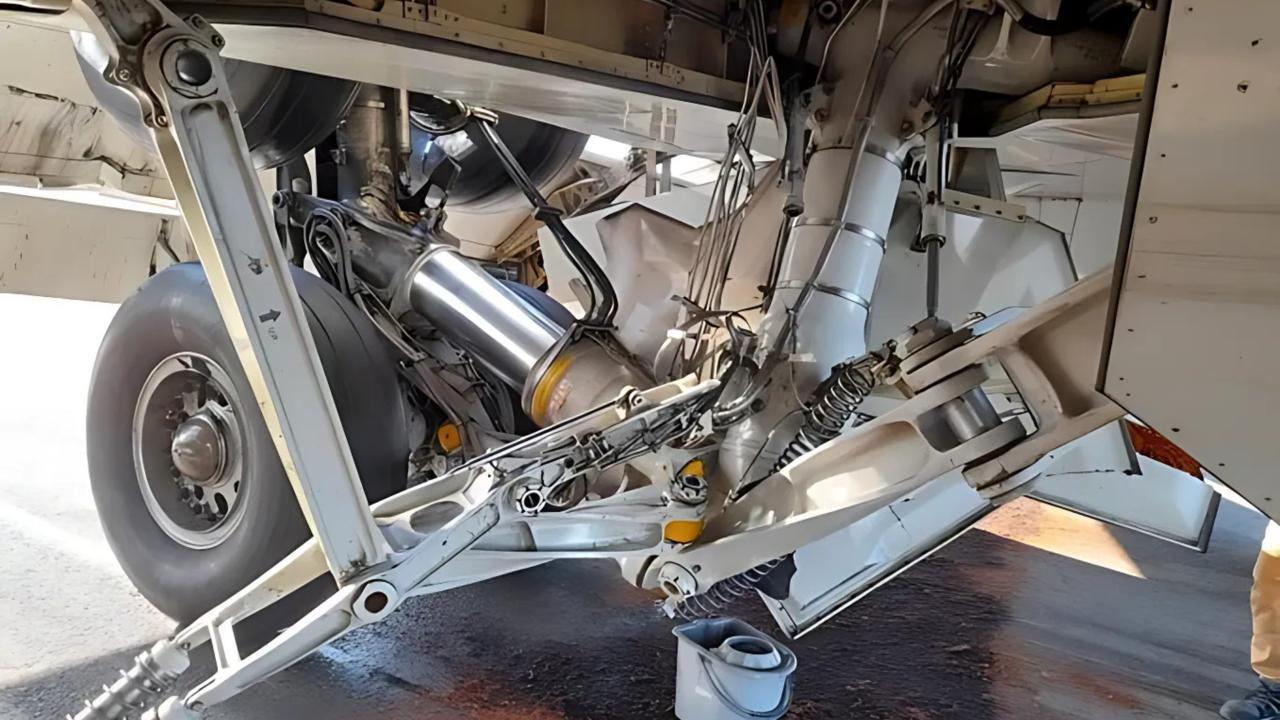
Photo : X / Aviation Week MRO
FAA Tightens Oversight Following Maintenance Irregularities
In a move underscoring its commitment to aviation safety, the Federal Aviation Administration (FAA) has ordered expanded inspections of aircraft landing gear assemblies after uncovering improper maintenance, repair, and overhaul (MRO) work. The decision follows a series of incidents in which landing gear components were found to be improperly installed or maintained, raising serious safety concerns across the commercial aviation sector.
The FAA’s directive is set to impact multiple airlines and MRO providers, as the regulator calls for comprehensive checks to ensure the continued airworthiness of affected aircraft.
The Issue: Improper MRO Work on Landing Gear Assemblies
The FAA’s action stems from the discovery of incorrect installation of landing gear components during routine MRO procedures. In several cases, critical parts such as axles, bushings, and torque link assemblies were found to be fitted improperly or without adhering to the strict specifications outlined by aircraft manufacturers.
Such deviations, if left undetected, could result in premature wear, structural failure, or compromised aircraft performance during takeoff and landing—scenarios that pose unacceptable risks to both passengers and crew.
The regulator has not specified the exact number of aircraft involved but has made clear that the issue is systemic enough to warrant immediate and widespread attention.
Safety Comes First: FAA’s Proactive Response
In its expanded Airworthiness Directive (AD), the FAA has mandated that airlines and certified MRO organizations conduct enhanced inspections of landing gear systems, with particular focus on components suspected of being improperly serviced. The directive includes detailed guidance on:
The move is part of the FAA’s broader safety framework, which emphasizes early detection and rectification of mechanical or procedural lapses before they escalate into in-flight emergencies.
Airlines and MRO Providers on Alert
Major US carriers and independent MRO firms are now racing to comply with the FAA’s expanded directive. While most airlines follow stringent internal maintenance protocols, the recent findings suggest that even reputable maintenance facilities may occasionally fall short of expected standards.
Industry sources indicate that the problematic maintenance work was likely carried out by third-party MRO providers handling heavy checks or component overhauls for airlines under cost-optimization strategies. With tight schedules and cost pressures, some operators may have inadvertently accepted compromised workmanship.
Airlines are now working closely with the FAA and original equipment manufacturers (OEMs) such as Boeing and Airbus to identify and rectify any affected aircraft without causing major service disruptions.
Impact on Flight Operations and Passenger Safety
For the traveling public, the FAA’s intervention is a clear reminder of the rigorous safety oversight that underpins commercial aviation in the United States. While the expanded checks may result in temporary aircraft groundings or schedule adjustments, the industry is emphasizing that these actions are preventive and precautionary in nature.
No accidents or injuries have been reported as a direct result of the MRO discrepancies, but the FAA’s swift response highlights its policy of zero tolerance for safety lapses.
Passengers can continue to fly with confidence, knowing that regulatory agencies and airlines alike are committed to maintaining the highest levels of safety.
The Growing Complexity of MRO in Modern Aviation
The incident also brings into focus the increasing complexity of MRO services in modern aviation. As aircraft systems become more sophisticated and airline fleets diversify, the demand for highly skilled maintenance professionals has risen sharply. Simultaneously, the global MRO market has witnessed intense cost competition, leading some operators to outsource to lower-cost providers abroad.
Industry experts warn that while outsourcing MRO can offer financial benefits, it also introduces potential risks related to quality control, documentation standards, and regulatory compliance. The FAA’s expanded inspections may prompt airlines to re-evaluate their MRO vendor management policies and invest more heavily in maintenance oversight.
Regulatory Landscape and Future Outlook
The FAA’s proactive approach is likely to set a precedent for similar actions globally. Aviation authorities in Europe, Asia, and the Middle East often follow the FAA’s lead in tightening regulations and issuing safety directives. This latest mandate could spark a wider industry conversation on the need for uniform maintenance standards across international borders.
In the coming months, the FAA is expected to release additional guidance to both airlines and MRO providers, possibly including enhanced training requirements, revised certification protocols, and stricter auditing processes.
Industry Response: A Renewed Focus on Maintenance Excellence
The response from the aviation community has been swift and supportive. Both airlines and MRO providers have reiterated their commitment to complying fully with the FAA's directive, viewing it as an essential step in maintaining trust in the safety of air travel.
Many industry stakeholders see the situation as an opportunity to modernize maintenance practices, invest in predictive maintenance technologies, and ensure that maintenance personnel receive continuous training on evolving aircraft systems.
Safety Above All in Aviation’s Maintenance Ecosystem
The FAA's decision to expand landing gear checks following improper MRO work underscores the aviation industry's unwavering focus on safety and precision. As aircraft become more complex and maintenance demands grow, the sector faces the dual challenge of cost management and safety assurance.
By acting decisively, the FAA not only protects passengers and crew but also sends a clear signal that there is no room for error in aviation maintenance. The ongoing inspections, though potentially disruptive in the short term, reinforce the aviation sector’s global reputation as the safest mode of transport—a reputation built on vigilance, integrity, and continuous improvement.
Aviation, MRO, Aircraft



Advances in Aerospace Technology and Commercial Aviation Recovery
Insights into breakthrough aerospace technologies and commercial aviation’s recovery amid 2025 chall

Defense Modernization and Strategic Spending Trends
Explore key trends in global defense modernization and strategic military spending shaping 2025 secu

Tens of Thousands Protest in Serbia on Anniversary of Deadly Roof Collapse
Tens of thousands in Novi Sad mark a year since a deadly station roof collapse that killed 16, prote

Canada PM Carney Apologizes to Trump Over Controversial Reagan Anti-Tariff Ad
Canadian PM Mark Carney apologized to President Trump over an Ontario anti-tariff ad quoting Reagan,

The ad that stirred a hornets nest, and made Canadian PM Carney say sorry to Trump
Canadian PM Mark Carney apologizes to US President Trump after a tariff-related ad causes diplomatic

Bengaluru-Mumbai Superfast Train Approved After 30-Year Wait
Railways approves new superfast train connecting Bengaluru and Mumbai, ending a 30-year demand, easi




