Post by : Amit
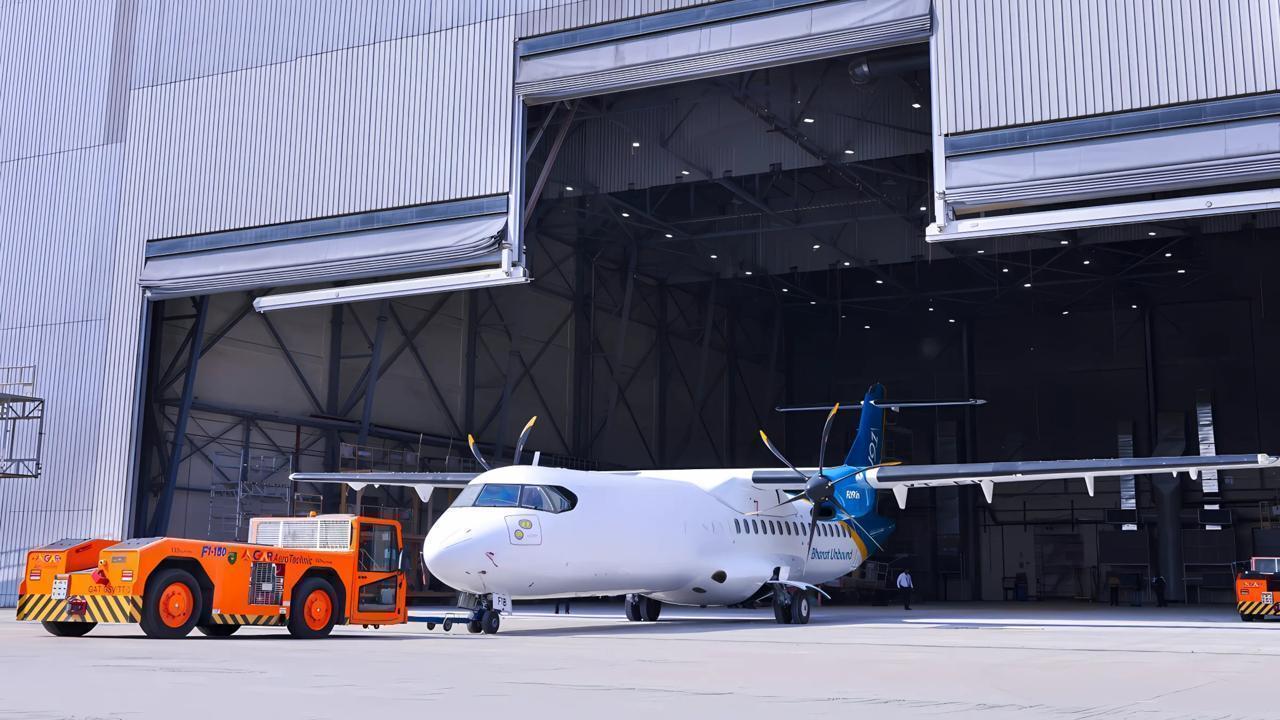
Photo : X / fly91.in
FedEx Takes Lead on New ATR 72-600 LCD Freighter Conversion
In a significant step to enhance its regional cargo capabilities, FedEx Express has placed the first order for a newly converted ATR 72-600 freighter under the LCD (Large Cargo Door) configuration, developed by IPR Conversions. The announcement marks a milestone not only for FedEx but also for the growing demand for turboprop freighters amid rising e-commerce and regional logistics growth.
The agreement designates FedEx as the launch customer for the ATR 72-600 LCD conversion program, highlighting the express delivery giant's continued investment in modern, efficient, and scalable cargo solutions. According to IPR Conversions, the aircraft will be delivered in 2026, with conversions being carried out at the Sabena Technics facility in Dinard, France.
Conversion Innovation for Modern Cargo Demands
The ATR 72-600 LCD freighter is a modified version of the passenger aircraft, specifically tailored to accommodate a large cargo door and freighter configuration. The conversion process by IPR includes structural modifications to allow the aircraft to carry industry-standard cargo containers and pallets, significantly enhancing its utility for regional air freight operations.
The LCD variant provides a 2.72-meter (approximately 107 inches) wide cargo door, offering improved loading flexibility for bulkier freight compared to standard passenger-to-freighter (P2F) modifications. This enables operators like FedEx to handle a broader variety of shipments efficiently, from e-commerce parcels to medical supplies and time-critical logistics.
Strategic Fleet Expansion Amid Growing Demand
FedEx's move aligns with broader trends in the air cargo industry, where regional and last-mile connectivity have become central to logistics strategies. With e-commerce continuing to surge and supply chains adapting to post-pandemic consumer behaviors, operators are seeking nimble, fuel-efficient aircraft to service remote and underserved areas.
The ATR 72-600’s proven performance, short takeoff and landing (STOL) capability, and operational economy make it a compelling choice for such roles. By adding the LCD freighter version to its fleet, FedEx ensures that it can maintain operational agility while expanding its intra-regional network.
IPR and Sabena Technics Drive the Conversion Program
IPR Conversions, an established name in regional aircraft modification, has joined forces with Sabena Technics to carry out the ATR 72-600 LCD conversions. The partnership draws upon IPR’s engineering expertise and Sabena’s MRO capabilities to deliver a robust conversion process designed for reliability and performance.
Sabena’s Dinard facility in France is well-equipped for large-scale modification programs and is expected to play a crucial role in ramping up deliveries once production begins. Both companies believe the ATR 72-600 LCD program will attract more customers globally, particularly those operating in developing markets where regional connectivity is paramount.
FedEx’s Long-Term Strategy for Fleet Diversification
FedEx has long embraced aircraft conversions as part of its strategic fleet planning. The company operates one of the largest fleets of turboprop and narrowbody freighters in the world, including previous versions of converted ATR 42s and 72s. By committing to the ATR 72-600 LCD, FedEx is reaffirming its preference for proven platforms enhanced through innovative upgrades.
This move also supports FedEx’s broader sustainability goals. Turboprops like the ATR 72-600 consume significantly less fuel than jet-powered aircraft on short-haul routes, contributing to lower emissions and operating costs. The LCD modification enhances this advantage by offering higher payload flexibility without requiring a new aircraft platform.
Industry Response and Market Implications
Industry observers see the FedEx order as a major endorsement for the ATR 72-600 LCD program, likely to catalyze further interest from regional carriers, logistics operators, and cargo specialists. Given the success of similar P2F programs across various aircraft types, the LCD conversion could serve niche but vital routes in Africa, Asia, Latin America, and island-based operations globally.
With global air cargo traffic expected to grow steadily over the next decade, especially in regions with less developed ground infrastructure, aircraft like the ATR 72-600 LCD freighter fill an essential gap. Their ability to land on short or unpaved runways, combined with containerized cargo loading, makes them uniquely suited for point-to-point delivery in complex terrains.
Conversion Milestones and Certification
The LCD conversion for the ATR 72-600 is undergoing certification by the European Union Aviation Safety Agency (EASA), with final approval expected in time for FedEx’s first delivery in 2026. IPR has emphasized that the conversion will meet all regulatory requirements for safety, cargo handling, and structural integrity.
Once certified, the LCD conversion could be offered as a retrofit option for existing ATR 72-600 operators or as part of forward-looking fleet procurement strategies. With FedEx leading the charge, the project’s success could help reinvigorate the secondary market for regional turboprops.
Turboprops in a Digital Supply Chain
FedEx’s adoption of the ATR 72-600 LCD reflects a broader shift in cargo strategy—one where digital supply chains, on-demand logistics, and regional adaptability play an outsized role. As customers demand faster, more flexible delivery, especially in emerging markets, right-sized freighters will become indispensable assets.
Turboprop conversions like this one are not just stopgap measures—they are purpose-driven adaptations to new realities in global logistics. Whether flying essential goods to island nations or connecting Tier-II cities with global trade hubs, the ATR 72-600 LCD offers both scalability and sustainability.
A Tactical Win for Regional Air Cargo
With its first order secured from FedEx, the ATR 72-600 LCD freighter program is off to a strong start. The move underscores how aircraft conversions, when executed with precision and foresight, can unlock powerful operational capabilities.
For FedEx, it’s another step toward building a diversified, environmentally conscious, and future-ready cargo fleet. For the air cargo industry, it may mark the beginning of a broader trend where converted turboprops take center stage in reshaping how goods move across regions.
As the first delivery nears in 2026, all eyes will be on the ATR 72-600 LCD—an aircraft that promises to redefine regional air logistics through smart design, proven performance, and trusted partnerships.
FedEx, Cargo, Aviation



Advances in Aerospace Technology and Commercial Aviation Recovery
Insights into breakthrough aerospace technologies and commercial aviation’s recovery amid 2025 chall

Defense Modernization and Strategic Spending Trends
Explore key trends in global defense modernization and strategic military spending shaping 2025 secu

Tens of Thousands Protest in Serbia on Anniversary of Deadly Roof Collapse
Tens of thousands in Novi Sad mark a year since a deadly station roof collapse that killed 16, prote

Canada PM Carney Apologizes to Trump Over Controversial Reagan Anti-Tariff Ad
Canadian PM Mark Carney apologized to President Trump over an Ontario anti-tariff ad quoting Reagan,

The ad that stirred a hornets nest, and made Canadian PM Carney say sorry to Trump
Canadian PM Mark Carney apologizes to US President Trump after a tariff-related ad causes diplomatic

Bengaluru-Mumbai Superfast Train Approved After 30-Year Wait
Railways approves new superfast train connecting Bengaluru and Mumbai, ending a 30-year demand, easi




