Post by : Amit
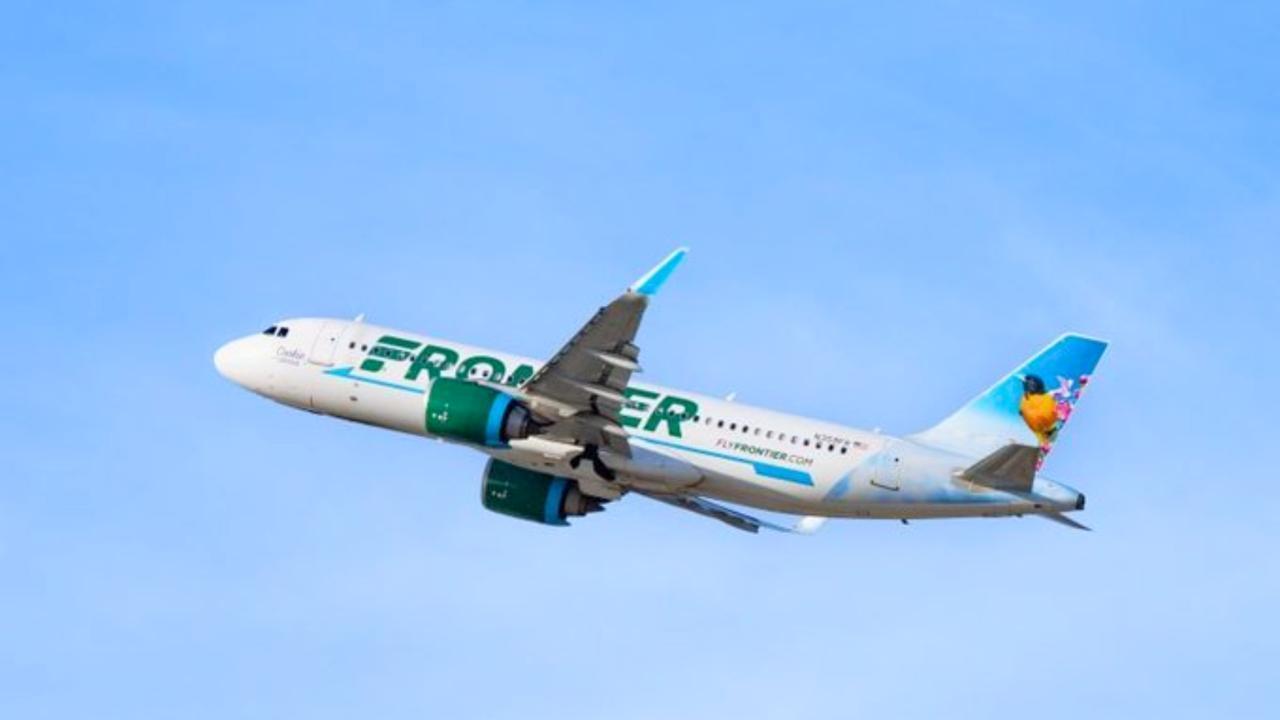
Photo : X / Aviation Week
Frontier Airlines Looks to Reinvent Inflight Connectivity with New Partnerships
Frontier Airlines, one of the U.S.’s leading ultra-low-cost carriers (ULCCs), is exploring a new wave of inflight connectivity (IFC) partnerships as it aims to upgrade passenger experience, streamline operations, and remain cost-competitive in an increasingly tech-driven aviation environment. The carrier, known for its no-frills business model and low base fares, is now considering multiple providers to deliver high-speed internet access aboard its growing fleet.
This shift marks a significant strategic evolution for Frontier, which has traditionally kept onboard connectivity offerings limited or entirely absent. With the competitive landscape among budget airlines intensifying—and passenger expectations rising even on short-haul routes—IFC is no longer a luxury but a differentiator.
A Turning Point in Frontier’s Digital Strategy
Speaking at a recent industry event, Frontier’s Chief Operating Officer Howard Diamond confirmed that the airline is actively assessing new IFC options, with the goal of enhancing the onboard experience while maintaining cost discipline.
“We’re taking a hard look at what’s available in the market,” said Diamond. “Inflight connectivity has come a long way in terms of speed, affordability, and reliability. We think there’s now an opportunity to deliver better value to customers without compromising our ULCC model.”
The statement comes as Frontier prepares to expand its fleet with dozens of new Airbus A320neo family aircraft, offering the airline a window to embed next-gen connectivity systems into new builds or retrofit existing jets more efficiently.
Balancing Cost with Connectivity
Frontier’s hesitation to adopt IFC in the past was grounded in cost-control imperatives. As a ULCC, Frontier’s core proposition relies on keeping operating costs low and revenue streams diversified through ancillaries rather than premium onboard features.
However, the economics of inflight internet have changed. Satellite providers and hardware integrators are now offering lighter, more efficient antennas, and bandwidth pricing has dropped with the proliferation of high-throughput satellites (HTS) and low-Earth orbit (LEO) constellations. These advances mean airlines can now deploy IFC systems that are both technically and financially viable, even on thinner-margin routes.
“We’re not looking to become a premium product, but the definition of value is shifting,” said a Frontier executive familiar with the process. “Even leisure travelers today want to scroll through Instagram or send a WhatsApp while flying. If we can deliver that at the right price point, it’s worth exploring.”
The Options on the Table: LEO vs GEO Providers
Frontier has not yet named which providers are under consideration, but the current IFC market is dominated by a few key players:
Each provider offers different trade-offs in terms of latency, global coverage, installation complexity, and long-term cost. For a ULCC like Frontier—whose routes span domestic hubs and some cross-border services—low latency and high reliability are key, especially as more flights traverse congested airspace where consistent IFC can be challenging.
A shift toward LEO providers like Starlink could give Frontier an edge with ultra-low latency service, but it would also mean managing new integration protocols and regulatory approvals.
Passengers Want More Than Just a Seat
Inflight connectivity, once seen as a premium perk on transcontinental flights, has quickly become a baseline expectation, even on short-haul and budget routes. A 2024 survey from Inmarsat revealed that 83% of passengers expect Wi-Fi availability, and over half are more likely to rebook with airlines that offer reliable inflight internet.
For Frontier, the pressure is twofold: match passenger expectations and compete with low-cost rivals like Spirit, JetBlue, and Southwest, many of whom already offer inflight Wi-Fi, sometimes for free.
“Connectivity has shifted from being a nice-to-have to a need-to-have,” noted airline analyst Michael Boyd. “If Frontier doesn’t keep pace, it risks losing passengers to carriers who see IFC as an essential service, not an add-on.”
Ancillary Revenue Opportunities
For ULCCs, connectivity is not just about customer satisfaction—it’s a potential revenue stream. Frontier has already excelled at unbundling services, charging extra for seat selection, baggage, and onboard refreshments. IFC could be another layer in this monetization strategy.
Several airlines are now exploring tiered internet access models, such as:
With more passengers carrying smartphones and tablets, and airlines increasingly tapping into advertising and data partnerships, IFC is evolving into a multi-channel platform that supports both ancillary revenue and loyalty program engagement.
“Think of it as digital real estate,” said an IFC industry executive. “You can sell speed, sell ads, track behaviors, and even tailor content based on flight routes or demographics.”
Installation Timing and Retrofit Strategy
Any connectivity upgrade will require thoughtful implementation. Frontier is reportedly considering a dual-track strategy: installing IFC on its new Airbus A321neo and A320neo deliveries while evaluating retrofit plans for existing aircraft depending on performance benchmarks and passenger demand.
Given that IFC hardware can be installed during routine heavy maintenance, costs can be minimized if aligned with planned checks. However, downtime remains a major consideration, especially for a ULCC that operates high aircraft utilization rates.
The hardware footprint of new IFC systems is smaller than ever, and antennas are now more aerodynamic, helping reduce fuel burn penalties. Nonetheless, the cumulative cost of fleet-wide adoption—including installation, licensing, training, and bandwidth contracts—could still exceed tens of millions of dollars.
Frontier’s Broader Technology Ambitions
The connectivity discussion is also part of Frontier’s larger digital strategy. The airline has been quietly investing in tech upgrades across mobile booking, dynamic pricing, and predictive maintenance platforms. Adding IFC to the mix could further streamline inflight operations, allowing for real-time updates to crew tablets, improved turnaround coordination, and better disruption management in the event of weather or technical delays.
Moreover, enhanced connectivity could open the door for pilot data streaming, aircraft health monitoring, and remote diagnostics—capabilities that go beyond passenger entertainment and touch on flight safety and operational efficiency.
A ULCC Arms Race
Frontier’s move to evaluate new connectivity partners comes at a time when the low-cost carrier segment is undergoing a digital arms race. Spirit Airlines, which Frontier nearly merged with in 2022, already offers IFC on many of its aircraft via Thales and Gogo partnerships. JetBlue, while not a pure ULCC, provides free high-speed Wi-Fi powered by Viasat on all its flights—a major draw for tech-savvy travelers.
Meanwhile, startup carriers like Breeze Airways and Canada’s Lynx Air are experimenting with hybrid IFC models and streaming-first platforms to attract younger, digital-native flyers.
To stay competitive, Frontier will need to strike a delicate balance: cost-effective IFC deployment without straying from its low-fare DNA.
Decisions on the Horizon
While Frontier has not announced a formal timeline, executives indicate that connectivity decisions will be finalized within the next 12–18 months. The selection of a partner will likely hinge on trial results, customer surveys, and financial modeling.
"We're being deliberate," said Diamond. "We want to get this right—not just rush into it because the market expects it."
Once a partner is chosen, implementation could begin with a pilot rollout on select routes—likely cross-country flights or high-volume leisure destinations—before scaling systemwide.
Frontier’s exploration of inflight connectivity is a strategic pivot that reflects broader industry trends. As passenger expectations evolve and digital services become core to airline branding, even the most cost-conscious carriers must adapt. If Frontier succeeds in integrating IFC without bloating costs, it could redefine what value-oriented flying means in the connected age.
Frontier Airline, Aviation, Flight



Advances in Aerospace Technology and Commercial Aviation Recovery
Insights into breakthrough aerospace technologies and commercial aviation’s recovery amid 2025 chall

Defense Modernization and Strategic Spending Trends
Explore key trends in global defense modernization and strategic military spending shaping 2025 secu

Tens of Thousands Protest in Serbia on Anniversary of Deadly Roof Collapse
Tens of thousands in Novi Sad mark a year since a deadly station roof collapse that killed 16, prote

Canada PM Carney Apologizes to Trump Over Controversial Reagan Anti-Tariff Ad
Canadian PM Mark Carney apologized to President Trump over an Ontario anti-tariff ad quoting Reagan,

The ad that stirred a hornets nest, and made Canadian PM Carney say sorry to Trump
Canadian PM Mark Carney apologizes to US President Trump after a tariff-related ad causes diplomatic

Bengaluru-Mumbai Superfast Train Approved After 30-Year Wait
Railways approves new superfast train connecting Bengaluru and Mumbai, ending a 30-year demand, easi




