Post by : Amit
Photo : X / Times LIVE
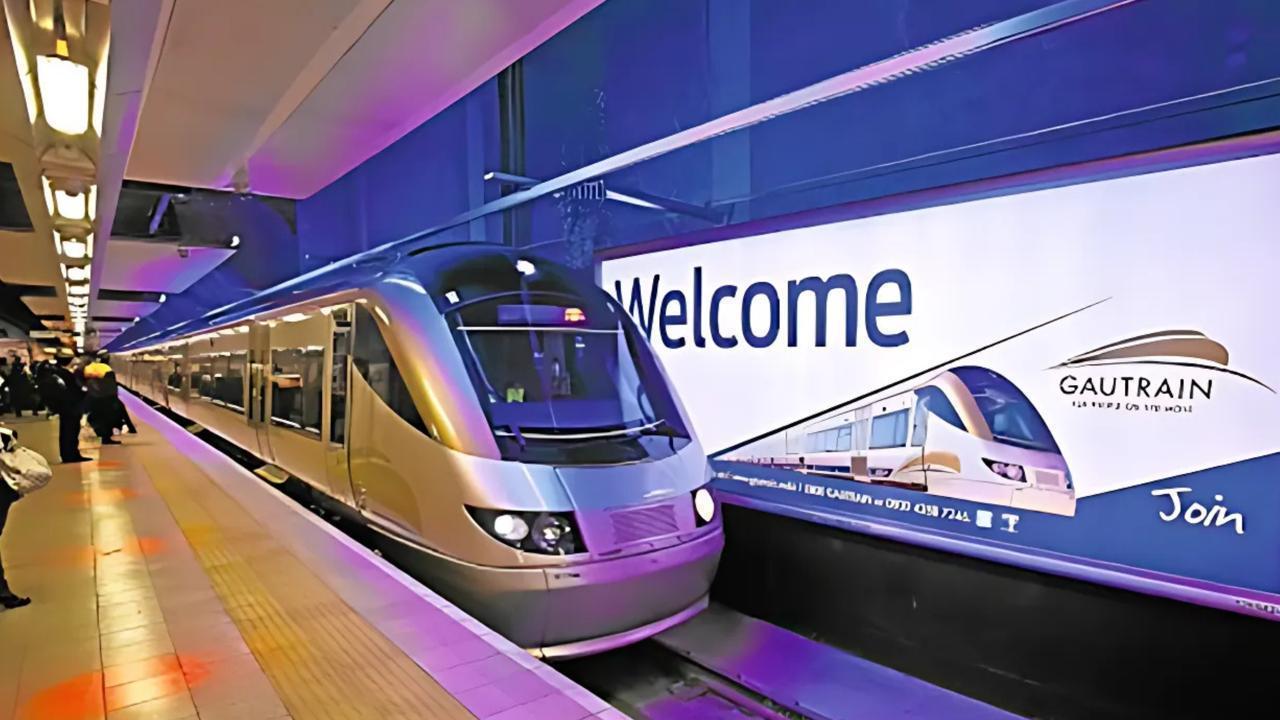
Gautrain’s New Fare Cuts Aim to Lure Riders Back
In a strategic effort to increase ridership and make high-speed rail more accessible to a wider demographic, Gautrain has announced an off-peak fare promotion across all its routes. The initiative, dubbed the “Off-Peak Fare Discount,” is more than just a marketing experiment—it represents a growing urgency to reshape how urban mobility functions in Gauteng, and by extension, how South Africa tackles public transport engagement in a post-pandemic economy.
Starting this month, commuters who travel on the Gautrain outside of peak hours will benefit from reduced fares, a move designed to incentivize travel during quieter periods and boost overall use of the country’s premier rapid rail service. With the cost of living rising and fuel prices remaining volatile, the timing could prove fortuitous for daily commuters, students, and budget-conscious travelers alike.
Addressing Ridership Declines Post-Pandemic
The Gautrain, while a technological success story and a symbol of urban progress, has long faced criticism for catering primarily to the middle and upper classes. Post-pandemic, its ridership has suffered the same fate as many public transport systems around the world—reduced patronage, changing commuter patterns due to hybrid work models, and a general distrust of shared spaces.
Gautrain Management Agency (GMA) officials acknowledge these shifting realities. According to them, the new fare reduction is part of a broader strategy to reinvigorate the system and make it a viable, cost-effective option for more segments of the population.
"Public transport systems around the world are having to reimagine their pricing models,” said William Dachs, CEO of the Gautrain Management Agency. “We want to ensure Gautrain remains both relevant and accessible.”
What the Discount Offers—and Who It Targets
The discount applies to trips taken outside of traditional peak periods, specifically:
These hours capture a broad swath of the day, particularly benefiting part-time workers, tourists, students, and anyone with flexible schedules. It also provides an opportunity for companies to encourage staggered working hours, alleviating congestion on highways and easing pressure on peak services.
The discounted fares vary depending on route length but are noticeably lower than peak pricing, sometimes by as much as 25–30%. For daily commuters using the Sandton–Pretoria route, for instance, the savings can accumulate significantly over the course of a month.
Importantly, the fare cuts are being automatically applied at the point of travel—no registration or special booking required, making the process frictionless for passengers.
Alleviating Traffic and Environmental Pressure
One of Gautrain’s founding missions was to decongest the N1 and N3 highways and reduce carbon emissions tied to private car usage. While the system made notable early progress in this regard, critics argue that its momentum has stalled in recent years due to high fares and limited route coverage.
The new pricing model could revive that original goal. By incentivizing off-peak travel, Gautrain could shift some car commuters back to rail, easing pressure on Gauteng’s notoriously choked roadways—especially during morning and evening rush hours.
In tandem with South Africa’s climate commitments and Johannesburg’s sustainability goals, a more robust, widely-used public rail network could also have environmental benefits. Each passenger who opts for a train instead of a car reduces greenhouse gas emissions and local air pollution.
Making High-Speed Rail More Equitable
Affordability has long been the Achilles’ heel of the Gautrain. For many South Africans, the train’s sleek cars and speed were out of financial reach, reinforcing perceptions that it was built more for prestige than practical public service.
This new fare initiative signals a potential shift in that thinking. Although it doesn’t fully solve the accessibility and equity challenges, it shows an intentional pivot toward inclusion—offering lower-cost entry points without compromising service quality.
“There’s still a long way to go in terms of real affordability,” noted Sarah Moleleki, an urban mobility researcher at the University of Johannesburg. “But the off-peak discount is a welcome first step. It acknowledges that pricing plays a major role in how people engage—or disengage—from public transport.”
Opportunity for Better Public-Private Integration
Gautrain operates under a Public-Private Partnership (PPP) model—one of the largest in Africa. It has been hailed globally as a pioneering infrastructure success, but that doesn’t mean it’s immune to inefficiencies or criticism.
Some transport analysts argue that the off-peak pricing strategy could be even more effective if paired with deeper integration across Gauteng’s mobility ecosystem—including minibus taxis, BRT (Bus Rapid Transit), and shared micro-mobility services.
A truly integrated fare and scheduling system, enabled by smart ticketing or Mobility-as-a-Service (MaaS) platforms, would allow travelers to plan multimodal trips in real time—encouraging use of complementary modes rather than competitive ones.
Could This Set a Precedent for Other Systems?
The decision by Gautrain to proactively cut fares—rather than raise them or reduce services—stands out in a global context where many transit authorities are hiking prices to cover post-pandemic deficits.
If the off-peak experiment proves successful in increasing ridership and shifting travel habits, it could serve as a blueprint for other rail and bus systems across South Africa, and perhaps even the continent.
“Transport is about more than getting from A to B,” said Moleleki. “It’s about shaping the economy, the climate, and social equity. Every small pricing adjustment can be a lever for much larger change.”
Early Public Reactions: A Mixed Bag
The public reaction to the announcement has been cautiously optimistic. On social media, many users praised the initiative, noting that it finally gives students and freelancers a financial incentive to use Gautrain. Others pointed out that the broader problems—limited routes, last-mile connectivity, and safety at stations—remain unaddressed.
Still, the very fact that Gautrain is testing new pricing strategies is seen by many as a step in the right direction. If coupled with future expansions, improved station amenities, and better modal integration, the off-peak discount could evolve into a much larger transformation strategy.
A More Adaptive Gautrain?
For now, Gautrain’s fare strategy is a trial—but its implications stretch far beyond the rand-and-cent discount. It represents a new mindset: that urban mobility needs to be flexible, that transport planning must match evolving lifestyles, and that ridership is earned, not assumed.
As South African cities prepare for a future shaped by climate risks, digital transformation, and shifting commuter norms, the lessons from Gautrain’s off-peak initiative may offer valuable insights into what a resilient, people-focused transit system can look like.
In the meantime, the message from Gautrain is simple: if you're willing to shift your schedule slightly, you can now ride smarter—for less.
Gautrain, Travel Incentives



Advances in Aerospace Technology and Commercial Aviation Recovery
Insights into breakthrough aerospace technologies and commercial aviation’s recovery amid 2025 chall

Defense Modernization and Strategic Spending Trends
Explore key trends in global defense modernization and strategic military spending shaping 2025 secu

Tens of Thousands Protest in Serbia on Anniversary of Deadly Roof Collapse
Tens of thousands in Novi Sad mark a year since a deadly station roof collapse that killed 16, prote

Canada PM Carney Apologizes to Trump Over Controversial Reagan Anti-Tariff Ad
Canadian PM Mark Carney apologized to President Trump over an Ontario anti-tariff ad quoting Reagan,

The ad that stirred a hornets nest, and made Canadian PM Carney say sorry to Trump
Canadian PM Mark Carney apologizes to US President Trump after a tariff-related ad causes diplomatic

Bengaluru-Mumbai Superfast Train Approved After 30-Year Wait
Railways approves new superfast train connecting Bengaluru and Mumbai, ending a 30-year demand, easi




