Post by : Amit
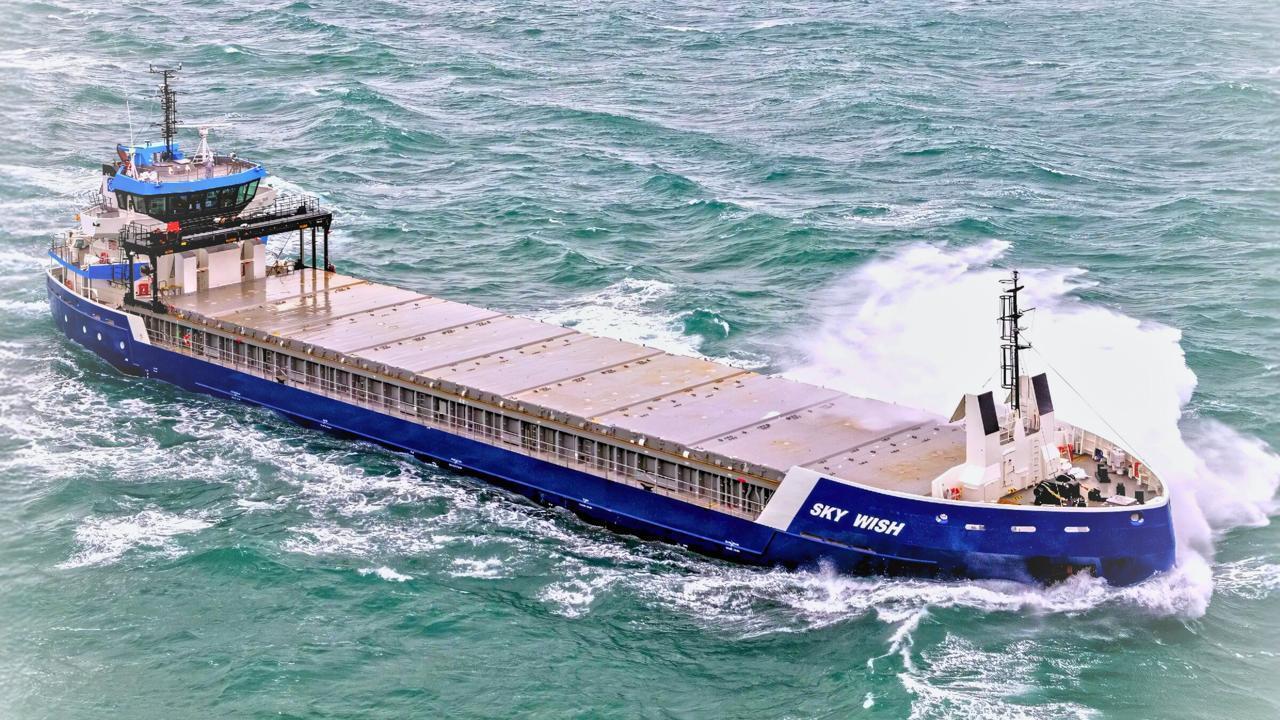
Photo : Facbook / Damen
Germany Supports Reederei Bernd Sibum’s Green Shipbuilding Drive for a Sustainable Future
In a clear signal of Europe’s growing commitment to greener shipping, Germany has stepped forward to fund the construction of new environmentally friendly vessels for Reederei Bernd Sibum, one of the country’s respected shipping operators. The move reflects both Germany’s push to decarbonize maritime transport and the company’s ambition to align its operations with the future of sustainable shipping.
The investment not only underscores the increasing importance of green innovation in the maritime sector but also highlights Germany’s determination to position itself at the forefront of cleaner, smarter maritime logistics in Europe.
A Strategic Boost for Eco-Friendly Shipbuilding
The funding, which will be channeled through Germany's Federal Ministry for Digital and Transport, is set to support the construction of two advanced, low-emission vessels designed to significantly reduce greenhouse gas emissions. These next-generation ships will join Reederei Bernd Sibum’s fleet, marking a decisive step in the company’s journey toward sustainability.
The financial backing is part of a broader German government strategy aimed at accelerating the decarbonization of shipping, which remains one of the most challenging sectors to transition to greener alternatives due to its heavy reliance on fossil fuels.
Reederei Bernd Sibum: Pioneering Green Maritime Operations
For Reederei Bernd Sibum, a family-owned company based in Papenburg, Lower Saxony, the move represents both an environmental responsibility and a business necessity. As global regulatory pressure mounts on the shipping industry to cut emissions, forward-looking operators like Sibum are investing in greener fleets to stay competitive and compliant.
The company, which operates short-sea vessels across European waters, is positioning itself as a leader in the transition to low-carbon maritime transport, an area that has often lagged behind other industries in sustainability efforts.
Driving Change in Europe's Shipping Industry
The decision to fund these eco-friendly newbuilds reflects Germany’s wider maritime environmental policy. The shipping sector, a key pillar of global trade, accounts for nearly 3% of global CO₂ emissions. Efforts to tackle this challenge have gained momentum in recent years, especially within the European Union, which has introduced stricter environmental regulations and emissions targets for shipping.
By supporting innovative projects like Sibum’s green vessels, Germany is not only contributing to climate goals but also strengthening the country’s shipbuilding industry, which remains a cornerstone of regional employment and technological excellence.
Greener Vessels: A Step Toward Zero Emissions
The new vessels funded under this initiative will incorporate cutting-edge design and technology to minimize fuel consumption and emissions. While specific technical details of the ships have not yet been publicly disclosed, they are expected to meet or exceed the International Maritime Organization’s (IMO) efficiency and emission reduction guidelines.
Such innovations may include advanced hull designs, alternative fuels such as LNG or biofuels, hybrid propulsion systems, and onboard energy efficiency technologies that together can slash carbon output while maintaining operational performance.
Public-Private Collaboration Fuels Sustainable Innovation
The collaboration between the German government and Reederei Bernd Sibum exemplifies how public funding can play a catalytic role in accelerating the adoption of greener technologies in industries that face significant barriers to decarbonization.
Maritime shipping, with its long asset lifecycles and high capital costs, often struggles to finance the shift to cleaner vessels without state support. Germany’s willingness to fund these advancements sends a strong message: sustainability in shipping is not only possible but essential—and the transition must be supported at every level.
Aligning with Global Climate Goals
The initiative also aligns with broader international commitments to combat climate change, including the EU’s Fit for 55 package and the IMO’s strategy for reducing greenhouse gas emissions from ships. By investing in cleaner ships today, Germany is laying the groundwork for compliance with future regulations while setting an example for other maritime nations.
For shipping companies, this is not just a compliance issue—it's a chance to redefine their role in global supply chains by offering greener, more sustainable services to customers who are increasingly demanding lower-carbon logistics solutions.
A Competitive Edge in the Green Economy
As sustainability becomes a key competitive factor in global trade, early adopters like Reederei Bernd Sibum stand to benefit from enhanced market positioning. Many of the world’s largest shippers, retailers, and logistics providers are already setting net-zero supply chain targets, putting pressure on their shipping partners to provide cleaner transport options.
By proactively investing in eco-friendly ships, Sibum is future-proofing its operations and signaling its commitment to both environmental stewardship and customer expectations.
German Shipbuilding Industry Gains Momentum
Germany’s support for green shipping also bolsters its shipbuilding sector, which has faced intense competition from Asia in recent decades. By focusing on innovation and sustainability, German shipyards have the potential to carve out a niche in the construction of specialized, high-efficiency vessels for the European market and beyond.
This initiative not only helps cut emissions but also protects skilled jobs and expertise within the country’s maritime industrial base, ensuring that Germany remains a key player in the evolving global shipping landscape.
Greener Horizons for European Shipping
As the world races to meet climate targets, maritime shipping is finally catching up. Germany’s decision to fund Reederei Bernd Sibum’s green newbuilds is just one example of how governments, industry players, and technology providers can work together to tackle one of the toughest decarbonization challenges.
The coming years will likely see more such collaborations, with sustainability no longer treated as an optional extra but as the foundation for future growth in shipping.
Steering Toward a Cleaner Maritime Future
Germany’s funding of Reederei Bernd Sibum’s eco-friendly vessels represents more than just new ships—it reflects a broader shift in the global mindset about how goods are moved, how emissions are managed, and how industries must evolve to meet the climate challenge.
With these new green vessels, Reederei Bernd Sibum is not only investing in its own future but also contributing to the collective mission of building a cleaner, smarter, and more responsible maritime industry for generations to come.
Germany, Marintime, Shipping



Advances in Aerospace Technology and Commercial Aviation Recovery
Insights into breakthrough aerospace technologies and commercial aviation’s recovery amid 2025 chall

Defense Modernization and Strategic Spending Trends
Explore key trends in global defense modernization and strategic military spending shaping 2025 secu

Tens of Thousands Protest in Serbia on Anniversary of Deadly Roof Collapse
Tens of thousands in Novi Sad mark a year since a deadly station roof collapse that killed 16, prote

Canada PM Carney Apologizes to Trump Over Controversial Reagan Anti-Tariff Ad
Canadian PM Mark Carney apologized to President Trump over an Ontario anti-tariff ad quoting Reagan,

The ad that stirred a hornets nest, and made Canadian PM Carney say sorry to Trump
Canadian PM Mark Carney apologizes to US President Trump after a tariff-related ad causes diplomatic

Bengaluru-Mumbai Superfast Train Approved After 30-Year Wait
Railways approves new superfast train connecting Bengaluru and Mumbai, ending a 30-year demand, easi




