Post by : Amit
Photo : X / Nikita Sareen
Freight Train Derails and Catches Fire Near Tiruvallur, Sparks Safety Concerns
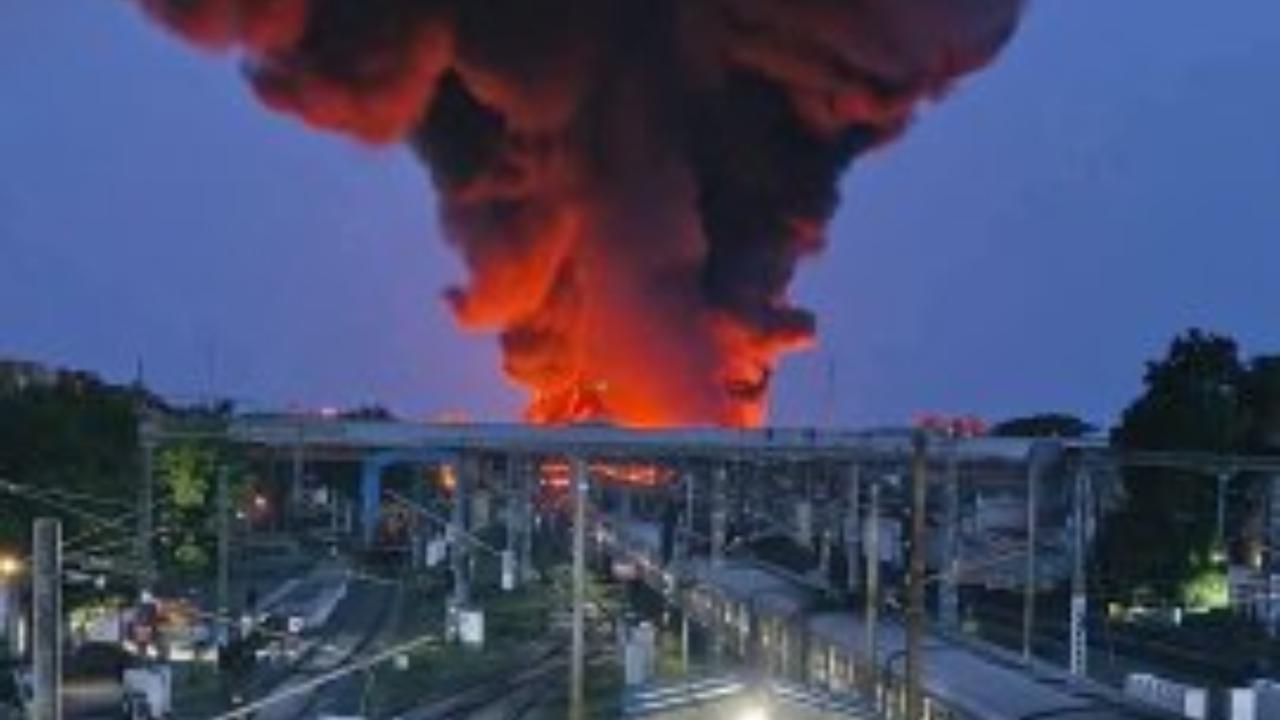
A freight train derailed and caught fire near Tiruvallur in Tamil Nadu on Sunday, triggering alarm among locals and raising fresh questions over railway safety and freight train handling. The incident, which occurred around noon on 14 July, involved a goods train carrying petroleum-related materials. Thankfully, no casualties were reported, but visuals of billowing black smoke and flames spread rapidly across media and social networks.
Sudden Blaze Following Freight Train Derailment
The accident occurred near the Gummidipoondi–Arakkonam section close to Tiruvallur, about 45 km west of Chennai. According to initial reports from the Southern Railway authorities, multiple wagons of the train derailed while it was in motion, with one or more wagons reportedly carrying inflammable cargo. Upon derailment, a fire erupted, engulfing at least one carriage.
The thick smoke was visible from several kilometers away, prompting local residents and passersby to rush toward the scene even before emergency responders arrived. The local fire and rescue department was called in immediately, and teams worked for hours to bring the fire under control and prevent its spread to other wagons.
Emergency Response and Containment Measures
Firefighters from Tiruvallur, Gummidipoondi, and other surrounding districts were mobilized as soon as reports of the fire emerged. Railway Protection Force (RPF) personnel, along with Government Railway Police (GRP), quickly cordoned off the area. Electricity to the nearby railway lines was suspended as a precaution, and other train services through the corridor were temporarily halted.
By late afternoon, fire crews had successfully doused the flames, preventing a larger catastrophe. “We were able to contain the fire within a couple of hours,” said a fire department official at the site. “The heat was intense, and we had to be extremely cautious since petroleum-based materials were involved.”
Authorities confirmed that there were no injuries to railway staff or nearby civilians. However, multiple wagons were severely damaged, and a full assessment of cargo loss and infrastructural impact is underway.
Probe Ordered into Cause of Derailment
While the cause of the derailment has yet to be officially established, Southern Railway has ordered a high-level inquiry into the incident. Preliminary suspicions point toward track-related issues or possible axle failure as potential causes. Senior officials from the Railway Board are expected to visit the site and review the damage firsthand.
The Commissioner of Railway Safety (CRS), Southern Circle, is also likely to conduct an independent investigation to determine whether lapses in maintenance, operational error, or technical malfunction contributed to the mishap.
As a temporary measure, goods train movement along the affected section has been suspended until track inspection and repair are completed.
Rail Freight Safety Under Scrutiny
This accident is the latest in a string of freight train incidents that have drawn attention to India’s aging rail infrastructure and safety practices. While Indian Railways has been focusing significant resources on high-speed passenger corridors and modernization projects like Vande Bharat and bullet trains, the freight network—crucial for economic activity—has often lagged in upgrades.
Experts warn that derailments involving inflammable materials, like petroleum or chemical cargo, present a higher risk of fire and environmental damage. “Freight trains carry highly sensitive materials, often without sufficient monitoring or fire-suppression infrastructure,” said Anil Rajan, a Chennai-based railway safety analyst. “One derailment is all it takes for a disaster.”
Indian Railways has been working on a national plan to increase track capacity and improve axle load-bearing performance, but progress in many freight corridors has been slow. This incident may now accelerate those conversations.
Local Impact and Public Reaction
Residents in Tiruvallur and nearby areas expressed shock and concern following the incident. Videos captured by eyewitnesses show frightened locals shouting warnings and pointing toward the fire as it grew rapidly. Many nearby shopkeepers and residents temporarily evacuated their premises fearing an explosion.
“We heard a loud noise, like something metal crashing,” said Arumugham, a farmer who lives close to the tracks. “Then we saw fire and smoke rising very fast. Some of us thought it might explode, so we ran away immediately.”
Social media users were quick to react, with many urging railway authorities to improve freight train safety, while others thanked first responders for acting swiftly to contain the fire.
Restoration and Recovery Operations Begin
Post-fire recovery operations began by early evening, with engineering crews from Southern Railway arriving to begin track clearance and restoration. Cranes were brought in to remove the damaged wagons, and rail welding teams were deployed to assess the extent of track deformation.
Railway officials estimate that full restoration of the affected track section could take 24 to 48 hours. Several passenger and goods trains scheduled through this route have been diverted, delayed, or cancelled in the interim.
Meanwhile, forensic experts have been called in to analyze the burnt wagons and determine whether proper labeling and cargo classification were followed—especially crucial in identifying safety violations in transporting flammable goods.
Political Leaders React, Demand Accountability
Local political representatives, including MLAs from Tiruvallur district and Members of Parliament from Tamil Nadu, issued statements expressing relief that no lives were lost but called for accountability and transparency in the investigation.
“This could have been a major disaster had it occurred closer to a populated zone,” said one local DMK legislator. “The railway ministry must take freight safety more seriously and ensure these tracks are constantly monitored for faults.”
Railway Minister Ashwini Vaishnaw is yet to make an official statement, though sources indicate he has sought an immediate report from Southern Railway.
A Wake-Up Call for Freight Rail Modernization
As India aggressively pushes ahead with major passenger rail modernization programs, experts stress that freight transport safety cannot remain a secondary priority. The Tiruvallur incident, though contained, serves as a stark reminder of the potentially explosive consequences of neglecting cargo train oversight.
Analysts believe that lessons from this accident must go beyond routine probes and lead to policy-level changes—especially in freight movement monitoring, infrastructure reinforcement, and real-time fire detection systems in wagons carrying hazardous materials.
As railway services in the region slowly return to normal, the question that remains is not just how this happened—but how soon the system will evolve to ensure it doesn’t happen again.
India, Asia, Railways



Advances in Aerospace Technology and Commercial Aviation Recovery
Insights into breakthrough aerospace technologies and commercial aviation’s recovery amid 2025 chall

Defense Modernization and Strategic Spending Trends
Explore key trends in global defense modernization and strategic military spending shaping 2025 secu

Tens of Thousands Protest in Serbia on Anniversary of Deadly Roof Collapse
Tens of thousands in Novi Sad mark a year since a deadly station roof collapse that killed 16, prote

Canada PM Carney Apologizes to Trump Over Controversial Reagan Anti-Tariff Ad
Canadian PM Mark Carney apologized to President Trump over an Ontario anti-tariff ad quoting Reagan,

The ad that stirred a hornets nest, and made Canadian PM Carney say sorry to Trump
Canadian PM Mark Carney apologizes to US President Trump after a tariff-related ad causes diplomatic

Bengaluru-Mumbai Superfast Train Approved After 30-Year Wait
Railways approves new superfast train connecting Bengaluru and Mumbai, ending a 30-year demand, easi




