Post by : Amit
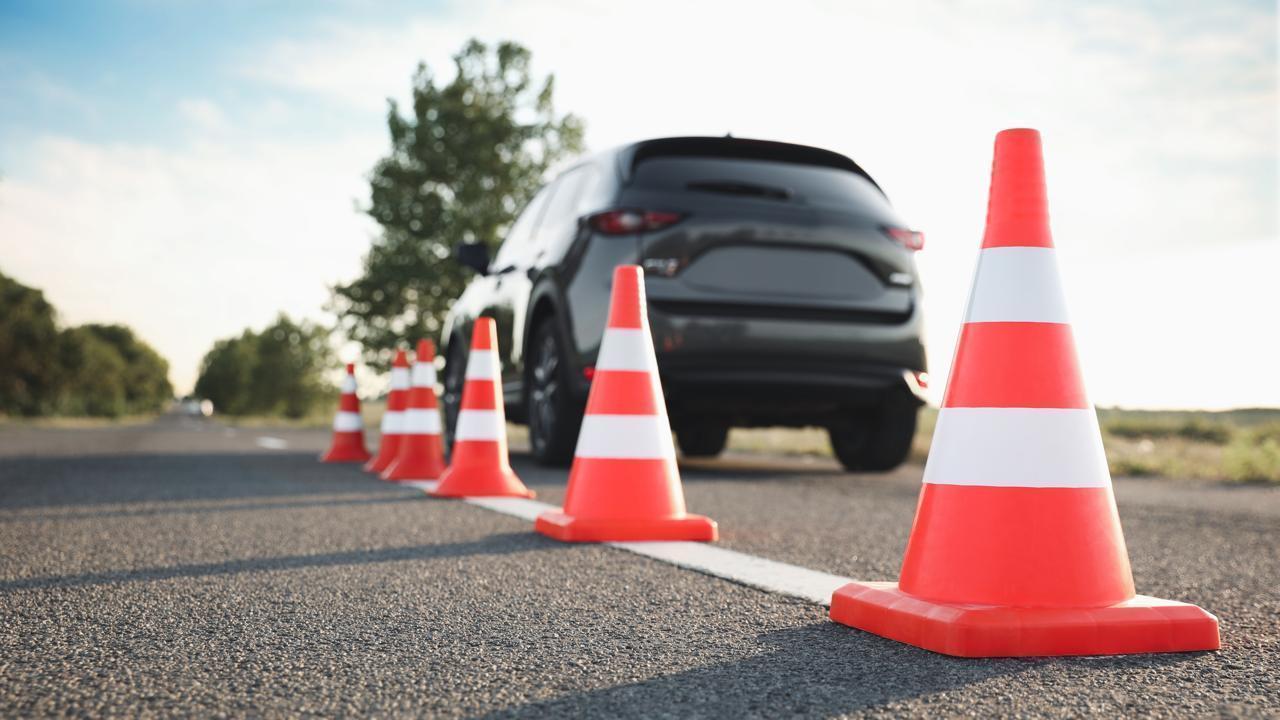
Visakhapatnam, July 2025 — The port city of Visakhapatnam (Vizag) is making headlines this week for a development that blends progress with a stark reality check. The city's recently introduced automated driving test track—designed to digitize and streamline the driver licensing process—has revealed a surprising statistic: over 50% of candidates are failing.
The system, launched by the Andhra Pradesh Transport Department, replaces traditional human-supervised tests with sensor- and AI-enabled driving assessment tracks, offering an unbiased, fully automated experience. While the goal is to bring transparency and efficiency to the process, the high failure rate has raised concerns about driver preparedness, training quality, and the state of road safety education in the region.
A New Era of Transparency in Licensing
The automated testing initiative is part of Andhra Pradesh’s larger digitization push across transport services. Instead of being judged by human instructors who may be inconsistent or vulnerable to external influences, candidates are now assessed by a machine-operated system that tracks every move of the vehicle.
This includes performance on critical tasks like reverse parking, slope driving, figure-8 turns, parallel parking, and emergency stops. Each test is scored in real-time using embedded sensors, cameras, and AI-enabled analytics software that leave little room for error or manipulation.
“Manual testing had its share of subjectivity and loopholes,” said a senior official from the Vizag Regional Transport Office (RTO). “The automated test brings 100% transparency, and ensures only competent drivers are licensed.”
Why Are So Many Failing?
While the intent behind automation is laudable, the data paints a troubling picture. Since the launch of the Vizag track earlier this month, more than half of applicants have failed on their first attempt. In some slots, failure rates have touched 60–65%, particularly on maneuvers like the reverse ‘S’ curve and parallel parking, which demand both technical precision and familiarity with modern test procedures.
Experts point to multiple reasons for this trend:
“The system is fair, but it’s also strict. There’s no scope for leniency,” said Naveen Kumar, a driving instructor in Vizag. “Drivers must now train with precision—not just familiarity.”
Public Reaction: Surprise, Frustration, and Support
The sudden shift has led to a mix of public reactions. Several candidates who failed voiced frustration, citing the system’s lack of human flexibility and their unawareness of the new requirements.
“I didn’t even know I had to stop exactly at the line,” said Anusha Rao, a 23-year-old college student. “The vehicle crossed it by a few inches, and I failed the whole test. In a real-world scenario, that wouldn’t matter.”
Yet, many others have welcomed the reform. For years, India’s driver licensing process has been criticized for corruption, leniency, and poor evaluation standards. According to a 2017 World Health Organization (WHO) report, over 30% of Indian drivers admitted to receiving licenses without proper testing.
“Automation is long overdue,” said Suresh Naidu, a road safety advocate. “For too long, we've allowed undertrained drivers on the road. The failure rate proves the problem, not the system.”
Automation vs. Accessibility: Striking the Balance
The challenge now is to balance technological rigor with public readiness. State officials acknowledge that transition support is critical.
To ease the shift, the transport department has begun:
“We don’t want to discourage citizens. Our goal is to elevate road safety, not erect barriers,” said S. Venkateswara Rao, Vizag’s Deputy Transport Commissioner.
A Nationwide Trend in the Making
Vizag is not alone. Cities like Hyderabad, Bengaluru, Delhi, and Pune have already piloted or rolled out similar automated driving test tracks. With the Ministry of Road Transport and Highways (MoRTH) encouraging tech-driven reforms, automated systems may soon become the norm across India.
Each city has witnessed a similar trend during initial rollout—spike in failure rates followed by gradual adaptation. Hyderabad, which launched its automated test track in 2022, saw initial failure rates above 50%, which dropped to around 35% after six months of public acclimatization and driving school reforms.
Driving Schools Under the Scanner
As automation takes over the testing process, the spotlight is now on driving schools and instructors. Many are being held accountable for outdated teaching methods, inadequate training infrastructure, and focus on passing the test rather than road-readiness.
Transport authorities in Andhra Pradesh have announced stricter certification protocols for driving schools and may soon introduce a grading system based on pass rates under the new system.
“This isn’t just a wake-up call for learners—it’s one for trainers too,” said Jayalakshmi, a senior RTO inspector in Vizag. “We’re moving from memory-based learning to skill-based assessment. The entire ecosystem must evolve.”
Road Safety
At the heart of this change lies a deeper motive—improving road safety. India reports over 150,000 road fatalities each year, many of which are attributed to driver error or inexperience. By ensuring only trained and tested drivers receive licenses, automation hopes to curb preventable accidents and make roads safer for all.
The system is also expected to bring long-term administrative savings, reducing the manpower burden on RTOs and eliminating scope for bribery or human error. For citizens, it promises a faster, fairer, and more trustworthy licensing experience—once they are prepared for it.
A Test of More Than Just Driving
Vizag’s automated driving test track is more than a tech upgrade—it’s a social reset button on how India licenses its drivers. The early failure rates may seem alarming, but they reveal a truth that has long gone unaddressed: far too many people are getting behind the wheel without adequate skills.
As the city adapts and institutions respond, the long-term benefits may far outweigh the initial hiccups. A future where only capable, confident, and properly trained drivers share the road is not just a possibility—it’s a necessity. And Vizag’s step into automation might just accelerate that future.
Automated Driving Test, Visakhapatnam



Advances in Aerospace Technology and Commercial Aviation Recovery
Insights into breakthrough aerospace technologies and commercial aviation’s recovery amid 2025 chall

Defense Modernization and Strategic Spending Trends
Explore key trends in global defense modernization and strategic military spending shaping 2025 secu

Tens of Thousands Protest in Serbia on Anniversary of Deadly Roof Collapse
Tens of thousands in Novi Sad mark a year since a deadly station roof collapse that killed 16, prote

Canada PM Carney Apologizes to Trump Over Controversial Reagan Anti-Tariff Ad
Canadian PM Mark Carney apologized to President Trump over an Ontario anti-tariff ad quoting Reagan,

The ad that stirred a hornets nest, and made Canadian PM Carney say sorry to Trump
Canadian PM Mark Carney apologizes to US President Trump after a tariff-related ad causes diplomatic

Bengaluru-Mumbai Superfast Train Approved After 30-Year Wait
Railways approves new superfast train connecting Bengaluru and Mumbai, ending a 30-year demand, easi




