Post by : Amit
Photo: Linkdin / Hanwha Aerospace
South Korea's Push for Defence Self-Reliance
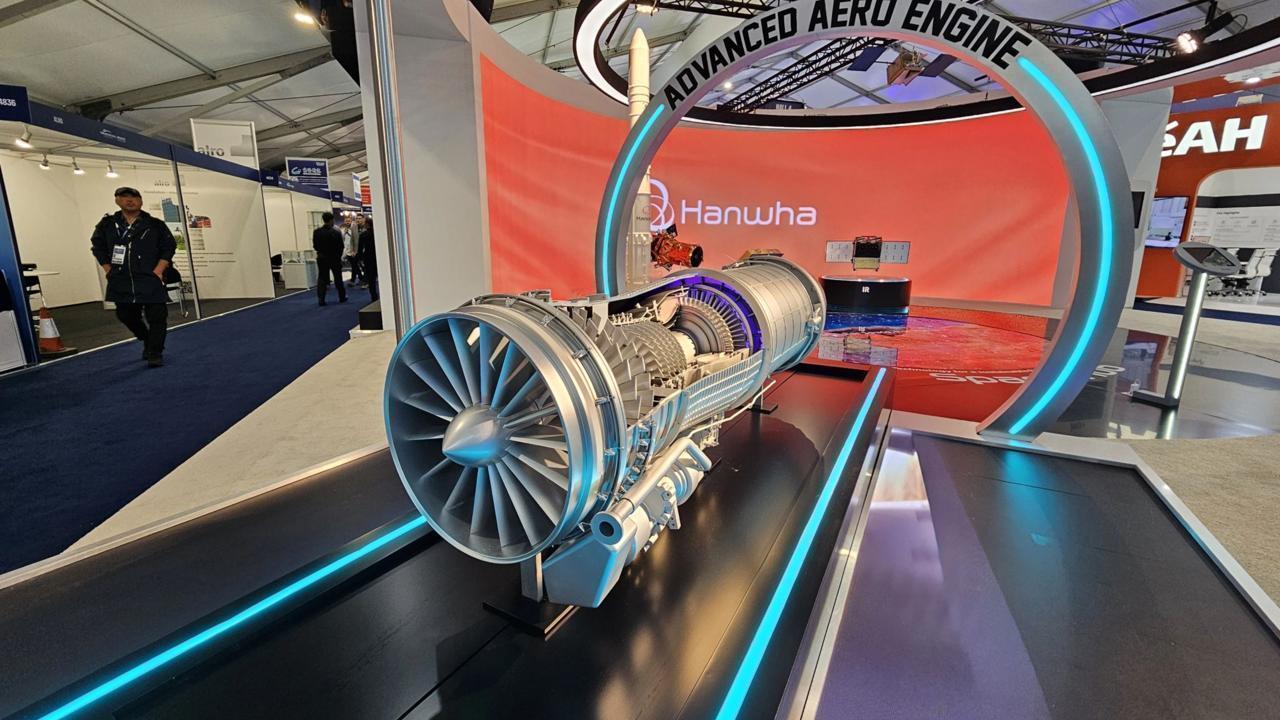
In a landmark development that underscores South Korea’s commitment to strengthening its domestic defence capabilities, Hanwha Aerospace has announced plans to develop the country’s first indigenous turboprop engine designed specifically for large unmanned aerial vehicles (UAVs). The move is being hailed as a key step towards achieving self-reliance in critical aerospace technologies while positioning South Korea as a significant player in the evolving global UAV market.
Partnership with South Korea's Defence Acquisition Program Administration
Hanwha Aerospace, South Korea’s leading aerospace and defence company, has signed an agreement with the nation’s Defence Acquisition Program Administration (DAPA) to kickstart the ambitious project. The turboprop engine, once completed, will be used to power large military UAVs, including those for surveillance, reconnaissance, and potential combat roles.
The strategic collaboration between Hanwha and DAPA highlights the government’s increasing focus on reducing dependency on foreign suppliers for key defence components, a priority sharpened by global geopolitical uncertainties and rising regional security concerns in East Asia.
Filling a Critical Gap in Domestic Aerospace Technology
Currently, South Korea relies heavily on imported propulsion systems for its UAV platforms, particularly for larger drones with high endurance and extended operational ranges. Developing an indigenous turboprop engine aims to fill this critical gap, allowing the country to exercise greater control over its unmanned aerial systems both strategically and operationally.
Hanwha Aerospace is known for its expertise in developing and maintaining military-grade propulsion systems, including engines for fighter jets and helicopters. With this new project, the company is expanding its technological footprint into the growing field of UAV propulsion—a domain that is increasingly vital for modern militaries around the world.
Growing Importance of Large UAVs in Modern Warfare
The global demand for large UAVs has surged in recent years, as militaries seek to enhance their surveillance, reconnaissance, and strike capabilities without putting human pilots at risk. Large UAVs such as the U.S. MQ-9 Reaper and the Turkish Bayraktar Akıncı have demonstrated the tactical and strategic advantages of long-endurance, high-altitude drones capable of multi-mission roles.
South Korea, facing persistent security threats from North Korea and the need to monitor surrounding maritime zones, is accelerating its investment in drone technology as part of its broader defence modernization efforts. Developing a homegrown turboprop engine is central to ensuring that future UAV fleets can operate independently of international supply chains, which can be vulnerable to sanctions or export restrictions.
The Vision for Hanwha's Turboprop Engine
According to Hanwha Aerospace, the new turboprop engine will be designed to deliver optimal performance for medium to large-sized UAVs that require long endurance, high fuel efficiency, and the ability to carry significant payloads including sensors, communications equipment, or even munitions.
The engine is expected to feature advanced materials and manufacturing processes to ensure durability and performance in diverse operational environments. It will also be designed with scalability in mind, allowing for potential use in other aerial platforms beyond UAVs in the future.
Enabling Strategic Independence
One of the primary drivers behind the development is the desire for strategic independence in defence manufacturing. By developing indigenous engines, South Korea aims to reduce the risks associated with supply chain disruptions, technology denials, or geopolitical pressures that can impact defence readiness.
Additionally, the move aligns with the country’s long-term goal of becoming a defence exporter, with UAVs and related technologies identified as key growth sectors. Having an in-house engine capability not only enhances operational autonomy but also improves the competitiveness of South Korea’s UAV offerings on the international market.
Building on Existing Aerospace Expertise
Hanwha Aerospace is no stranger to high-performance engine development. The company is the prime contractor for the Korean Fighter Experimental (KF-X) program’s propulsion systems and has decades of experience in producing and maintaining engines for both civil and military applications.
By leveraging its existing R&D infrastructure, skilled workforce, and close relationships with military end-users, Hanwha is well-positioned to succeed in this ambitious UAV engine project. The company has also invested heavily in advanced manufacturing technologies such as additive manufacturing (3D printing), which will likely play a crucial role in engine development and production.
Timeline and Development Phases
While specific timelines for the engine’s development and deployment have not been disclosed in detail, industry experts believe the project will follow a multi-phase approach. The initial phase will focus on basic research, feasibility studies, and design. This will be followed by the development of working prototypes, rigorous testing, and eventual certification for operational use.
The ultimate goal is to integrate the new turboprop engine into the next generation of large South Korean UAVs, some of which are already in early stages of conceptual development.
Strategic Implications for the Asia-Pacific Region
South Korea’s decision to pursue an indigenous UAV propulsion solution has broader implications for regional security dynamics. As tensions in the Asia-Pacific persist—driven by developments in the Korean Peninsula, the South China Sea, and Taiwan—the demand for unmanned aerial systems capable of rapid intelligence gathering and precision targeting is set to rise.
A domestically powered UAV fleet not only enhances South Korea’s own defence posture but could also position the country as a key supplier of UAVs to regional allies, strengthening defence cooperation within Asia-Pacific.
Environmental Considerations and Efficiency
Modern defence projects are increasingly required to balance performance with environmental considerations. The upcoming turboprop engine is expected to include features that improve fuel efficiency and reduce emissions, aligning with global trends towards greener military aviation.
Furthermore, the modular design approach could allow for upgrades or retrofits as new materials and propulsion technologies, such as hybrid-electric or alternative fuels, become viable in the future.
Hanwha's Broader UAV Ambitions
This engine development is part of a larger strategy by Hanwha Aerospace to cement its position in the fast-growing UAV sector. The company is already involved in the development of various drone platforms, including smaller tactical UAVs and surveillance systems.
The new engine will enable Hanwha to offer complete UAV solutions—including airframes, propulsion, payload integration, and support systems—giving the company a competitive edge in both domestic and international defence markets.
Challenges and Risks
Despite the optimism, the project is not without challenges. Turboprop engine development for UAVs requires a delicate balance between weight, reliability, performance, and cost—each of which presents complex engineering hurdles. Furthermore, global competition in UAV technology is fierce, with established players from the U.S., Europe, Israel, and China leading the market.
Hanwha’s success will depend on its ability to innovate rapidly, manage development risks, and maintain cost competitiveness while meeting the stringent reliability and durability standards required for military aviation.
A Step Towards Global Leadership
Ultimately, the development of South Korea’s first indigenous UAV turboprop engine represents a significant milestone not only for Hanwha Aerospace but for the entire Korean defence industry. It signals the country's shift from being a buyer of high-end defence technologies to a builder of globally competitive solutions.
If successful, the project could open doors for export opportunities, international collaborations, and the creation of an entire ecosystem of aerospace suppliers within South Korea—boosting the economy and enhancing national security.
A New Era for South Korea’s Defence Industry
As work begins on this groundbreaking turboprop engine, South Korea takes another step towards achieving technological self-sufficiency in one of the most strategically important sectors of modern defence. With Hanwha Aerospace leading the charge, the country's ambition to be at the forefront of the global UAV market looks increasingly within reach.
The next few years will be critical as the project moves from concept to reality, but if successful, it will mark the dawn of a new era for South Korea’s aerospace industry—one where indigenous innovation powers not only its aircraft but also its standing on the world stage.
South Korea, Defence



Advances in Aerospace Technology and Commercial Aviation Recovery
Insights into breakthrough aerospace technologies and commercial aviation’s recovery amid 2025 chall

Defense Modernization and Strategic Spending Trends
Explore key trends in global defense modernization and strategic military spending shaping 2025 secu

Tens of Thousands Protest in Serbia on Anniversary of Deadly Roof Collapse
Tens of thousands in Novi Sad mark a year since a deadly station roof collapse that killed 16, prote

Canada PM Carney Apologizes to Trump Over Controversial Reagan Anti-Tariff Ad
Canadian PM Mark Carney apologized to President Trump over an Ontario anti-tariff ad quoting Reagan,

The ad that stirred a hornets nest, and made Canadian PM Carney say sorry to Trump
Canadian PM Mark Carney apologizes to US President Trump after a tariff-related ad causes diplomatic

Bengaluru-Mumbai Superfast Train Approved After 30-Year Wait
Railways approves new superfast train connecting Bengaluru and Mumbai, ending a 30-year demand, easi




