Post by : Amit
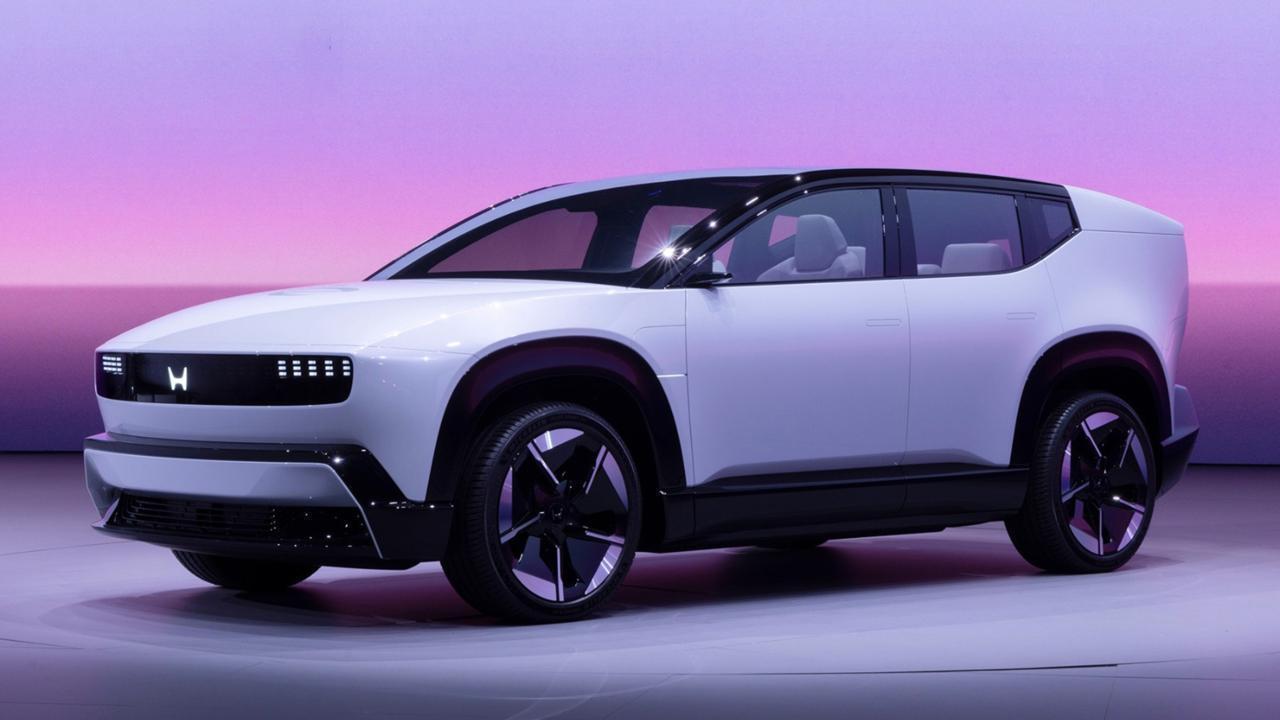
Photo : Honda
Strategic Shift Alters Honda’s EV Roadmap
In a surprising move that underscores the rapidly changing landscape of the electric vehicle (EV) market, Honda has officially cancelled the development of its large electric SUV that was previously in the pipeline. The decision signals a strategic pivot as the Japanese automaker re-evaluates its approach to electrification in response to evolving consumer demands, cost pressures, and technological developments.
The news was confirmed by Honda's executives during recent media interactions, where the company acknowledged that while the large SUV was part of earlier electrification plans, it no longer aligns with Honda’s current market strategy.
Changing Market Dynamics Drive Decision
Honda's decision reflects broader shifts in the global EV market. While demand for electric vehicles continues to rise, there is increasing consumer preference for compact and mid-sized models that offer greater affordability, efficiency, and urban usability. Large SUVs, typically associated with higher costs, larger battery requirements, and lower energy efficiency, are becoming less central to the EV strategies of many automakers.
According to Honda, the company's revised focus will prioritize the development of smaller, more energy-efficient electric vehicles that can appeal to a broader consumer base and address range anxiety, affordability, and sustainability concerns.
Partnership with General Motors and Future EV Plans
The cancelled SUV was reportedly linked to Honda’s partnership with General Motors (GM), which was aimed at co-developing electric vehicles based on GM’s Ultium battery technology. While this specific large SUV project has been shelved, Honda emphasized that its collaboration with GM remains intact and that other joint projects are still moving forward.
Both companies are jointly working on a new series of affordable EVs that are expected to enter the market by 2027. These vehicles will aim to target mass-market adoption, particularly in North America, where competition in the EV sector is intensifying.
Focus on Compact Electric Models and Global Electrification
In line with its revised EV strategy, Honda has announced plans to launch a new series of compact and mid-size electric models under its global “Honda 0 Series,” which was unveiled earlier this year. The first of these vehicles is expected to debut in 2026, with Honda emphasizing lightweight design, energy efficiency, and cost-effectiveness as key pillars of this new generation of EVs.
The shift also aligns with Honda’s broader goal of achieving carbon neutrality across all products and corporate activities by 2050. By focusing on smaller EVs, the company aims to contribute to sustainability while also enhancing profitability in an increasingly competitive market.
Competitive Pressure in the EV Market
The decision to abandon the large SUV project also reflects the intense competitive pressure in the global EV space. Tesla’s dominance in the premium electric SUV segment with models like the Model X and Model Y, coupled with the rise of new entrants such as Rivian and Lucid, has made it increasingly difficult for traditional automakers to carve out profitable niches in the upper end of the market.
Moreover, rising material costs—particularly for lithium, cobalt, and nickel used in EV batteries—have pushed automakers to rethink how they balance vehicle size, range, and affordability. Many industry analysts believe that the future of EV growth lies in accessible, everyday models rather than luxury or oversized vehicles.
Environmental and Efficiency Considerations
Environmental considerations also played a role in Honda's strategic shift. Larger electric SUVs require significantly bigger batteries, which in turn consume more rare earth materials and increase vehicle weight—both factors that undermine energy efficiency and environmental gains.
By redirecting efforts toward smaller models, Honda aims to create vehicles that not only reduce carbon emissions but also align with the principles of resource conservation and long-term sustainability. This decision supports the growing emphasis within the auto industry on lifecycle emissions and responsible sourcing.
Honda's Long-Term Electrification Targets
Despite the cancellation of this particular project, Honda remains firmly committed to electrification. The company has set ambitious targets to make battery-electric and fuel cell electric vehicles account for 100% of its global vehicle sales by 2040.
To achieve this, Honda is investing heavily in research and development of next-generation battery technology, including solid-state batteries, and is also exploring hydrogen fuel cell applications in both automotive and commercial vehicle sectors.
Customer Response and Market Outlook
Early reactions to Honda’s announcement have been mixed. While some industry observers have praised the move as a realistic adjustment to market needs, others have expressed disappointment over the withdrawal from the growing large SUV segment.
However, the overarching consensus is that Honda’s decision reflects the necessity for traditional automakers to remain agile and responsive in the face of rapid technological change, shifting consumer behavior, and the broader economic landscape.
With governments around the world tightening emissions regulations and offering incentives for EV adoption, automakers are under increasing pressure to deliver zero-emission vehicles that balance performance, cost, and environmental responsibility.
A Pragmatic Shift Towards Sustainable Growth
Honda’s cancellation of its large electric SUV project highlights the company's pragmatic approach to electrification as it seeks to align its product offerings with market realities and environmental goals.
By focusing on compact, efficient, and affordable electric vehicles, Honda is positioning itself for sustainable growth in an industry that is undergoing one of the most profound transformations in its history.
The coming years will be critical as Honda rolls out its new EV models and continues to innovate in pursuit of its zero-emissions future.
Honda, Electric



Advances in Aerospace Technology and Commercial Aviation Recovery
Insights into breakthrough aerospace technologies and commercial aviation’s recovery amid 2025 chall

Defense Modernization and Strategic Spending Trends
Explore key trends in global defense modernization and strategic military spending shaping 2025 secu

Tens of Thousands Protest in Serbia on Anniversary of Deadly Roof Collapse
Tens of thousands in Novi Sad mark a year since a deadly station roof collapse that killed 16, prote

Canada PM Carney Apologizes to Trump Over Controversial Reagan Anti-Tariff Ad
Canadian PM Mark Carney apologized to President Trump over an Ontario anti-tariff ad quoting Reagan,

The ad that stirred a hornets nest, and made Canadian PM Carney say sorry to Trump
Canadian PM Mark Carney apologizes to US President Trump after a tariff-related ad causes diplomatic

Bengaluru-Mumbai Superfast Train Approved After 30-Year Wait
Railways approves new superfast train connecting Bengaluru and Mumbai, ending a 30-year demand, easi




