Post by : Amit
Photo : X / Flightradar24
Honda Aircraft Pushes Elite II Further with 20Twenty Wing
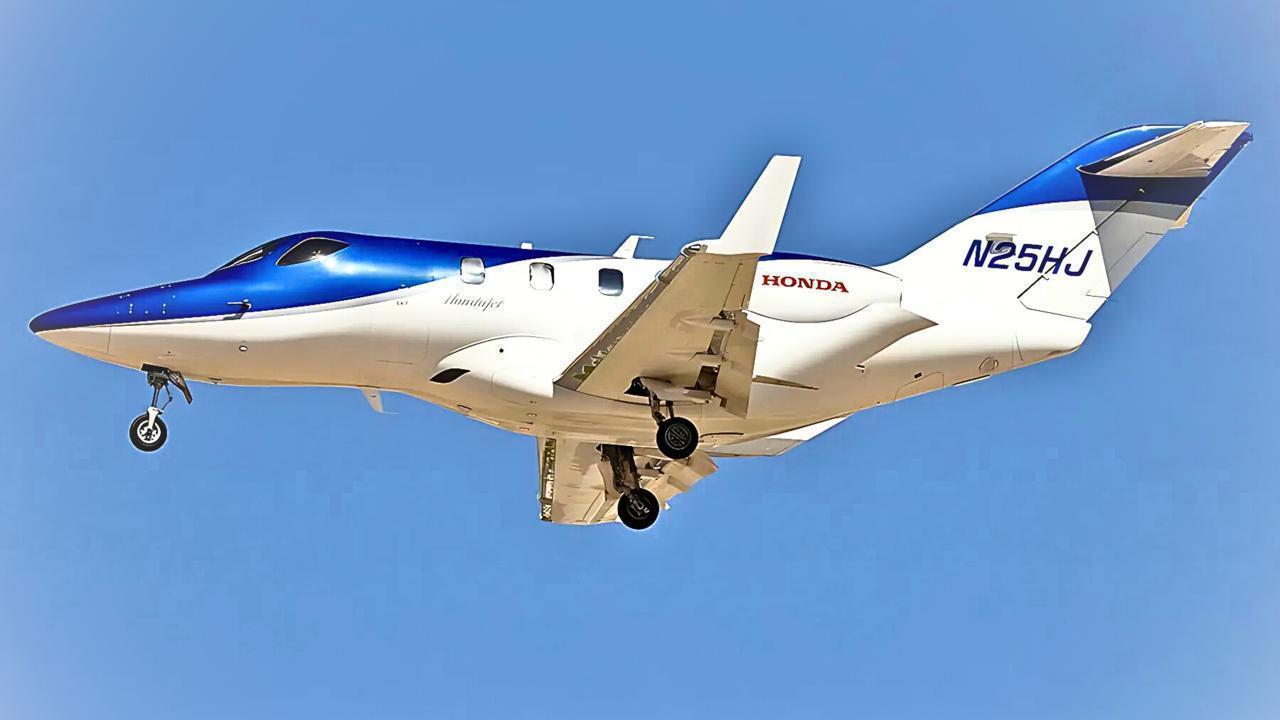
Honda Aircraft Company has revealed a bold evolutionary step for its flagship HondaJet Elite II. The company’s new “20Twenty” wing, now undergoing rigorous flight testing, represents far more than just a refined aerodynamic surface. It reflects Honda’s Kaizen philosophy of continuous improvement and positions the Elite II to compete in a market hungry for performance, efficiency, and cabin comfort.
Unveiled as part of a broader development program, the 20Twenty wing builds on HondaJet’s legacy of unconventional thinking. With over-the-wing engine mounts and composite construction, the original HondaJet was a disruptive entry in the light-jet segment. Now, Honda Aircraft is signaling that it is unwilling to rest on past achievements.
Kaizen Meets Aerodynamics
For Honda Aircraft, Kaizen — the Japanese principle of incremental but relentless improvement — is not just a slogan but a guiding design ethic. The 20Twenty wing’s name is more than branding; it represents a two-decade vision, blending lessons from the HondaJet’s original design process with state‑of‑the‑art computational analysis and manufacturing techniques.
“This is not simply a refresh or a cosmetic change,” said company engineers during a private briefing. “The 20Twenty program is about rethinking wing architecture to give Elite II owners an even more refined flying experience — faster, smoother, and more efficient.”
The wing is said to feature a more optimized sweep and refined airfoil shaping, designed to reduce drag at high subsonic speeds. Early test data suggest that the Elite II could see improvements in both top cruise speed and fuel efficiency, although Honda has not yet released exact performance figures.
A Jet with a Growing Reputation
Since its entry into service, the HondaJet family has carved out an identity for speed, fuel economy, and luxury in a segment dominated by established names like Embraer and Cessna. The Elite II already offers Garmin G3000 avionics, automated systems, and a spacious cabin unusual for a light jet of its size.
Yet the 20Twenty wing signals that Honda Aircraft wants to sharpen every metric. Smoother airflow over the wing should not only improve aerodynamic performance but also reduce cabin noise and vibration — subtle details that appeal to discerning corporate and private customers.
Industry analysts note that while most business jets undergo periodic upgrades, a wing redesign at this scale is a rare commitment. “Honda is doing something quite different here,” says aviation consultant Brian Foley. “Rather than just upgrading avionics or interior materials, they are making structural aerodynamic changes that usually occur only with entirely new aircraft models.”
Market Timing and Strategic Goals
The timing of this enhancement aligns with a resurgent light‑jet market. Demand for private aviation spiked during and after the pandemic as business leaders and high‑net‑worth travelers sought alternatives to commercial airlines. Even as global supply chains and operating costs remain volatile, manufacturers who can deliver efficiency gains stand to benefit.
Honda’s move appears calculated to capture long-term loyalty among owner-pilots and charter operators. A more efficient Elite II not only lowers direct operating costs but also improves resale value — key considerations for fleet buyers.
Moreover, this could be a strategic bridge to Honda Aircraft’s next-generation platform, which the company has hinted is already on its design boards. The 20Twenty wing might be as much about technology demonstration as about improving a current production model.
Flight Testing and Certification Path
Honda Aircraft is running the 20Twenty wing through a carefully phased flight‑test program. Engineers are examining stall behavior, handling qualities, and structural loads across the aircraft’s operating envelope. Certification efforts will depend on how much the wing alters the Elite II’s baseline characteristics.
If the Federal Aviation Administration (FAA) deems the changes significant, the program could require more extensive review than a typical service bulletin upgrade. However, industry sources suggest that Honda is pursuing an approach that blends performance improvements with minimal disruption to certification timelines. The company expects to integrate the wing into production models once testing is complete, though no firm entry‑into‑service date has been disclosed.
Design Philosophy: Beyond Just Speed
While speed and range improvements grab headlines, Honda’s engineers emphasize that the real focus is stability and handling refinement. The 20Twenty wing is expected to offer better low‑speed performance, which could translate to shorter takeoff and landing distances — a vital advantage for operators who use regional airports.
This complements the Elite II’s already strong record for efficiency. Its over‑the‑wing engine mounts reduce cabin noise while freeing up interior space, and its composite fuselage keeps weight low without compromising strength. The new wing’s optimized structure may also reduce the need for heavy reinforcements, preserving payload capability.
Competitive Landscape
Honda Aircraft’s investment comes at a time when rivals are also updating their portfolios. Embraer recently enhanced its Phenom 300E with avionics and interior upgrades, while Textron Aviation’s Citation M2 Gen2 added pilot‑friendly features. However, neither competitor has pursued a major wing redesign, giving Honda a rare differentiator.
“The wing is the soul of an aircraft,” said one former Gulfstream aerodynamicist not involved with the program. “It defines performance and efficiency more than any other single component. If Honda can deliver a measurable step forward without a clean-sheet aircraft, that’s impressive.”
Customer Reception and Expectations
Although pricing has not been announced, Elite II customers are watching closely. Owner‑pilots who value the HondaJet’s combination of performance and cabin refinement are eager to see how much the new wing enhances real‑world operating metrics.
Fleet operators, too, are interested in lifecycle economics. A more efficient wing could translate directly into lower fuel burn and maintenance costs, especially for high‑utilization aircraft. Honda Aircraft is likely to position the upgrade as both a technological leap and a practical business investment.
The company has not yet clarified whether the 20Twenty wing will be retrofittable to existing Elite II models, but industry insiders speculate that such an option would be limited, given the structural changes involved.
Broader Implications for Honda Aircraft
The 20Twenty wing also reflects Honda’s evolving identity as an aircraft manufacturer. When the original HondaJet debuted, it was seen as an experiment — a car company’s ambitious venture into aviation. Nearly two decades later, Honda Aircraft has matured into a serious player in business aviation.
By committing to major aerodynamic improvements rather than cosmetic tweaks, Honda Aircraft reinforces that its aviation division is not a side project but a long‑term enterprise. This could help attract new investment and partnerships as the company eyes larger markets and potentially new aircraft categories.
The next 12 to 18 months will be critical. If flight tests confirm the promised performance gains and certification proceeds without delays, Honda could have a unique market advantage just as business jet demand remains strong. The company may use this opportunity to showcase its engineering prowess at major aviation events like NBAA‑BACE or EBACE.
For now, the 20Twenty wing embodies Honda Aircraft’s commitment to Kaizen — small but meaningful steps that, over time, redefine what a light jet can be.
In an industry where incremental upgrades are common but transformative improvements are rare, Honda’s decision to redesign the Elite II’s wing underscores both technical ambition and market confidence. Whether this sets the stage for an all‑new HondaJet successor remains to be seen, but one thing is clear: Honda Aircraft is not standing still.
HondaJet Elite II, Embraer, Cessna, Aviation



Advances in Aerospace Technology and Commercial Aviation Recovery
Insights into breakthrough aerospace technologies and commercial aviation’s recovery amid 2025 chall

Defense Modernization and Strategic Spending Trends
Explore key trends in global defense modernization and strategic military spending shaping 2025 secu

Tens of Thousands Protest in Serbia on Anniversary of Deadly Roof Collapse
Tens of thousands in Novi Sad mark a year since a deadly station roof collapse that killed 16, prote

Canada PM Carney Apologizes to Trump Over Controversial Reagan Anti-Tariff Ad
Canadian PM Mark Carney apologized to President Trump over an Ontario anti-tariff ad quoting Reagan,

The ad that stirred a hornets nest, and made Canadian PM Carney say sorry to Trump
Canadian PM Mark Carney apologizes to US President Trump after a tariff-related ad causes diplomatic

Bengaluru-Mumbai Superfast Train Approved After 30-Year Wait
Railways approves new superfast train connecting Bengaluru and Mumbai, ending a 30-year demand, easi




