Post by : Saif
Hong Kong has begun a closely watched national security trial against three well-known activists who organised annual candlelight vigils to remember the victims of the 1989 Tiananmen Square crackdown. The case marks another major moment in the city’s legal and political shift since the national security law came into force.
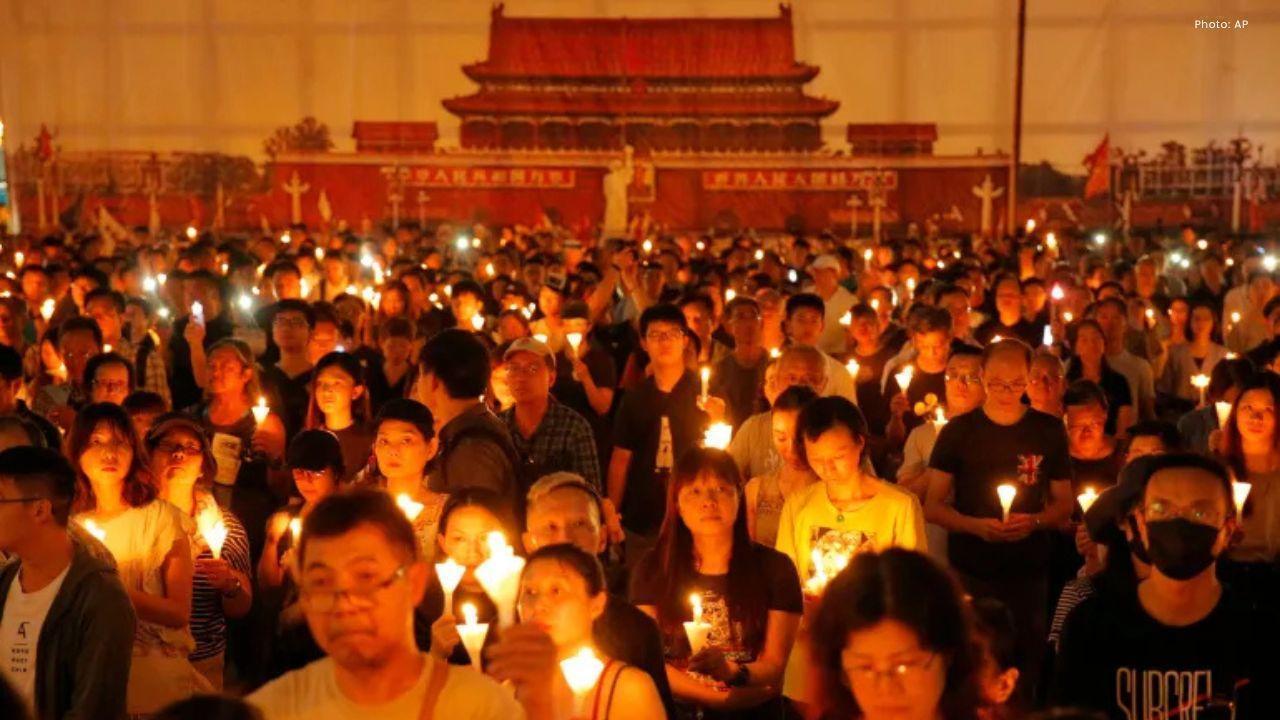
The three accused are former leaders of the Hong Kong Alliance in Support of Patriotic Democratic Movements of China. For decades, the group organised peaceful June 4 vigils that drew large crowds to Victoria Park. These gatherings were once a powerful symbol of Hong Kong’s freedoms, as such public remembrance is banned in mainland China.
At the opening of the trial, two of the defendants pleaded not guilty to charges of “inciting subversion of state power,” while the third pleaded guilty. Prosecutors argue that the group’s long-standing calls for democracy in China and accountability for the Tiananmen killings crossed the line into illegal political action. If convicted, the accused could face long prison sentences.
The case is being heard without a jury by judges approved under the national security law. Prosecutors are expected to present speeches, writings, and public activities linked to the group as evidence. The trial is expected to run for several weeks.
Supporters of the defendants gathered outside the courthouse, many standing quietly to show solidarity. Human rights groups say the trial is not about security, but about silencing peaceful voices and erasing historical memory. They argue that remembering the Tiananmen victims and calling for democratic values should not be treated as crimes.
Hong Kong authorities strongly reject these claims. Officials say the national security law is necessary to restore order after years of political unrest. They insist the law is applied fairly and only targets actions that threaten the state.
Since the law was introduced in 2020, many pro-democracy organisations have disbanded, activists have been jailed, and public protests have nearly disappeared. Critics say this has deeply changed Hong Kong’s identity and reduced freedoms once guaranteed under its unique system.
This trial is seen as a test of how far the national security law can reach. Its outcome may shape the future of free expression, historical remembrance, and civic space in Hong Kong. For many residents and observers around the world, the case is about more than three individuals — it is about the city’s direction and the cost of speaking openly about the past.
#trending #latest #HongKong #Tiananmen #NationalSecurityLaw #HumanRights #FreedomOfSpeech #PressFreedom #AsiaNews #Editorial



Advances in Aerospace Technology and Commercial Aviation Recovery
Insights into breakthrough aerospace technologies and commercial aviation’s recovery amid 2025 chall

Defense Modernization and Strategic Spending Trends
Explore key trends in global defense modernization and strategic military spending shaping 2025 secu

Tens of Thousands Protest in Serbia on Anniversary of Deadly Roof Collapse
Tens of thousands in Novi Sad mark a year since a deadly station roof collapse that killed 16, prote

Canada PM Carney Apologizes to Trump Over Controversial Reagan Anti-Tariff Ad
Canadian PM Mark Carney apologized to President Trump over an Ontario anti-tariff ad quoting Reagan,

The ad that stirred a hornets nest, and made Canadian PM Carney say sorry to Trump
Canadian PM Mark Carney apologizes to US President Trump after a tariff-related ad causes diplomatic

Bengaluru-Mumbai Superfast Train Approved After 30-Year Wait
Railways approves new superfast train connecting Bengaluru and Mumbai, ending a 30-year demand, easi




